Are konjac and glucomannan the same thing?
Konjac and glucomannan are not the same thing: konjac is Amorphophallus konjac, while glucomannan is the viscous soluble fiber concentrated in its underground corm. The plant is cultivated in parts of East and Southeast Asia, and the processed corm is used to make konjac flour, konjac gum, shirataki noodles, and purified glucomannan powder.
Glucomannan is a high-molecular-weight polysaccharide made mainly from glucose and mannose units. EFSA describes konjac mannan, also called glucomannan, as a soluble dietary fiber with high water-binding capacity in its scientific opinion on weight-related health claims [EFSA opinion](https://www.efsa.europa.eu/en/efsajournal/pub/1798).
The naming can be confusing because product labels may use several terms for overlapping materials. A noodle label may say konjac flour because the product uses the broader corm-derived ingredient. A capsule label may say glucomannan because the product is standardized around the fiber fraction.
For a broader ingredient overview, see the parent guide: Glucomannan: The Konjac Fiber Supplement Guide. That pillar explains supplement formats, label terms, and how glucomannan compares with other soluble fibers.

How do konjac and glucomannan work in food and supplements?
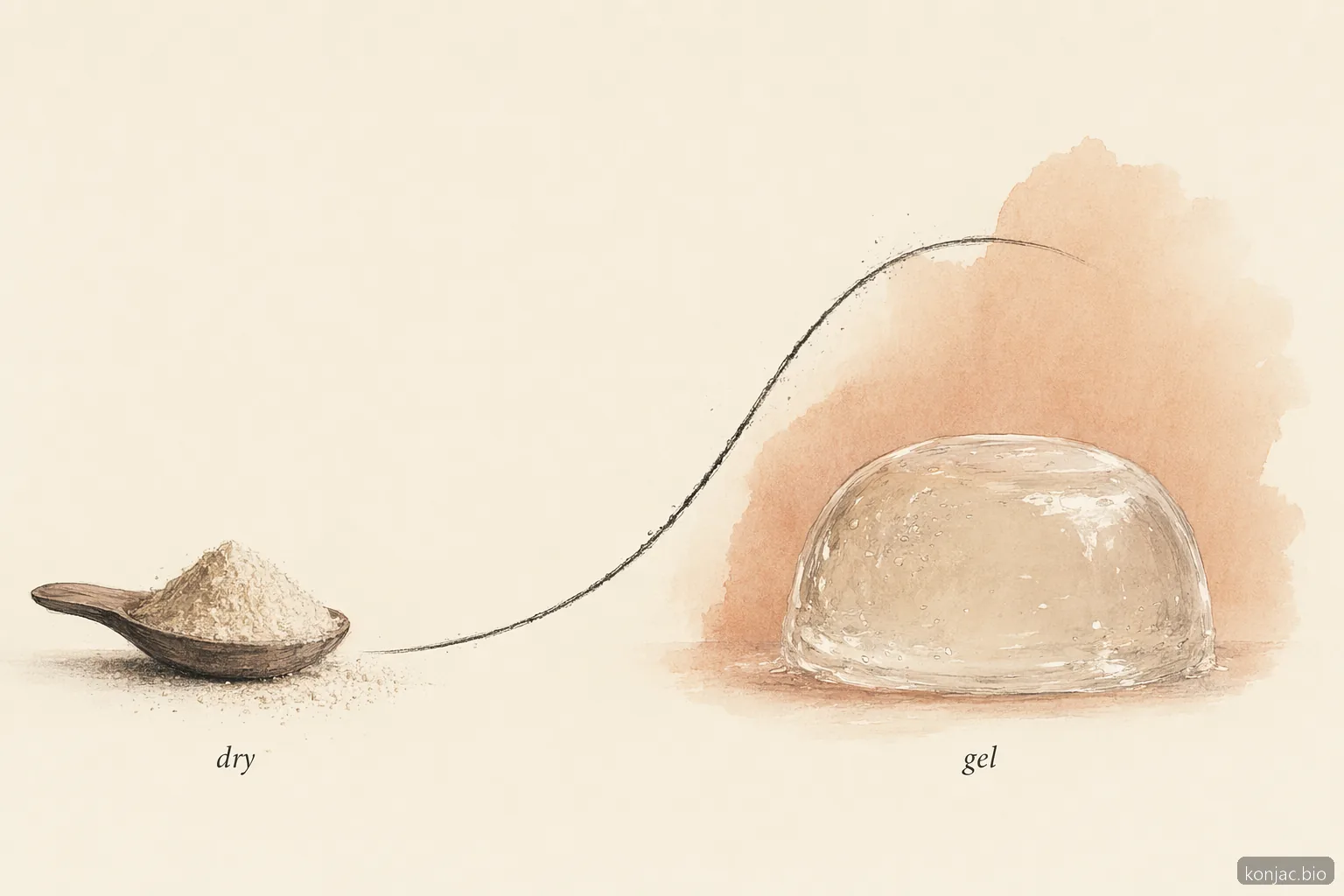
Konjac and glucomannan work by absorbing water and forming a thick, slow-moving gel. This gel behavior explains why konjac flour can structure noodles and why glucomannan supplements are usually taken before meals with a full glass of water.
In food manufacturing, hydration, heat, pH, and calcium salts can change how firm the gel becomes. Shirataki noodles are typically made from konjac flour, water, and an alkaline setting agent, which creates a springy texture with very low digestible carbohydrate content compared with wheat pasta.
In supplement use, the same water-binding property is the central feature. A powder or capsule that hydrates properly can increase viscosity in the stomach contents, which is one reason glucomannan has been studied for satiety and weight-management support. A systematic review of randomized trials evaluated glucomannan effects on body weight, lipids, glucose, and blood pressure markers [PubMed review](https://pubmed.ncbi.nlm.nih.gov/18842808/).
Three practical variables matter more than marketing language:
- Particle size: finer powder usually hydrates faster than coarse granules.
- Viscosity: higher-viscosity glucomannan often produces a thicker gel at the same dose.
- Water amount: insufficient water can leave dry fiber clumps and increase swallowing discomfort.
Food buyers and formulators should distinguish konjac flour, konjac gum, and purified glucomannan by application. Noodles need texture and set. Beverages need controlled viscosity. Capsules need hydration behavior, purity, and label consistency.
What benefits are linked to konjac and glucomannan?
Konjac and glucomannan may support satiety, regular fiber intake, and certain cholesterol-related nutrition goals when used under the right conditions. The strongest formal language comes from European health-claim evaluations, not from broad wellness claims.
EFSA’s approved weight-management wording is specific: “Glucomannan in the context of an energy restricted diet contributes to weight loss.” The conditions include 3 g daily in three 1 g doses, each taken with 1 to 2 glasses of water before meals as part of an energy-restricted diet [EFSA opinion](https://www.efsa.europa.eu/en/efsajournal/pub/1798).
EFSA has also evaluated cholesterol-related claims for glucomannan. The approved claim language used in the EU is “Glucomannan contributes to the maintenance of normal blood cholesterol concentrations,” with required intake conditions that should be checked against the current EU register before using on packaging.
Human trial results are not identical across populations, doses, and product types. The 2008 systematic review found effects on several cardiometabolic markers, but trial designs varied by sample size, duration, dose, and participant characteristics [PubMed review](https://pubmed.ncbi.nlm.nih.gov/18842808/). That is why responsible labels should use approved wording where applicable and avoid unsupported promises.
For consumers, the plain-language takeaway is simple: glucomannan is a fiber, not a shortcut. It works best when the dose, water intake, meal timing, and overall eating pattern match the evidence behind the claim. For a deeper benefit-by-benefit breakdown, see glucomannan benefits.
Forms, labels, and quality specs buyers should compare
Konjac ingredients appear in several commercial forms, and each form has a different role. Food products often use konjac flour or konjac gum for texture. Supplements usually use glucomannan powder, capsules, or tablets with a stated amount per serving.
A simple comparison helps separate the names:
| Form | Common use | What to check |
|---|---|---|
| Konjac flour | Shirataki noodles, gels, thickened foods | Mesh size, odor, hydration, whiteness |
| Konjac gum | Food thickener and stabilizer | Viscosity, purity, microbiology |
| Glucomannan powder | Fiber supplements, functional blends | Glucomannan content, viscosity, heavy metals |
| Capsules or tablets | Measured consumer servings | Dose per serving, directions, water warning |
Labeling also differs by category. Dietary supplement labels in the United States must follow Supplement Facts formatting and required declarations under FDA dietary supplement labeling rules [FDA label](https://www.fda.gov/food/dietary-supplements/dietary-supplement-labeling-guide). Food labels follow a different route, especially when the ingredient is used as a thickener, stabilizer, or noodle base.
Wholesale buyers should request a certificate of analysis for each lot. Useful specifications include glucomannan percentage, viscosity method, moisture, ash, sulfur dioxide where relevant, lead, cadmium, arsenic, mercury, total plate count, yeast and mold, and absence of key pathogens.
B2B aside: konjac.bio sources konjac ingredients at wholesale scale for food and supplement teams, with specifications available through /contact/.
Safety, dosing, and use mistakes to avoid
Glucomannan safety depends heavily on water, format, and directions for use. Because the powder expands as it hydrates, dry swallowing or taking capsules with too little liquid can create avoidable choking risk.
FDA compliance guidance for water-soluble gums and hydrophilic fibers used as weight-control aids has long emphasized adequate directions for use, including consumption with sufficient fluid [FDA guidance](https://www.fda.gov/regulatory-information/search-fda-guidance-documents/cpg-sec-555875-water-soluble-gums-hydrophilic-gums-and-fibers-aid-weight-control). EFSA’s weight-management condition also pairs each 1 g dose with 1 to 2 glasses of water before meals [EFSA opinion](https://www.efsa.europa.eu/en/efsajournal/pub/1798).
Common use mistakes include taking capsules without enough water, mixing powder into a thick drink and waiting too long, exceeding label directions, or combining multiple fiber products without tracking total intake. New users often tolerate fiber better by starting with a smaller amount and increasing gradually.
People with swallowing difficulty, a history of esophageal narrowing, or complex medication schedules should ask a qualified health professional before using glucomannan supplements. Fiber can slow stomach emptying and may affect timing for some oral medications, so separating fiber from medications by several hours is a common practical precaution.
For a focused safety guide, including side effects and label warnings, see glucomannan side effects. Product-specific directions should always take priority because powder, capsules, tablets, and fortified foods hydrate at different speeds.
Frequently asked questions
01 Are konjac and glucomannan the same ingredient?
02 Is konjac flour the same as glucomannan powder?
03 What is the EFSA-approved glucomannan weight claim?
04 How much glucomannan do people usually take?
05 Are shirataki noodles a glucomannan supplement?
06 Who should be cautious with glucomannan?
- Scientific Opinion on the substantiation of health claims related to konjac mannan and reduction of body weight · EFSA Journal · 2010
- Effect of glucomannan on plasma lipid and glucose concentrations, body weight, and blood pressure: systematic review and meta-analysis · PubMed · 2008
- CPG Sec. 555.875 Water-Soluble Gums, Hydrophilic Gums, and Hydrophilic Fibers as Aid in Weight Control · U.S. Food and Drug Administration · 2023
- Dietary Supplement Labeling Guide · U.S. Food and Drug Administration · 2024