What is konjac rice?
Konjac rice is a rice-shaped food made from the corm of Amorphophallus konjac, usually by forming konjac glucomannan gel into small grains. The plant is a member of the Araceae family and is recognized botanically as Amorphophallus konjac by Kew.
The same ingredient family appears in shirataki noodles, konjac jelly, konjac flour, and glucomannan supplements. In rice form, the goal is simple: provide a neutral, sauce-friendly base with far fewer digestible carbohydrates than cooked rice.
Most wet pouch products contain purified water, konjac flour or konjac powder, and a firming alkali such as calcium hydroxide. Dry konjac rice may contain dehydrated konjac, oat fiber, tapioca starch, soybean fiber, or other plant ingredients depending on the manufacturer.
Konjac rice is also sold under several overlapping names. These names are not always standardized, so the nutrition panel matters more than the front label.
| Label term | What it usually means | Buyer note |
|---|---|---|
| Konjac rice | Rice-shaped konjac gel or dry konjac granules | Broadest term |
| Shirataki rice | Rice-shaped version of shirataki | Usually wet packed |
| Shirataki konjac rice | Konjac-based rice substitute | Often used for keto listings |
| Shirataki miracle rice | Generic miracle rice made from shirataki-style konjac | Not a regulated category |
| Miracle rice shirataki rice | Retail search phrase for the same product family | Compare ingredients |
For a plant-level overview of the raw material, see the main konjac guide. For the isolated fiber used in supplements and food formulation, see the glucomannan guide.
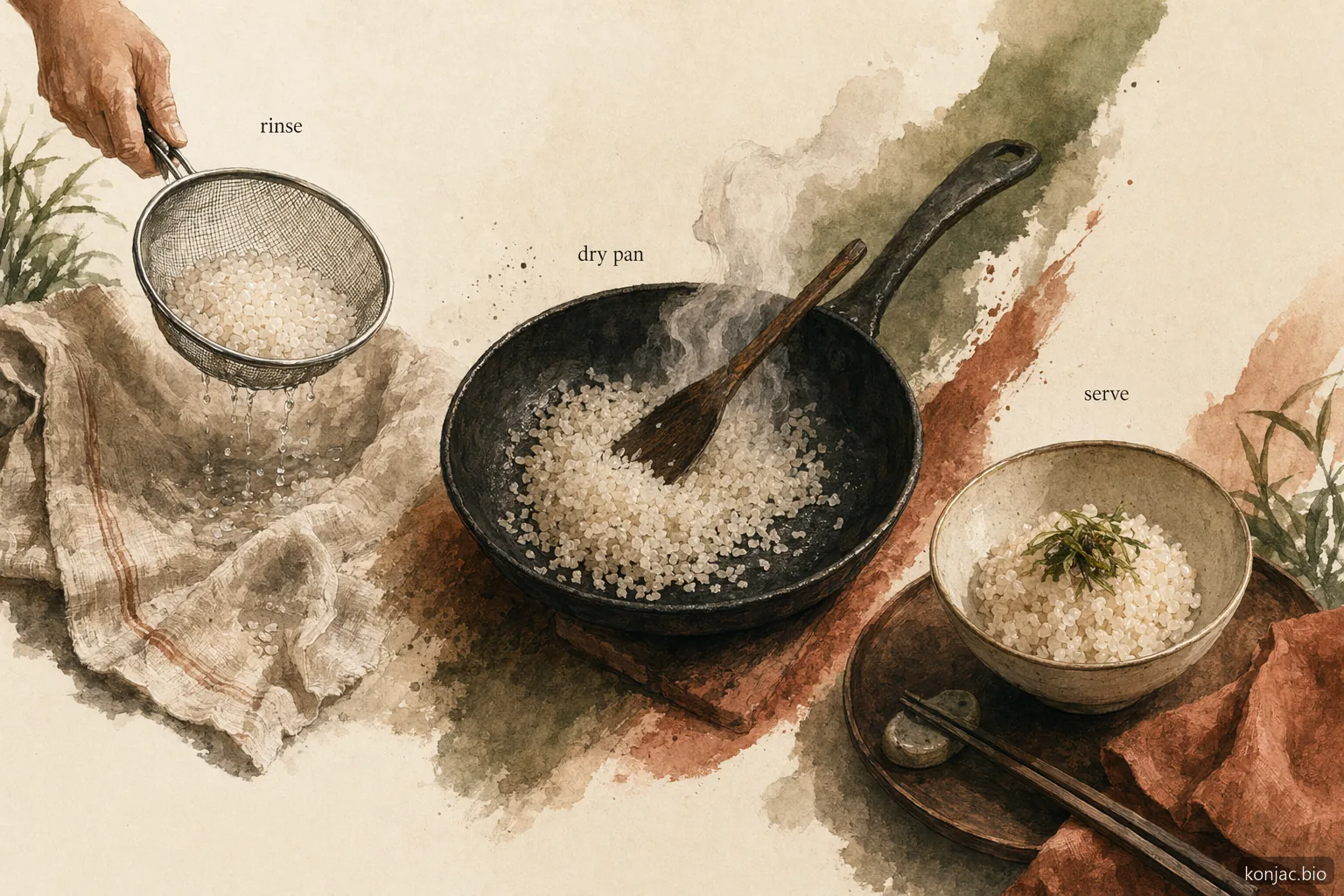
How many calories and carbs are in konjac rice?
Konjac rice calories are usually very low because wet shirataki-style rice is mostly water plus glucomannan fiber. Many wet products list 5 to 20 calories per serving, but blended dry konjac rice can be higher because added starches, fibers, or proteins change the formula.
The key nutrition variable is digestible carbohydrate, not the product name. A pouch labeled shirataki rice low carb may contain only konjac and water, while a dry rice substitute may include oat fiber or starch for chew and rehydration.
Glucomannan is the main soluble fiber in konjac, and EFSA evaluated health claims for konjac mannan, also called glucomannan, in a scientific opinion on weight management and cholesterol-related claims EFSA opinion. The approved EU wording for weight management is: Glucomannan in the context of an energy restricted diet contributes to weight loss.
That approved claim is not a free pass for any bowl of konjac rice. EFSA conditions for the weight-management claim specify 3 grams of glucomannan daily in three 1 gram doses, each taken with 1 to 2 glasses of water before meals, in an energy-restricted diet EFSA opinion.
| Food, cooked or prepared | Typical calories per 100 g | Carbohydrate profile | Best use |
|---|---|---|---|
| Wet konjac rice | Often 5 to 20 kcal | Mostly fiber and water | Keto bowls, saucy meals |
| White rice | About 130 kcal | Mostly starch | Traditional rice dishes |
| Brown rice | About 123 kcal | Starch plus more fiber than white rice | Grain bowls |
| Cauliflower rice | About 25 kcal | Vegetable carbohydrate and fiber | Fast skillet sides |
USDA FoodData Central lists cooked white rice at about 130 kcal per 100 g and cooked brown rice in a similar range depending on the entry and preparation method USDA data. Cauliflower is much lower in calories than grain rice, but it tastes like a vegetable rather than a neutral starch base USDA data.
For practical label reading, compare four numbers per prepared serving: calories, total carbohydrate, fiber, and sodium. Some wet pouches are stored in alkaline water and may contain more sodium than expected, while dry blends may have more total carbohydrate.
How does konjac rice compare with white rice, brown rice, and cauliflower rice?
Konjac rice has fewer calories and digestible carbohydrates than white or brown rice, but it does not taste or cook like grain rice. It is a functional substitute for low-carb meals, not a one-for-one match for jasmine rice, sushi rice, basmati rice, or short-grain brown rice.
White rice and brown rice are cereal grains from Oryza sativa. They supply starch, bulk, and a familiar rice aroma after cooking. Konjac rice is a gelled fiber food, so its strengths are calorie reduction, sauce absorption, and speed.
Cauliflower rice sits between grain rice and konjac rice for many home cooks. It has a vegetable flavor, visible plant texture, and more moisture release during cooking. Konjac rice is more neutral, but it needs dry-pan heating to remove pouch water and improve bite.
| Feature | Konjac rice | White rice | Brown rice | Cauliflower rice |
|---|---|---|---|---|
| Main ingredient | Konjac glucomannan gel | Milled rice grain | Whole-grain rice | Chopped cauliflower |
| Carb level | Very low in wet versions | High | High | Low to moderate |
| Texture | Bouncy, slippery, chewy | Soft, starchy | Chewy, grainy | Tender, vegetable-like |
| Flavor | Neutral after rinsing | Mild grain | Nutty grain | Brassica vegetable |
| Best cooking method | Rinse, drain, dry-pan, sauce | Boil or steam | Boil or steam longer | Sauté or microwave |
Konjac rice works best when the rest of the plate provides aroma and fat-soluble flavor. Curry, sesame oil, kimchi, tomato sauce, coconut milk, chili crisp, egg, tofu, chicken, fish, and mushrooms all help carry flavor across the grains.
For keto or lower-carb eating patterns, konjac rice is often paired with protein and non-starchy vegetables. The broader role of konjac in carbohydrate-reduced diets is covered in the konjac keto pillar.
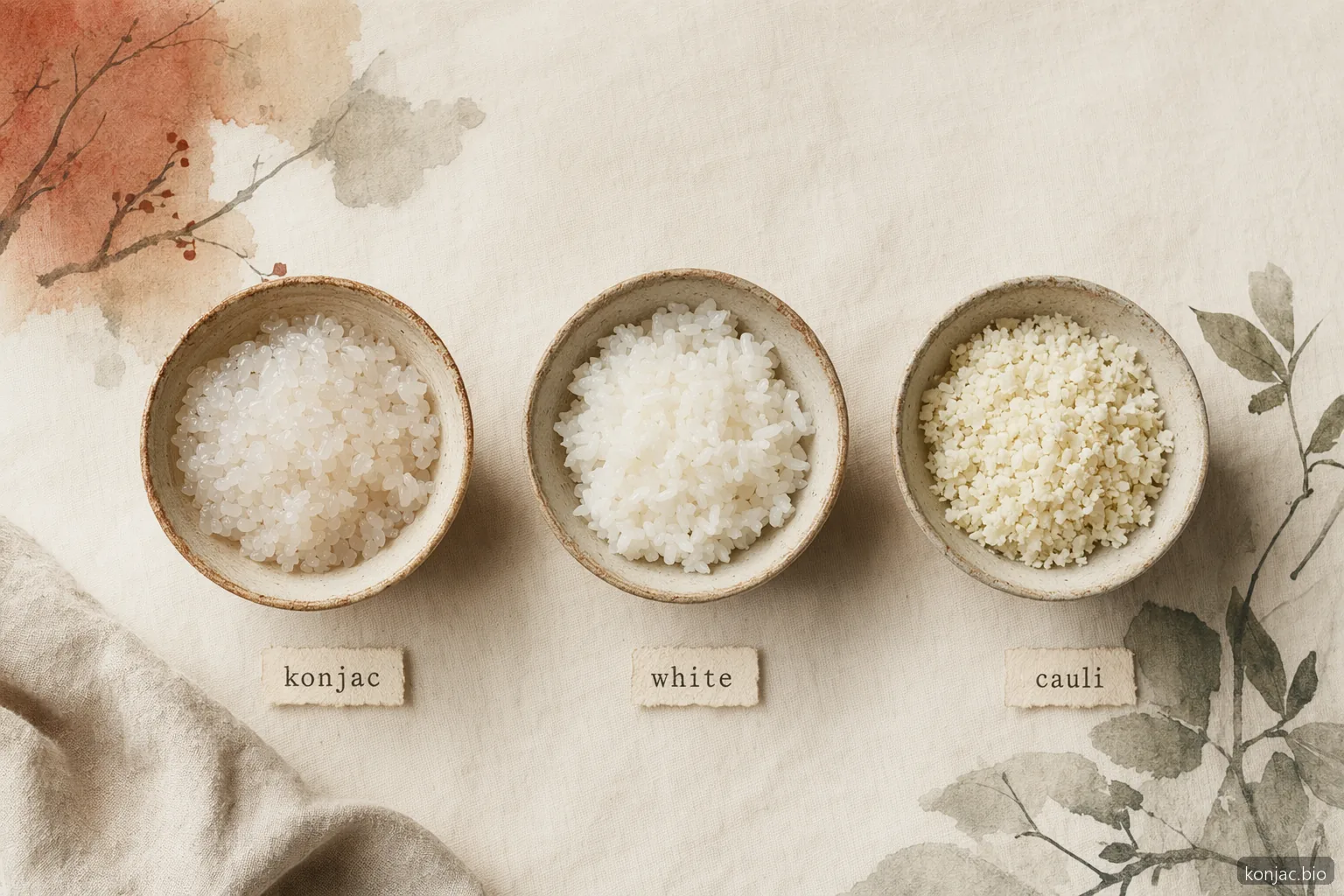
What does shirataki konjac rice taste like?
Shirataki konjac rice tastes mostly neutral after rinsing, with a springy and slightly slippery texture rather than a starchy rice bite. The first smell from a wet pouch can be alkaline or ocean-like, but rinsing and dry heating usually reduce it.
The texture comes from a gel network formed by konjac glucomannan and alkaline processing. Konjac gum is listed as E425 in the European Union food additive framework, which includes konjac gum and konjac glucomannan under the additive category EU E425.
Texture expectations matter. If a shopper expects fluffy basmati rice, konjac rice may feel too elastic. If the goal is a fast, low-carb base for saucy meals, the same bounce can be useful because the grains do not collapse during reheating.
Common texture notes include:
- Bouncy: the grains spring back more than cooked rice.
- Slippery: wet pouch products are smooth unless pan-dried.
- Neutral: flavor depends heavily on sauce and aromatics.
- Less fluffy: the grains do not absorb water like starch rice.
Use strong aromatic building blocks for the best result. Garlic, ginger, onion, scallion, curry paste, miso, soy sauce, vinegar, toasted sesame, lime, tomato, and mushroom powder make a larger difference than extra boiling time.
For recipe ideas that make texture work in the final dish, see konjac recipes. Bowls, fried rice, burrito fillings, stuffed peppers, soups, and skillet meals are more forgiving than plain rice sides.
How do you cook konjac rice so it is not watery?
You cook konjac rice so it is not watery by rinsing it well, draining it thoroughly, then heating it in a dry pan before adding sauce or fat. This removes packing liquid, improves aroma, and gives the rice-shaped grains a firmer bite.
Wet pouch konjac rice is already hydrated, so boiling it like grain rice usually makes the final dish wetter. The better method is closer to drying and seasoning than cooking from raw.
- Open and drain: pour away the pouch liquid.
- Rinse: rinse under cold water for 30 to 60 seconds.
- Drain hard: shake in a sieve or press gently with a spoon.
- Dry-pan: heat in a nonstick or stainless pan for 3 to 6 minutes.
- Season: add salt, sauce, oil, butter, broth reduction, or aromatics.
- Finish: fold into protein, vegetables, curry, chili, or soup.
A dry pan should hiss at first as water evaporates. When the grains stop steaming heavily and move more freely, they are ready for flavor. Adding oil too early can trap water and make the bowl feel slick.
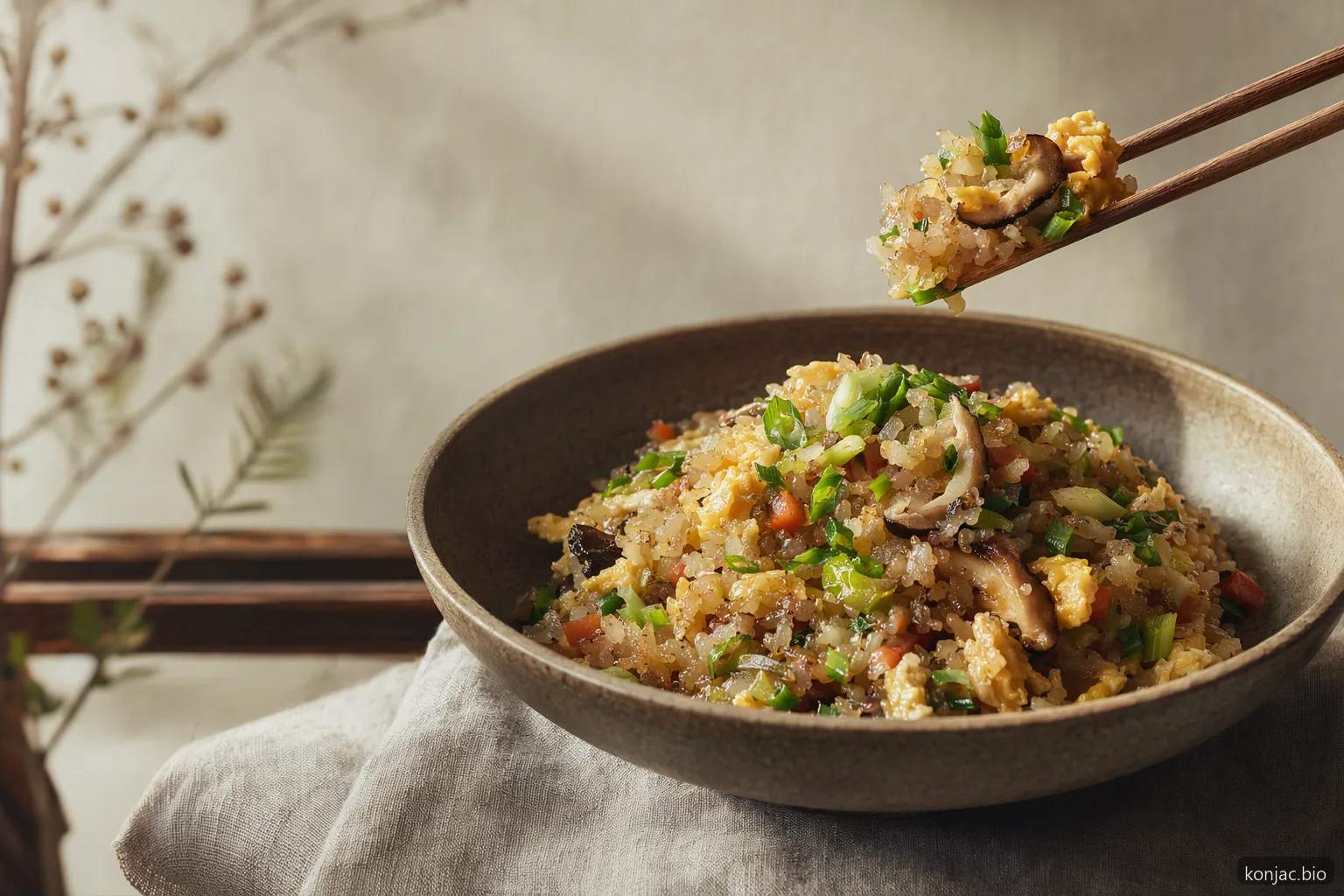
For fried rice, cook aromatics and protein separately, dry-pan the konjac rice, then combine everything at the end. Egg, tofu, shrimp, chicken, diced vegetables, tamari, sesame oil, and scallions create a fuller dish without relying on starch.
For soup, skip the long dry-pan step if broth is the main format. Rinsed konjac rice can go directly into miso soup, chicken broth, vegetable soup, or hot pot near the end because it does not need long cooking.
For meal prep, store prepared konjac rice with sauce rather than plain. Plain dry-panned grains can feel rubbery after refrigeration, while curry, chili, tomato sauce, and coconut sauces keep the texture more pleasant.
Wet pouch, dried konjac rice, and dry konjac rice formats
Konjac rice is sold in wet ready-to-heat pouches, dried konjac rice, and dry konjac rice blends that rehydrate during cooking. The right format depends on shelf life, shipping weight, texture target, and whether the buyer values convenience or pantry stability.
Wet pouches are the most common retail format for shirataki rice konjac rice. They are convenient because the product is fully hydrated, but they are heavy to ship and usually require rinsing. The pouch liquid is normal for this category, although the smell can surprise first-time buyers.
Dried konjac rice is lighter, easier to store, and often better for e-commerce or bulk pantry use. It may rehydrate into a firmer texture than wet pouch rice, but formulas vary widely. Some dry products are nearly all konjac and fiber, while others are blended with starch to improve chew.
Dry konjac rice blends can be useful when a brand wants a more rice-like cooking ritual. Some products are simmered in water, broth, or sauce, then rested. The tradeoff is that calories and digestible carbs may be higher than wet shirataki rice.
| Format | Advantages | Limitations | Best buyer |
|---|---|---|---|
| Wet pouch | Fast, widely available, very low calorie | Heavy, pouch aroma, needs rinsing | Keto shoppers and quick meals |
| Dried konjac rice | Light shipping, longer pantry storage, compact | Needs rehydration, formula varies | Online buyers and meal preppers |
| Dry konjac rice blend | Better chew possible, flexible seasoning | May contain more carbs | Consumers wanting a cooked-rice routine |
Ingredient order is the fastest way to understand the product. If water comes first, it is probably a wet gel product. If konjac flour, oat fiber, tapioca starch, resistant starch, or soy fiber appear early, the dry product may behave differently from a wet shirataki pouch.
For B2B buyers, format affects case weight, minimum order quantity, label claims, and freight cost. konjac.bio supports wholesale, private-label, and OEM sourcing conversations for wet, dry, and ingredient-led konjac products through contact.
Is konjac rice dangerous?
Konjac rice is generally a conventional food product when prepared and eaten as directed, but choking risk, digestive discomfort, allergies, and poor hydration are practical safety concerns. Risk is higher with large bites, inadequate chewing, unsupervised children, and dry glucomannan products taken without enough liquid.
Food safety discussions often confuse konjac rice with mini-cup konjac jelly. The U.S. FDA has warned about gel candy products in small cups because their firmness and shape can create a choking hazard, especially for children and older adults FDA alert. That warning is about mini-cup gel candy, not rinsed rice-shaped konjac served in a bowl.
Glucomannan absorbs water and forms viscous gels. EFSA noted conditions of use for glucomannan health claims that include taking it with water, especially for supplement formats EFSA opinion. Wet konjac rice is already hydrated, but it should still be chewed thoroughly.
Practical safety steps are simple:
- Chew thoroughly and avoid swallowing large spoonfuls quickly.
- Serve small portions to children only with appropriate supervision.
- Do not eat dry glucomannan powder directly.
- Drink fluids with high-fiber meals if your usual fiber intake is low.
- Start with a small serving if you are sensitive to fiber.
- Check labels for soy, oat, or other blend ingredients.
Digestive effects can include fullness, gas, or changes in stool pattern, especially when fiber intake rises quickly. A small first serving, such as half a pouch with protein and vegetables, is more sensible than using multiple pouches in one meal.
Konjac rice is not the same as a supplement capsule. A rice substitute contributes texture and bulk to a meal, while a glucomannan supplement is measured for fiber dose. The supplement category has different use instructions, which are covered in the glucomannan pillar.
Konjac rice sourcing, labels, and quality checks
Konjac rice quality depends on raw konjac flour grade, gel strength, water quality, pH control, sterilization, packaging integrity, and label accuracy. For consumer shoppers, the nutrition panel and ingredient list are the best quality signals. For brand owners, supplier documentation matters just as much as the sample texture.
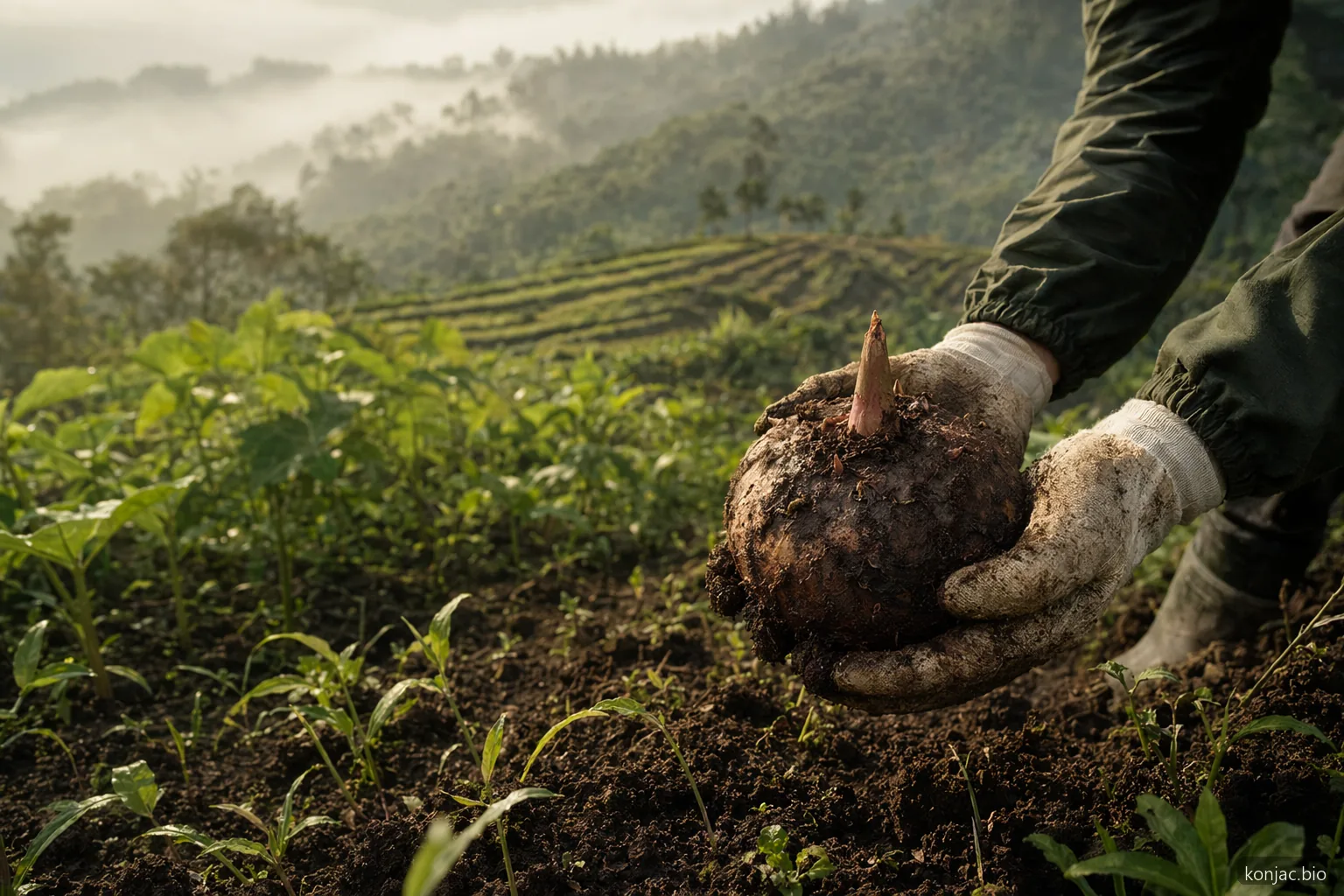
Konjac flour is produced from the corm of Amorphophallus konjac and refined to concentrate glucomannan. Food manufacturers use different grades depending on viscosity, gel strength, particle size, color, odor, and microbial specification. The ingredient-side overview is covered in the konjac flour pillar.
Retail labels should clearly show serving size, calories, total carbohydrate, fiber, sodium, ingredients, storage instructions, and allergen information. Dry blends should make rehydration directions clear because underhydrated grains can be unpleasant and overly firm.
Procurement teams usually request a technical document pack before approving a konjac rice supplier. Typical documents include:
- Specification sheet for finished product and konjac raw material.
- Certificate of analysis for recent production lots.
- Food safety certification, such as ISO 22000, BRCGS, SQF, or HACCP-based documentation.
- Microbiological limits and heavy metals testing where required by market.
- Allergen statement and GMO status statement.
- Shelf-life study or accelerated stability data.
- Packaging migration or food-contact compliance documents.
For wet pouch products, buyers should evaluate drained weight, net weight, pH, seal strength, pouch odor, grain uniformity, and thermal processing controls. A low unit price can become expensive if pouch leakage, inconsistent drained weight, or strong off-odor increases returns.
For dry konjac rice, buyers should evaluate rehydration ratio, cooking time, broken granule percentage, moisture, water activity, and carb contribution from non-konjac ingredients. A dry product with excellent shelf stability may still fail if the finished texture is too rubbery or too starchy for its label promise.
Regulatory naming varies by market. In the EU, konjac gum and konjac glucomannan appear under E425 in the food additive framework EU E425. In the United States, food products still need truthful labeling and safe manufacturing controls under general food law, even when front-label terms such as miracle rice are used generically.
Best uses for shirataki rice low carb meals
Shirataki rice low carb meals work best when konjac rice is used as a base for bold sauces, protein, fat, and vegetables. Plain konjac rice rarely satisfies like a bowl of steamed jasmine rice, but it performs well in dishes where starch is not the main flavor.
Good starter meals include curry bowls, egg fried rice, taco bowls, Korean-style beef bowls, cauliflower and konjac mixed rice, tomato rice skillets, stuffed peppers, mushroom risotto-style bowls, and soup add-ins. These formats solve the two main weaknesses of konjac rice: limited aroma and lack of starch.
A 50:50 blend can be more satisfying than using konjac rice alone. Mixing konjac rice with cauliflower rice lowers calories while adding vegetable texture. Mixing konjac rice with a smaller portion of white or brown rice reduces total starch while keeping familiar grain aroma.
| Meal goal | Use konjac rice with | Why it works |
|---|---|---|
| Keto bowl | Egg, avocado, chicken, tofu, greens | Protein and fat improve satiety |
| Fried rice | Garlic, egg, tamari, sesame, scallion | High heat removes water |
| Curry | Coconut milk, curry paste, vegetables | Sauce coats neutral grains |
| Burrito bowl | Ground meat, salsa, lettuce, cheese | Bold seasoning carries flavor |
| Mixed rice | Half grain rice or cauliflower rice | Better texture balance |
Seasoning should happen after water removal. Salt, acid, fat, and umami make the largest difference. Lime juice, rice vinegar, tomato paste, miso, parmesan-style hard cheese, nutritional yeast, mushroom powder, and broth reductions can make the same pouch taste completely different.
Konjac rice is less useful for sushi, rice pudding, rice balls, congee, and recipes where starch gelatinization creates the structure. In those dishes, grain rice is doing functional work that konjac gel cannot fully replace.
For a practical weekly pattern, use one pouch for a fast lunch bowl, one dry konjac rice serving for a pantry meal, and one mixed-rice meal when flavor and texture matter more than the lowest possible carb count. That approach keeps the ingredient useful without forcing it into every rice recipe.
Frequently asked questions
01 Is konjac rice the same as shirataki rice?
02 What are konjac rice calories per serving?
03 Does konjac rice taste like real rice?
04 How do I remove the smell from shirataki konjac rice?
05 Is konjac rice dangerous for children?
06 Can I eat konjac rice every day?
07 Where can I find konjac rice near me?
08 Is dried konjac rice better than wet pouch konjac rice?
- Amorphophallus konjac K.Koch · Plants of the World Online, Kew · 2024
- Scientific Opinion on the substantiation of health claims related to konjac mannan, glucomannan · EFSA Journal · 2010
- FoodData Central · USDA · 2024
- Import Alert 33-15: Detention Without Physical Examination of Gel Candy · U.S. Food and Drug Administration · 2024
- Regulation (EC) No 1333/2008 on food additives · EUR-Lex · 2008