Does konjac for weight loss actually work?
Konjac for weight loss has the best support when it refers to glucomannan, the soluble fiber from Amorphophallus konjac, taken before meals as part of an energy-restricted diet.
The key regulatory reference is the European Food Safety Authority opinion on glucomannan and body weight. EFSA concluded that "Glucomannan in the context of an energy restricted diet contributes to weight loss" when 3 g per day is consumed in three 1 g doses with 1 to 2 glasses of water before meals, and the claim is now listed in the EU authorized claims regulation through Regulation 432/2012.
That wording matters. It does not say konjac alone causes weight change, and it does not replace calorie awareness, protein intake, sleep, or physical activity. It says glucomannan contributes in the context of an energy-restricted diet, which means the food pattern still has to create a calorie deficit.
Human studies have produced mixed results. A randomized trial in overweight and moderately obese adults found no statistically significant weight reduction from glucomannan compared with placebo under its study conditions, as indexed in PubMed. A broader nutrition-supplement review from the NIH notes that glucomannan evidence for weight management is limited and variable, with study differences in dose, timing, diet control, and duration through the NIH ODS.
The practical reading is conservative: konjac can support a lower-calorie eating plan because glucomannan absorbs water, increases viscosity, and can make meals feel more filling. It is not a magic ingredient. People who see the best results usually pair it with measurable habits: pre-meal dosing, consistent hydration, high-protein meals, vegetables, and fewer ultra-dense snacks.
| Use case | Most relevant konjac form | Weight-management role |
|---|---|---|
| Pre-meal appetite structure | Glucomannan capsules or powder | Supports fullness when taken before meals with water |
| Keto noodle swap | Shirataki noodles | Replaces higher-calorie pasta in low-carb meals |
| Rice bowl swap | Konjac rice | Adds volume to meals with fewer digestible carbohydrates |
| Snack replacement | Konjac jelly | May replace higher-calorie sweets if sugar is low |

What is glucomannan, and why is it central to konjac weight loss?
Glucomannan is the main soluble dietary fiber in konjac, and it is the component most often studied for weight management.
The konjac plant, Amorphophallus konjac, grows a starchy underground corm that is processed into konjac flour, purified glucomannan powder, and food gels. Glucomannan is a high-viscosity polysaccharide made mainly of glucose and mannose units, and its water-binding behavior explains why small amounts can create large changes in texture and satiety.
In food manufacturing, konjac ingredients may appear as konjac flour, konjac glucomannan, or konjac gum. In the European additive system, konjac gum and konjac glucomannan are covered under E425, and the Joint FAO/WHO Expert Committee on Food Additives has evaluated specifications for these materials through JECFA.
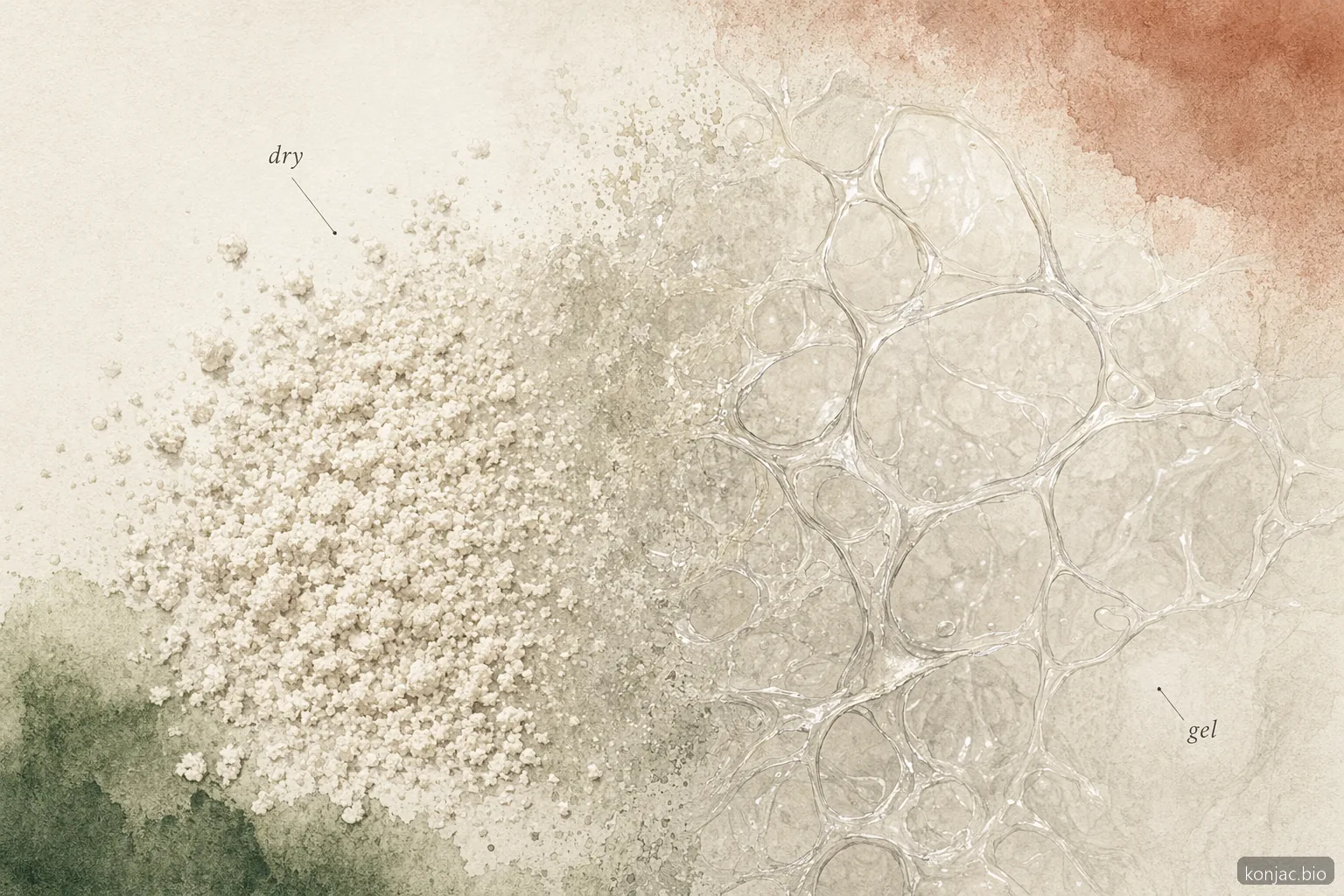
For consumers, the difference between forms is practical. Shirataki noodles are mostly water held in a konjac gel network. Konjac rice uses a similar concept in grain-like pieces. Glucomannan capsules and powders deliver a measured fiber dose without changing the meal itself.
For weight management, that distinction matters because the effective studied dose is easier to control with glucomannan powder or capsules than with noodles or jelly. A plate of shirataki noodles can help lower meal calories, but it may not supply the 1 g pre-meal glucomannan dose used for the EU claim unless the label states the fiber amount clearly.
- Konjac flour: broader ingredient from dried konjac corm, used in noodles, rice, gels, and sauces.
- Glucomannan powder: purified or standardized fiber ingredient, often used in capsules and functional foods.
- Konjac gum: food additive name used for thickening, gelling, and texture control.
- Shirataki: ready-to-eat gel food made from konjac flour, water, and alkaline setting agents.
For ingredient buyers and private-label teams, konjac.bio can help with wholesale konjac flour, glucomannan powder, shirataki, konjac rice, and OEM formats. Send sourcing details through our contact page for specification, MOQ, and packaging discussions.
How should you take konjac for weight loss safely?
You should take konjac for weight loss by following the studied glucomannan pattern: 1 g before each of three meals, with 1 to 2 glasses of water, within an energy-restricted diet.
The EU claim conditions are unusually specific. The authorized wording requires 3 g per day in three 1 g doses, and EFSA links the claimed effect to taking glucomannan with water before meals in the context of reduced energy intake through the EFSA opinion.
Water is not optional. Dry glucomannan expands quickly, and inadequate fluid can create a choking risk. The EU authorized conditions include a warning for people with swallowing difficulties and for intake with insufficient fluid, as shown in EU claims.
- Start low: begin with one 1 g dose before the largest meal for several days.
- Add water: drink 1 to 2 full glasses immediately with capsules or dispersed powder.
- Time it: take it before meals, not after a meal has already ended.
- Build consistency: move toward three daily doses only if digestion feels comfortable.
- Track response: log hunger, meal size, bowel comfort, and body weight trend weekly.
Powder should be mixed thoroughly and consumed before it thickens too much. Capsules should not be taken while lying down, and they should not be taken without water. Anyone with swallowing difficulty, gastrointestinal narrowing, or a history of blockage should seek individualized advice from a qualified clinician before using expanding fiber supplements.
Some people experience gas, bloating, softer stool, or abdominal fullness when increasing soluble fiber. These effects are more likely when the dose rises quickly or total daily fiber jumps suddenly. A slower ramp, more water, and attention to total fiber from beans, vegetables, psyllium, oats, and other sources can make the routine easier to tolerate.
| Timing | Typical glucomannan amount | Water | Purpose |
|---|---|---|---|
| Before breakfast | 1 g | 1 to 2 glasses | Pre-meal fullness support |
| Before lunch | 1 g | 1 to 2 glasses | Meal-size structure |
| Before dinner | 1 g | 1 to 2 glasses | Evening appetite support |
Is shirataki keto, and how does shirataki noodle keto eating work?
Shirataki is keto-friendly for many people because it is a konjac-based gel food that is mostly water and fiber, with very low digestible carbohydrate compared with wheat pasta.
A standard shirataki noodle keto meal works because the noodle contributes volume and chew while the sauce, protein, and vegetables carry most of the calories. Many shirataki products list very low calories and low net carbohydrates per serving, but labels vary by formulation, water content, and added ingredients. USDA FoodData Central lists nutrient data for foods including shirataki-style items through USDA FDC.
Shirataki keto meals can be useful because ketogenic diets often remove pasta, rice, and wheat noodles. A konjac noodle bowl can keep the familiar meal structure while reducing starch load. The most successful versions do not rely on noodles alone: they add eggs, tofu, fish, poultry, meat, tempeh, or another protein source plus fat and seasoning.
The texture improves with preparation. Rinse the noodles well, drain them, and dry-pan heat them for several minutes before adding sauce. This removes storage liquid aroma and helps the surface hold flavor. Acidic sauces, sesame oil, chili crisp, broth, curry, and garlic all pair well with the neutral gel texture.
| Meal goal | Higher-carb base | Konjac swap | Practical note |
|---|---|---|---|
| Keto ramen | Wheat ramen | Shirataki noodles | Use rich broth and protein for satiety |
| Keto stir-fry | Rice noodles | Shirataki strands | Dry-pan first to reduce excess water |
| Keto pasta | Semolina pasta | Konjac fettuccine style | Use thicker sauces that cling |
| Keto rice bowl | White rice | Konjac rice | Mix with cauliflower rice for texture |
Shirataki noodles are not nutritionally complete. They usually provide little protein, few micronutrients, and limited energy. A balanced keto plate should still include protein, non-starchy vegetables, sodium, potassium-rich foods where appropriate, and enough dietary fat to meet the chosen eating pattern.
For deeper cooking guidance, see the konjac.bio guides to konjac recipes and shirataki noodles. Those pages focus on rinsing, dry-roasting, sauce pairing, and meal formats rather than supplement dosing.
Food forms versus supplement forms
Konjac foods help replace higher-calorie staples, while glucomannan supplements provide the most controlled dose for the EFSA weight-management claim.
This difference is the core of practical konjac weight loss planning. If the goal is a lower-calorie lunch, shirataki noodles or konjac rice may be the simplest tool. If the goal is to follow the EU claim conditions precisely, a standardized glucomannan powder or capsule is easier to measure.
Konjac foods can also reduce diet fatigue. A person following keto may miss noodles, rice bowls, dumpling fillings, or jelly snacks. Konjac-based formats help preserve those meal habits while changing the calorie and carbohydrate profile. That can make a structured plan easier to repeat for weeks, which matters more than any single ingredient.
Supplements create different responsibilities. The label should state glucomannan per serving, suggested timing, allergen information, and warnings about taking with water. Capsules are convenient, but powders allow dose adjustment and can be stirred into water if used immediately before thickening.
| Form | Best for | Main limitation | Weight-loss role |
|---|---|---|---|
| Glucomannan capsules | Measured pre-meal dosing | Must be swallowed with plenty of water | Closest to EU claim conditions |
| Glucomannan powder | Flexible dosing and formulation | Thickens quickly in liquid | Useful for controlled fiber intake |
| Shirataki noodles | Keto pasta and noodle meals | Texture and aroma need preparation | Calorie displacement tool |
| Konjac rice | Bowls, fried rice, meal prep | Less starch-like than grain rice | Low-carb volume tool |
| Konjac jelly | Portioned snacks | May contain sugar or sweeteners | Snack substitution tool |
The best choice depends on the bottleneck. For large portions of pasta, start with shirataki. For rice-heavy dinners, start with konjac rice. For grazing between meals, examine konjac jelly labels. For a precise glucomannan weight loss routine, use a product that clearly states grams of glucomannan per serving.

Can konjac jelly support weight loss?
Konjac jelly can support weight loss only when it replaces a higher-calorie snack and fits the person's total daily calorie target.
Konjac jelly is not automatically low calorie. Some cups and pouches are sweetened with sugar, fruit syrup, or other carbohydrates, while others use non-sugar sweeteners. The label decides whether the snack is helpful for a calorie-restricted diet, not the word konjac on the package.
Konjac jelly weight loss claims should be read carefully. A jelly pouch may contain konjac gum for texture but only a small amount of glucomannan fiber. It may satisfy a sweet craving, but it usually does not match the measured 1 g pre-meal glucomannan pattern used in the EU claim unless the label states that amount.
Safety also deserves attention. Mini-cup gel candies containing konjac have been associated with choking risk because firm gels may not dissolve quickly, especially when sucked from small cups. The FDA has warned about mini-cup gel candies containing konjac gum through an FDA advisory.
- Check calories: compare the jelly with the snack it replaces.
- Check sugars: look at total carbohydrate, added sugar, and serving count.
- Check fiber: confirm whether glucomannan grams are listed.
- Check format: avoid risky mini-cup formats for children and vulnerable eaters.
- Check satiety: a sweet jelly may not replace a protein-rich snack for everyone.
Konjac jelly works best as a portion-controlled sweet option. It is less reliable as a fiber supplement, because many products are designed for texture and flavor rather than therapeutic-dose fiber delivery. For measured pre-meal glucomannan, use labeled powder or capsules and follow water instructions.
What does the evidence say about glucomannan for weight loss?
The evidence on glucomannan for weight loss is mixed: EFSA authorized a specific claim, while clinical trials and reviews show results depend on dose, timing, diet context, and study design.
The strongest positive regulatory position is European. EFSA reviewed human intervention data and considered a cause-and-effect relationship established for glucomannan and reduction of body weight under specific use conditions. The published EFSA Journal article is available from EFSA Journal.
US guidance is more cautious. The NIH Office of Dietary Supplements lists glucomannan among weight-loss supplement ingredients and describes evidence as limited, noting that some trials found modest effects while others did not through the NIH fact sheet. This difference does not mean the ingredient is useless. It means claims should be narrow, dose-specific, and tied to diet structure.
A practical evidence table helps separate the common search phrases. "Glucomannan for weight loss," "glucomannan and weight loss," and "glucomannan weight loss" all point to the same core question: does pre-meal soluble fiber help reduce energy intake enough to shift body weight over time?
| Phrase | Best evidence-based interpretation | Practical caution |
|---|---|---|
| Glucomannan for weight loss | Supported in the EU only under specific dose and diet conditions | Do not generalize to all konjac foods |
| Glucomannan and weight loss | Studied mainly as a pre-meal soluble fiber strategy | Results vary across trials |
| Weight loss with glucomannan | Most plausible when calories are reduced and timing is consistent | Water intake and swallowing safety are essential |
| Konjac and weight loss | Broader phrase covering foods, supplements, and snacks | Food labels differ widely |
Mechanistically, glucomannan may support fullness because it forms viscous solutions and slows gastric emptying in some contexts. Those mechanisms are plausible, but body weight changes still require repeated calorie balance over time. A high-calorie sauce over konjac noodles can erase the calorie advantage of the noodle base.
For a 4 to 12 week self-check, track three numbers: body weight trend, average daily calories or meal pattern adherence, and glucomannan timing. If those numbers do not change, adding more konjac is unlikely to solve the problem by itself.

A practical 7-day konjac keto and weight-management plan
A practical konjac plan uses glucomannan before meals if appropriate, then uses shirataki, konjac rice, or konjac jelly to make lower-calorie meals easier to repeat.
The plan below is not a prescribed diet. It is a structure for people who already choose keto or low-carb eating and want a repeatable way to use konjac foods. People with medical conditions, pregnancy, swallowing concerns, or complex medication schedules should get individualized guidance from a qualified professional before adding expanding fiber supplements.
- Day 1: rinse and dry-pan shirataki noodles, then pair with chicken, tofu, or eggs and a low-sugar sauce.
- Day 2: replace half or all rice in a bowl with konjac rice, then add protein and vegetables.
- Day 3: try one 1 g glucomannan dose before the largest meal with 1 to 2 glasses of water.
- Day 4: build a keto noodle soup with broth, greens, protein, and shirataki.
- Day 5: use konjac jelly only if its calories and sugars fit the snack budget.
- Day 6: repeat the best meal from the week and record hunger for 3 hours after eating.
- Day 7: review weight trend, digestion, adherence, and whether the meals were satisfying.
Meal design matters more than novelty. A good konjac keto meal has four parts: a low-carb konjac base, enough protein, flavorful fat or sauce, and a vegetable or broth component for micronutrients and volume. Without protein, a large bowl of noodles may feel filling at first but leave hunger later.
For people asking how to take glucomannan for weight loss, the supplement routine should stay separate from the cooking routine. Do not assume that eating shirataki equals taking a 1 g glucomannan dose. Use the supplement label for grams, the meal label for calories and carbohydrates, and the weekly trend for results.
Repeatable meals beat complicated menus. A person can rotate three core formats: shirataki stir-fry, konjac rice bowl, and broth-based noodle soup. Add a measured glucomannan routine only if the water requirement, timing, and digestive response are manageable.
| Goal | Konjac tool | What to measure |
|---|---|---|
| Lower pasta calories | Shirataki noodles | Sauce calories and protein grams |
| Lower rice carbohydrates | Konjac rice | Total net carbs per meal |
| Reduce snack calories | Konjac jelly | Calories, sugars, and portion count |
| Follow EFSA-style dosing | Glucomannan powder or capsules | 1 g dose, three times daily, with water |
Who should be cautious with konjac and glucomannan?
People with swallowing difficulties, gastrointestinal narrowing, prior blockage, or difficulty drinking enough water should be cautious with konjac supplements, especially dry capsules and powders.
The main supplement risk is physical expansion. Glucomannan absorbs water and thickens quickly, which is useful in food texture but risky if a dry dose sticks in the throat or is taken with too little fluid. EU claim conditions specifically require a warning for people with swallowing difficulties or inadequate fluid intake through EU Regulation.
Konjac foods have different safety considerations. Shirataki noodles and konjac rice are hydrated foods, so the dry-expansion risk is lower than with capsules. Mini-cup jelly candies are a separate concern because their firm gel shape can pose a choking hazard, and the FDA has issued warnings on konjac-containing mini-cup gels through the FDA notice.
Fiber can also affect timing with oral medications or supplements because viscous fibers may alter absorption conditions in the gut. A conservative approach is to separate glucomannan from medicines and mineral supplements by at least 2 hours unless a qualified professional gives different instructions.
- Avoid dry swallowing: never take glucomannan capsules without water.
- Use upright posture: take supplements while sitting or standing.
- Separate timing: leave a gap from medicines and supplements when appropriate.
- Increase slowly: sudden fiber increases can cause bloating or stool changes.
- Choose age-appropriate formats: avoid risky gel-candy formats for children.
Diet quality remains central. If konjac replaces vegetables, protein, or nutrient-dense foods, the plan becomes weaker. If konjac replaces high-calorie starches or sweets while the rest of the diet improves, it becomes a useful tool.
Frequently asked questions
01 Is konjac for weight loss backed by evidence?
02 How do I take glucomannan for weight loss?
03 Are shirataki noodles keto?
04 Does eating shirataki equal taking glucomannan supplements?
05 Can konjac jelly help with weight loss?
06 What is better for weight loss: konjac rice or shirataki noodles?
07 Can I use konjac on a low-carb diet without doing keto?
08 What side effects can glucomannan cause?
09 How long does konjac take to affect body weight?
- Scientific Opinion on the substantiation of health claims related to konjac mannan and reduction of body weight · EFSA Journal · 2010
- Commission Regulation (EU) No 432/2012 establishing a list of permitted health claims · European Union · 2012
- Dietary Supplements for Weight Loss: Fact Sheet for Health Professionals · NIH Office of Dietary Supplements · 2024
- Safety and efficacy of glucomannan for weight loss in overweight and moderately obese adults · PubMed · 2013
- Mini-Cup Gel Candies Containing Konjac Gum · U.S. Food and Drug Administration · 2001
- Food additive details for konjac gum · JECFA · 2024