What does the evidence say about glucomannan and cholesterol?
The evidence says glucomannan may support normal cholesterol levels, especially total cholesterol and LDL cholesterol, when used at studied daily intakes. EFSA’s authorized wording is specific: “Glucomannan contributes to the maintenance of normal blood cholesterol levels,” and the condition of use is 4 g glucomannan per day from foods that meet the requirement in the EU authorized claims list EU claims.
Glucomannan is the main soluble fiber in konjac, derived from the corm of Amorphophallus konjac. EFSA reviewed konjac mannan, also called glucomannan, and concluded that a cause and effect relationship had been established for maintaining normal blood cholesterol concentrations under the specified intake condition EFSA opinion.
A systematic review and meta-analysis published in the American Journal of Clinical Nutrition evaluated randomized controlled trials of glucomannan and reported reductions in total cholesterol and LDL cholesterol versus control groups PubMed review. The same review examined other markers, including triglycerides, body weight, fasting glucose, and blood pressure, but the cholesterol signal is the most relevant for this page.
For shoppers, the practical takeaway is narrow but useful: glucomannan is not a standalone solution. It is a soluble fiber ingredient with authorized wording in the EU, studied effects on lipid markers, and best use inside a broader diet pattern that includes vegetables, legumes, oats, nuts, and limited saturated fat.
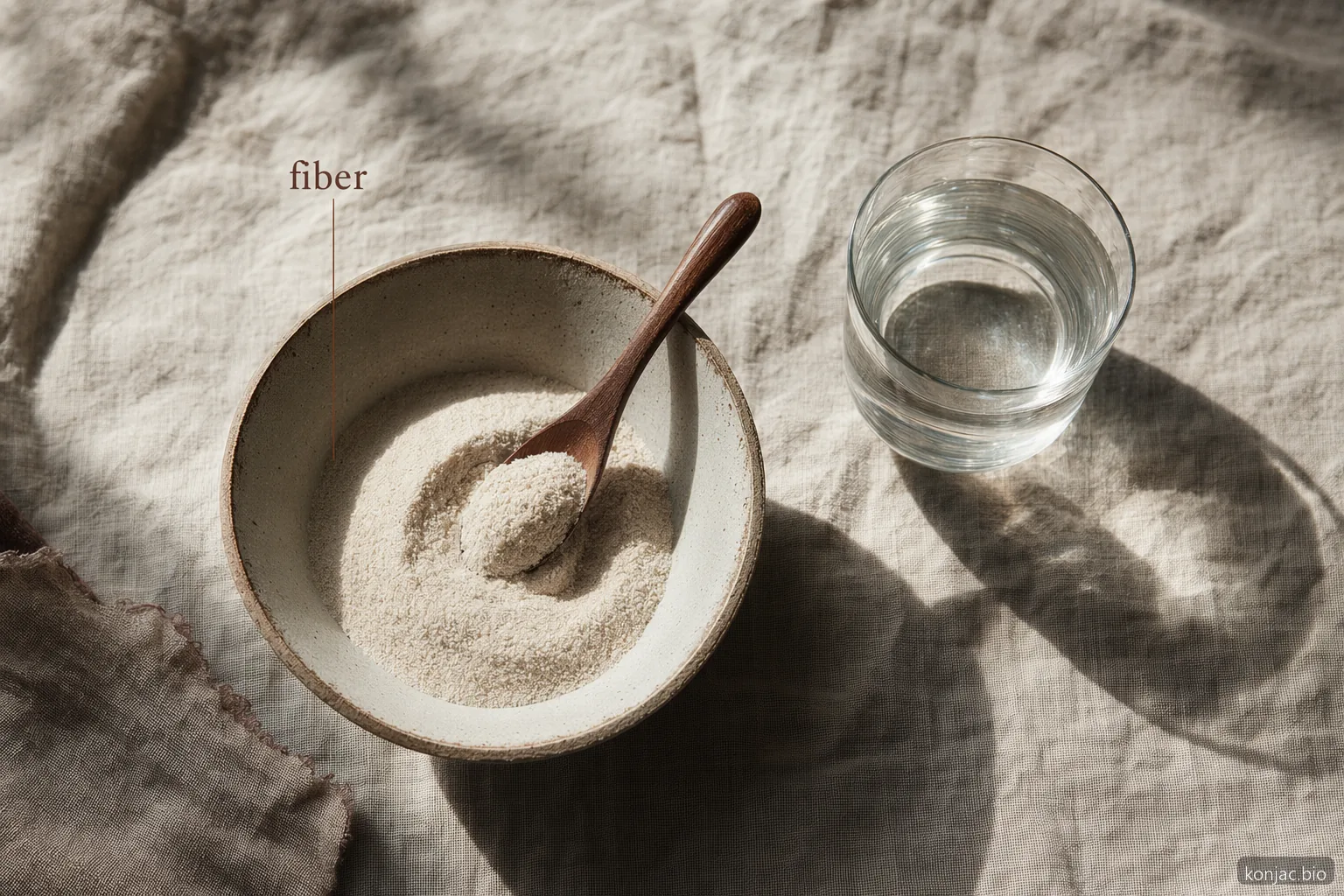
How much glucomannan is used for cholesterol support?
The EU condition for the authorized cholesterol claim is 4 g of glucomannan per day. That 4 g daily amount applies to foods carrying the claim “Glucomannan contributes to the maintenance of normal blood cholesterol levels” under Commission Regulation (EU) No 432/2012 EU regulation.
Many consumer products divide the daily amount into smaller servings. A practical pattern is 1 g to 2 g with meals, repeated across the day, because glucomannan thickens strongly in water and is easier to consume in split servings.
| Use case | Daily glucomannan target | Practical format |
|---|---|---|
| EU cholesterol claim | 4 g per day | Food or ingredient system meeting claim conditions |
| Meal pairing | 1 g to 2 g per meal | Hydrated powder, beverage, gel, noodle, or blend |
| Label planning | Match local rules | Verify serving size, warnings, and claim wording |
Hydration matters because glucomannan can absorb water and form a viscous gel. The NIH Office of Dietary Supplements describes glucomannan as a soluble dietary fiber from konjac root that can absorb water, a property relevant to satiety products and fiber formulations NIH ODS.
Consumers comparing capsules, powders, and foods should check the actual grams of glucomannan per serving, not just the grams of total product. A 2 g powder serving may not always equal 2 g glucomannan if it contains flavors, acids, sweeteners, minerals, or other fibers.
How glucomannan works in the gut
Glucomannan works mainly through viscosity, water binding, and fermentation by gut microbes. It is a soluble fiber, so it hydrates into a thick gel that can change the physical environment of the meal in the digestive tract.
High-viscosity soluble fibers are associated with reductions in LDL cholesterol because they can influence bile acid handling and cholesterol metabolism. Reviews of soluble fiber mechanisms describe bile acid binding, increased fecal bile acid loss, and microbial fermentation into short-chain fatty acids as plausible pathways fiber mechanisms.
Glucomannan’s gel-forming behavior also explains why format matters. A hydrated beverage, gel, or properly prepared food is different from a dry powder swallowed without enough fluid. The same physical property that makes glucomannan useful in food texture also creates a safety need for adequate water.
Konjac foods vary widely. Shirataki noodles are mostly water and typically provide less concentrated glucomannan per serving than purified powder, while konjac flour or standardized glucomannan powder can deliver measured grams in smaller serving sizes. For a broader evidence map, see the parent guide, Glucomannan and Cholesterol: The Research.

What should formulators know about glucomannan and cholesterol products?
Formulators should know that glucomannan and cholesterol positioning depends on dose, hydration, viscosity, label wording, and market rules. A product can only support a compliant cholesterol message when the finished serving plan delivers the required glucomannan amount and uses allowed wording for the target region.
In the EU, the cholesterol wording and 4 g daily condition are defined in the authorized health claims list claim rules. In the United States, structure-function language and dietary fiber declarations require separate regulatory review, so brands should verify claims with qualified labeling counsel before launch.
Key formulation variables include:
- Purity: Specify glucomannan content, not only “konjac powder.”
- Viscosity: Confirm viscosity grade because mouthfeel, satiety texture, and process behavior vary.
- Hydration: Build in water, mixing time, or preparation instructions.
- Serving size: Make the gram amount easy to understand on pack.
- Warnings: Avoid formats that invite dry swallowing or poor hydration.
For B2B buyers, konjac.bio sources konjac ingredients at wholesale for food, beverage, and supplement-style applications, and teams can request specifications through contact.
Food teams comparing formats can also review sibling guides on glucomannan dosage and shirataki noodles for serving-size planning.
Safety, labeling, and realistic expectations
Glucomannan is a food fiber, but its swelling behavior requires practical safety controls. Dry powder or tablets taken without enough liquid may expand before reaching the stomach, so products should provide clear preparation instructions and consumers should follow label directions.
Konjac safety concerns are format-specific. The FDA has warned consumers about mini-cup jelly products containing konjac because of choking risk, especially when the gel is firm and designed as a single-bite product FDA warning. That warning is about a product format, not a broad rejection of konjac as a food ingredient.
Expectations should stay evidence-based. Glucomannan may support normal cholesterol as part of a diet pattern, but cholesterol numbers are influenced by genetics, saturated fat intake, body weight, physical activity, alcohol intake, age, and prescribed clinical care. People using cholesterol-lowering prescriptions should ask a qualified clinician before changing fiber intake substantially, because high-viscosity fibers can affect timing and absorption of some oral products.
A useful consumer checklist is simple: measure grams, hydrate fully, start with a modest amount, pair with meals, and track the whole diet rather than one ingredient. Those steps keep glucomannan practical, repeatable, and aligned with the evidence.
Frequently asked questions
01 Does glucomannan lower cholesterol?
02 How much glucomannan should be used for cholesterol?
03 Is konjac the same as glucomannan?
04 Are shirataki noodles enough for a cholesterol claim?
05 Can glucomannan be taken with other fiber foods?
06 What is the main safety concern with glucomannan?
- Commission Regulation (EU) No 432/2012 establishing a list of permitted health claims made on foods · European Union · 2012
- Scientific Opinion on the substantiation of health claims related to konjac mannan (glucomannan) · EFSA Journal · 2010
- Effect of glucomannan on plasma lipid and glucose concentrations, body weight, and blood pressure · PubMed · 2008
- Dietary Supplements for Weight Loss: Fact Sheet for Health Professionals · NIH Office of Dietary Supplements · 2022
- FDA Warns Consumers Not to Eat Mini-Cup Jelly Products Containing Konjac · U.S. Food and Drug Administration · 2001