What is the amorphophallus konjac voodoo lily?
The amorphophallus konjac voodoo lily is the plant species Amorphophallus konjac, a tuberous aroid in the Araceae family.
The accepted botanical name is Amorphophallus konjac K.Koch, and Kew lists it as a distinct accepted species [Kew taxonomy](https://powo.science.kew.org/taxon/urn:lsid:ipni.org:names:84425-1). The common name "voodoo lily" is informal and can be confusing because gardeners use it for several Amorphophallus and related aroid species.
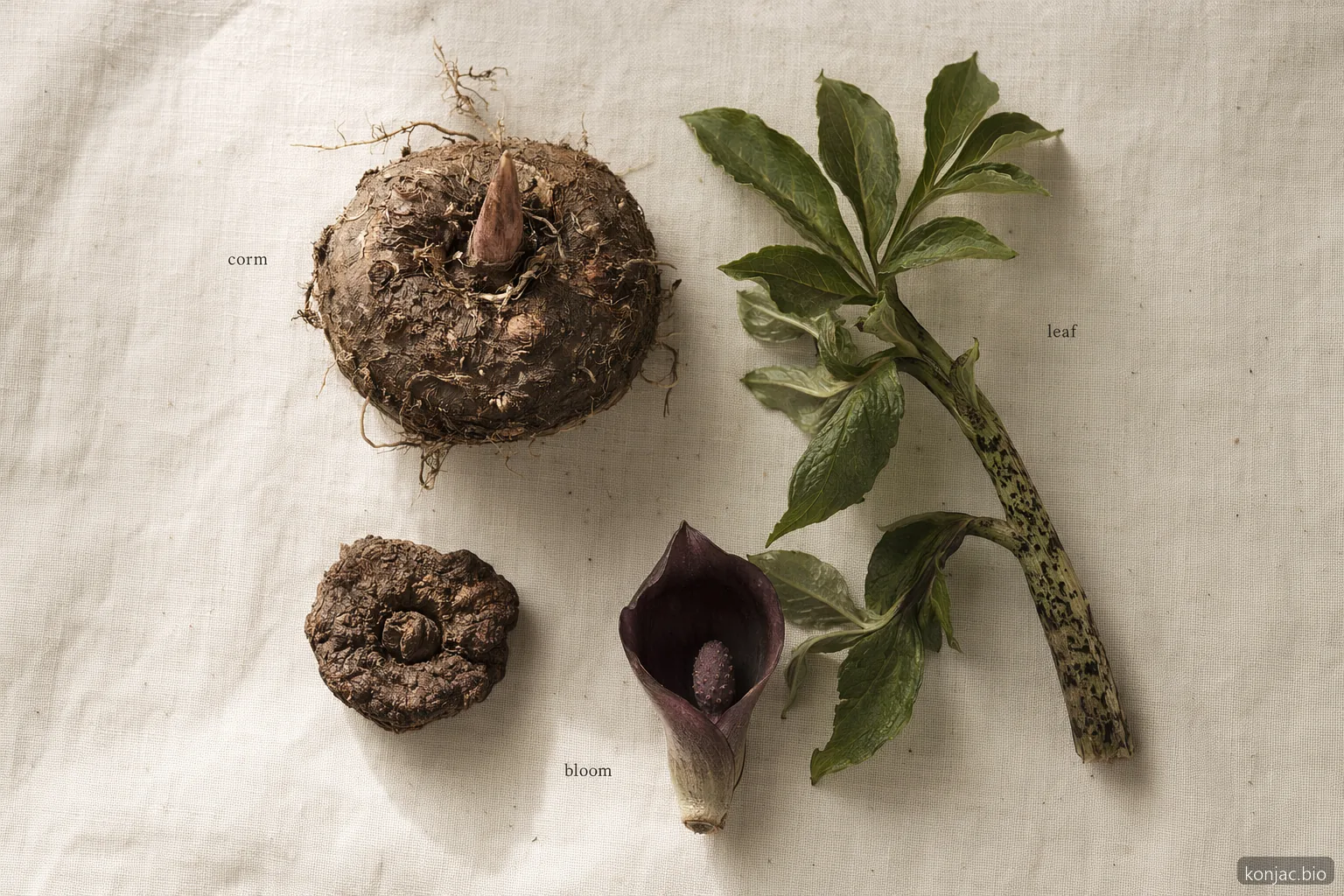
For food and ingredient supply, the important organ is the corm. The corm stores carbohydrates underground, then sends up either one umbrella-like leaf or one inflorescence depending on plant age, stored reserves, and seasonal conditions.
| Feature | What it means |
|---|---|
| Botanical name | Amorphophallus konjac K.Koch |
| Family | Araceae, the aroid family |
| Main crop part | Underground corm |
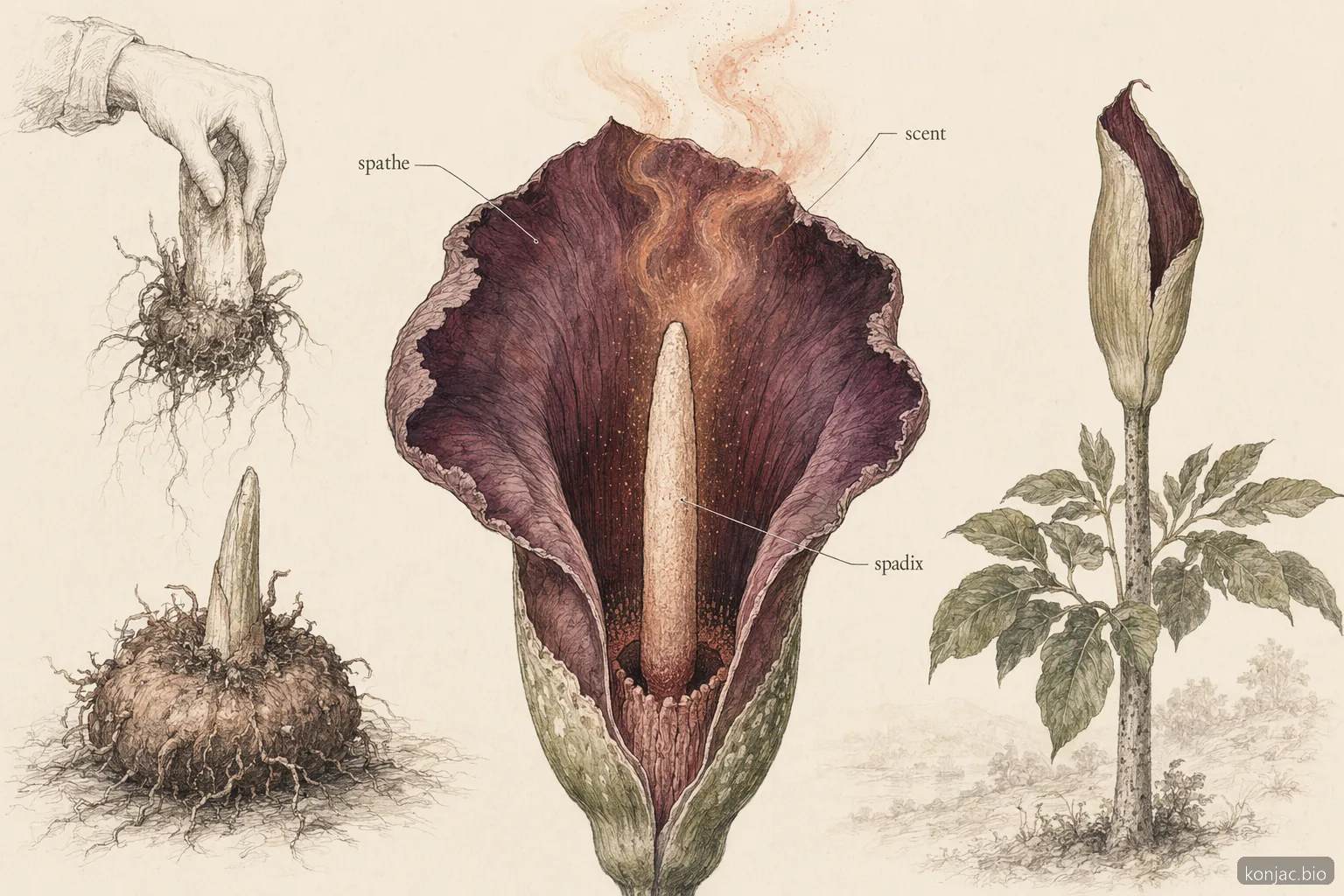
| Visible flower structure | Spathe surrounding a central spadix |
| Common names | Konjac, konjaku, voodoo lily, elephant yam in some markets |
China is a major center of botanical record for the species, and Flora of China describes Amorphophallus konjac with a large depressed-globose tuber, spotted petiole, and purple-brown spathe [Flora China](https://www.efloras.org/florataxon.aspx?flora_id=2&taxon_id=200027172).
Why does the amorphophallus konjac voodoo lily smell?
The amorphophallus konjac voodoo lily smells because its inflorescence releases a carrion-like odor that helps attract pollinating insects.
The odor is strongest when the spathe opens and the spadix becomes active. Gardeners often describe it as rotting meat, which is why the plant is grouped culturally with other carrion-scented aroids.
The smell is temporary, usually most noticeable around the first opening period rather than throughout the whole growing season. The plant spends much more time as a single large leaf than as a flowering display.
North Carolina State Extension notes that Amorphophallus konjac has a foul-smelling flower and is commonly grown as an unusual ornamental in suitable gardens [NC State](https://plants.ces.ncsu.edu/plants/amorphophallus-konjac/). The odor does not mean the corm is spoiled, and it is not the same as post-harvest rot in stored konjac corms.
- Odor source: the inflorescence, not the leaf.
- Timing: concentrated around bloom opening.
- Function: attraction of carrion-associated pollinators.
- Commercial relevance: flowering diverts stored corm energy from vegetative growth.
Growth cycle: corm, leaf, dormancy, and flower
Amorphophallus konjac grows as a seasonal corm plant, alternating between active growth and dormancy. In cultivation, the crop value depends on how efficiently each season increases corm mass.
The cycle has four practical stages:
- Dormant corm: the underground corm rests during the cool or dry period.
- Bud break: a shoot emerges when temperature and moisture become favorable.
- Leaf stage: one large divided leaf captures light and feeds corm expansion.
- Senescence: the leaf collapses, and the corm enters storage again.
Mature corms may flower before leaf emergence. Flora of China records a large inflorescence with a spathe and spadix, which is typical of aroids in the genus Amorphophallus [Flora China](https://www.efloras.org/florataxon.aspx?flora_id=2&taxon_id=200027172).
For production planning, the key point is that the crop is not an annual seed crop. Growers manage planting material, corm size, daughter corms, drainage, and post-harvest storage across multiple seasons. A small corm may need several cycles before it reaches processing size.
The corm-focused biology connects this ornamental name to ingredient supply. For a deeper corm and starch breakdown, see konjac corm development.
How is the amorphophallus konjac voodoo lily cultivated?
The amorphophallus konjac voodoo lily is cultivated by planting healthy corms in warm, well-drained, organic-rich soil with partial shade and protection from prolonged freezing.
In garden references, Amorphophallus konjac is commonly associated with part shade, moist but well-drained soil, and winter protection in colder climates [NC State](https://plants.ces.ncsu.edu/plants/amorphophallus-konjac/). Commercial cultivation applies the same biological logic at field scale: keep corms growing steadily, avoid waterlogging, and reduce mechanical bruising during harvest.
| Cultivation factor | Practical target |
|---|---|
| Planting material | Firm, intact corms with visible buds |
| Soil texture | Loose, draining soil that does not stay saturated |
| Light | Filtered light or partial shade in hot regions |
| Moisture | Even moisture during leaf growth, drier storage in dormancy |
| Harvest | After leaf senescence when corm reserves are concentrated |
Waterlogging is a major operational risk because the corm is a storage organ. Standing water raises the chance of soft breakdown, especially when corms are bruised, planted too deeply in heavy soil, or stored without airflow.
Temperature management also matters. The leaf canopy is frost-sensitive, while dormant corms can tolerate cooler storage only when kept dry and protected from freeze damage. For regional agronomy detail, see konjac growing conditions.
Why the voodoo lily matters to konjac supply
The voodoo lily name matters because it connects a striking garden plant to a high-value food ingredient crop. The same species that produces a purple carrion-scented inflorescence also produces the corm used for konjac flour and glucomannan.
EFSA evaluated glucomannan from konjac and authorized the claim: "Glucomannan in the context of an energy restricted diet contributes to weight loss" [EFSA opinion](https://www.efsa.europa.eu/en/efsajournal/pub/1798). That regulatory language applies to glucomannan under specified conditions, not to the ornamental flower or raw garden corm.
Supply quality begins before processing. Corm age, variety, growing site, harvest timing, drying method, and storage conditions influence the consistency of flour made later in the chain. A visually impressive flower is less important to processors than corm weight, cleanliness, dryness, and traceable origin.
For B2B buyers, konjac.bio sources konjac ingredients at wholesale scale and supports product teams comparing grade, origin, and application fit. To discuss supply requirements, use the wholesale contact form.
The parent crop guide at konjac cultivation explains how botany, history, and farming systems fit together across the wider konjac supply chain.
Frequently asked questions
01 Is amorphophallus konjac voodoo lily the same as konjac?
02 Why is Amorphophallus konjac called voodoo lily?
03 Does the voodoo lily flower mean the konjac corm is ready to harvest?
04 Can Amorphophallus konjac grow outside its Asian production regions?
05 Which part of the amorphophallus konjac voodoo lily is used for konjac flour?
- Amorphophallus konjac K.Koch · Royal Botanic Gardens, Kew · 2025
- Amorphophallus konjac · Flora of China via eFloras · 2010
- Amorphophallus konjac · North Carolina State Extension · 2024
- Scientific Opinion on the substantiation of health claims related to konjac mannan (glucomannan) · European Food Safety Authority · 2010