What is konjac flour pasta?
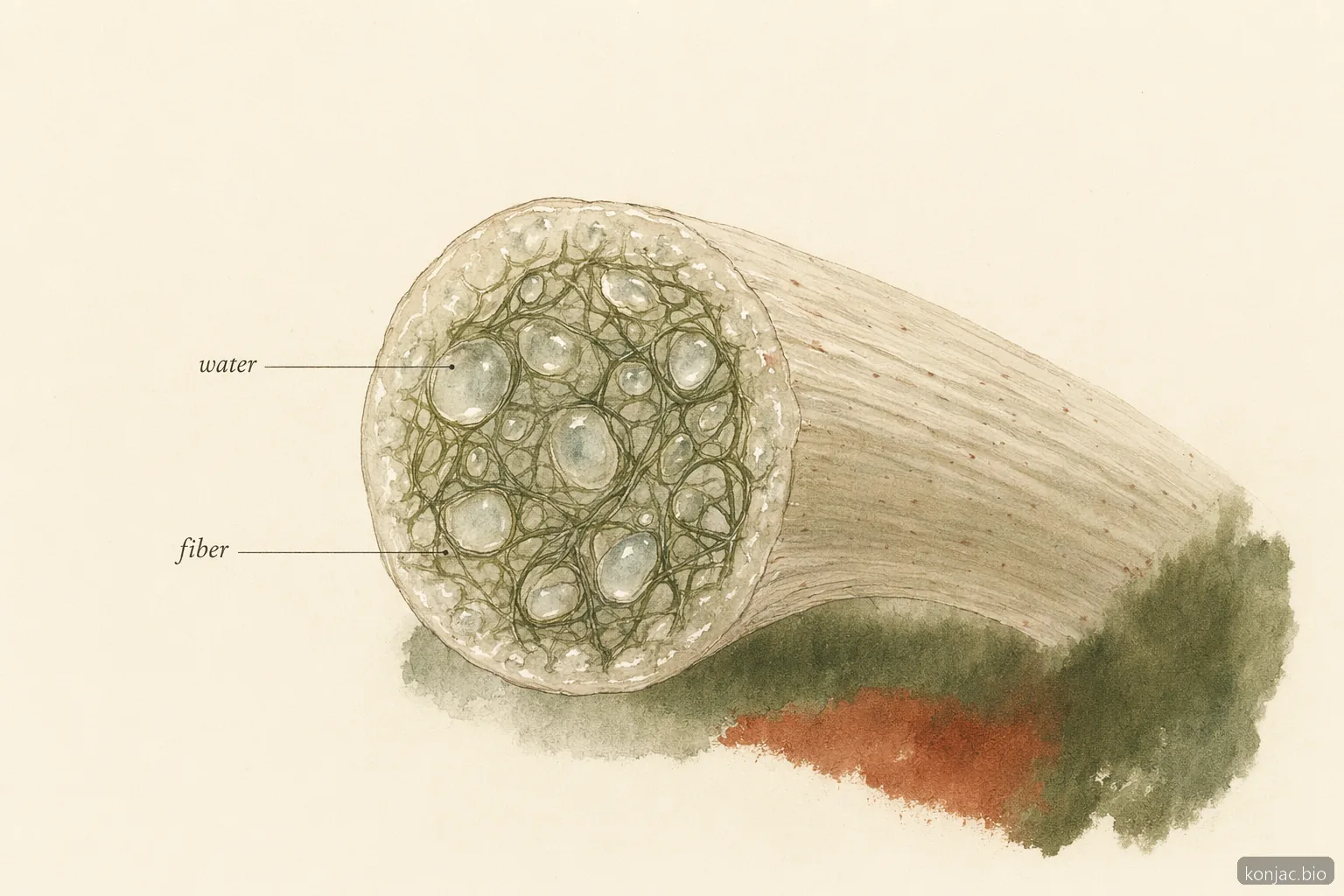
Konjac flour pasta is a gel noodle made from konjac flour, water, and a food-safe alkaline setting agent such as calcium hydroxide. The functional fiber is glucomannan, a soluble polysaccharide from Amorphophallus konjac, a plant entity listed in NCBI taxonomy.
Unlike durum wheat pasta, konjac flour pasta does not rely on gluten or starch gelatinization for structure. Its bite comes from hydrated glucomannan forming a firm, elastic gel after alkaline setting. That is why the texture is springy, slippery, and resilient rather than chewy in the wheat-pasta sense.
| Feature | Konjac flour pasta | Wheat pasta |
|---|---|---|
| Main structure | Glucomannan gel | Gluten and starch |
| Typical digestible carbs | Very low | High |
| Cooking need | Rinse, heat, sauce | Boil to hydrate starch |
| Texture | Springy, firm, slippery | Chewy, tender, starchy |
Commercial formats include spaghetti strands, flat ribbons, angel-hair cuts, rice-like granules, lasagna sheets, and mixed formulations with oat fiber, soy fiber, or vegetable powders. For the broader ingredient background, see konjac flour.
How is konjac flour pasta made from konjac flour?
Konjac flour pasta is made by dispersing konjac flour into water, allowing glucomannan to hydrate, adding an alkaline setting agent, then shaping and heat-setting the gel. The exact process varies by factory, but the core sequence is consistent across shirataki-style products.
- Hydration: Konjac flour is mixed into water under shear to limit clumping and build viscosity.
- Resting: The slurry sits long enough for glucomannan to fully hydrate and thicken.
- Alkaline setting: Calcium hydroxide or another approved alkaline ingredient raises pH and strengthens gel formation.
- Shaping: The gel is extruded into strands, cut into rice shapes, or cast into sheets.
- Heat setting and packing: The formed pasta is heated, cooled, and packed in water or a lightly alkaline holding liquid.
For manufacturers, the most important controls are particle size, hydration time, shear rate, pH, and gel strength. Fine konjac flour hydrates faster but can clump if dumped into water too quickly. Coarser grades disperse more easily but may need longer rest time before extrusion.
Ingredient declarations are usually short: water, konjac flour, and calcium hydroxide. Some products add seaweed powder, vegetable color, oat fiber, or soy fiber to adjust color, opacity, bite, or consumer familiarity.
Konjac flour pasta nutrition and label considerations
Konjac flour pasta is typically positioned around low calories, high water content, low digestible carbohydrate, and soluble fiber. Actual nutrition depends on serving size, drained weight, added fibers, sauces, and whether the product is plain konjac or a blended pasta.
For U.S. labels, dietary fiber context matters because the Daily Value is 28 g on a 2,000-calorie diet under the updated Nutrition Facts framework from FDA labeling. A plain konjac pasta serving may contribute fiber, but it should not be positioned as nutritionally equivalent to legume pasta, whole-wheat pasta, or egg noodles.
| Label item | What to verify |
|---|---|
| Serving size | Drained weight versus packed weight |
| Calories | Usually low, but added ingredients can change totals |
| Total carbohydrate | Separate fiber from sugars and starches |
| Fiber claim | Confirm analytical values and regional rules |
| Allergens | Plain konjac is simple, blends may add soy or wheat |
Glucomannan has an authorized European claim with strict wording: “Glucomannan in the context of an energy restricted diet contributes to weight loss,” as described in the EFSA claim. EFSA also links the condition of use to 3 g of glucomannan daily in three 1 g doses with water before meals, within an energy-restricted diet.
Konjac flour pasta may support satiety for some consumers because viscous fibers slow gastric emptying and increase meal volume. A systematic review indexed in PubMed review evaluated konjac glucomannan and reported associations with body weight, lipid, and glucose markers, but product copy should stay conservative and region-specific.
How should konjac flour pasta be cooked for better texture?
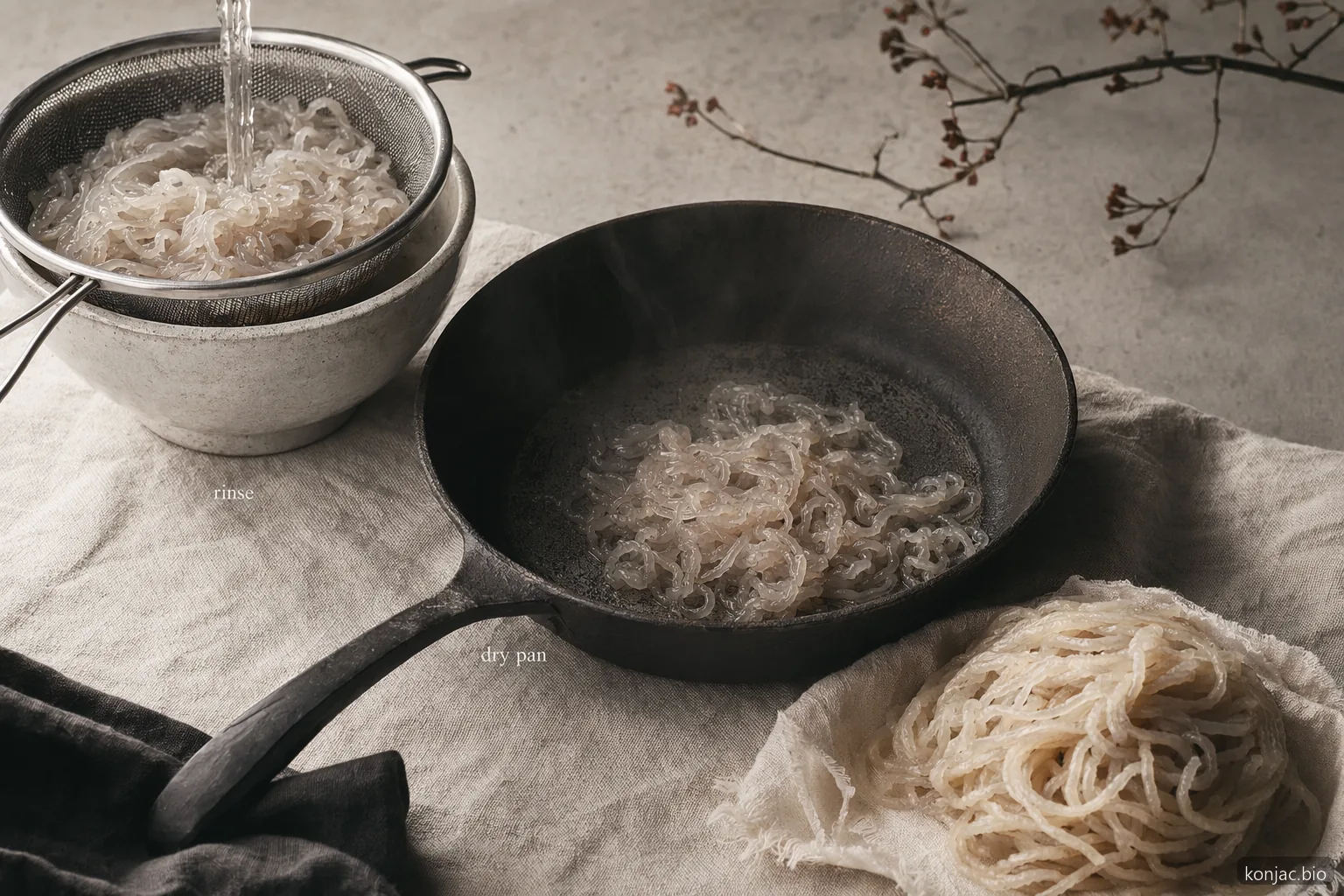
Konjac flour pasta should be rinsed, drained, heated in a dry pan, then finished in a strongly flavored sauce. This method reduces pack-liquid aroma, removes surface water, and helps sauce cling to the gel surface.
A practical home or foodservice workflow is simple:
- Open and drain: Pour off the packing liquid.
- Rinse for 20 to 30 seconds: Use cool running water to remove surface aroma.
- Dry-pan heat for 2 to 4 minutes: Stir until steam drops and strands squeak slightly.
- Add sauce last: Simmer briefly with thick sauces, broths, curries, or stir-fry bases.
Texture expectations should be clear. Konjac flour pasta will not absorb sauce like wheat pasta because it contains little starch. It performs best with coatings and reductions: tomato paste sauces, sesame dressings, peanut sauces, miso broths, coconut curry, chili oil, or pan sauces with emulsified fat.
| Problem | Likely cause | Fix |
|---|---|---|
| Watery plate | Pasta not dry-heated | Pan heat before saucing |
| Rubbery bite | Gel too firm or over-reduced | Use broth-based sauces |
| Weak flavor | Sauce too thin | Use concentrated seasonings |
| Pack aroma | Alkaline holding liquid | Rinse thoroughly |
Where konjac flour pasta fits in product development
Konjac flour pasta fits best in product lines built around low-calorie meals, reduced-carbohydrate bowls, high-fiber noodle kits, ready-to-heat sauces, and shelf-stable ambient packs. Its strengths are volume, neutral taste, short ingredient lists, and compatibility with Asian, Italian-style, and fusion flavor systems.
Product teams should decide whether the goal is a pure konjac noodle or a hybrid pasta. Pure konjac gives the lowest calorie and carbohydrate profile. Hybrid systems can improve bite, opacity, and consumer familiarity, but they may raise calories, add allergens, or change claims.
| Development choice | Why it matters |
|---|---|
| Pure konjac | Lowest calorie target and simplest ingredient list |
| Fiber blend | More opacity and softer bite |
| Vegetable color | Better visual fit for spinach, carrot, or tomato styles |
| Ambient pack | Longer distribution window, more pack-liquid management |
| Ready meal | Higher flavor control and better consumer experience |
For ingredient planning, review related guidance on shirataki noodles and glucomannan powder. Konjac.bio sources konjac ingredients at wholesale for product teams, importers, and food manufacturers. For specifications, volumes, and pricing, contact us at /contact/.
Quality documentation should match the market. Common buyer requests include certificate of analysis, microbial limits, heavy metal results, allergen statement, country of origin, mesh size, viscosity range, and food safety certification such as ISO 22000 or FSSC 22000 where available.
Frequently asked questions
01 Is konjac flour pasta the same as shirataki noodles?
02 Does konjac flour pasta taste like wheat pasta?
03 Is konjac flour pasta low in carbohydrates?
04 Can konjac flour pasta support weight-management goals?
05 Why does konjac flour pasta smell when opened?
06 What should food manufacturers check before sourcing konjac flour for pasta?
- Scientific Opinion on the substantiation of health claims related to konjac mannan · European Food Safety Authority · 2010
- Daily Value on the New Nutrition and Supplement Facts Labels · U.S. Food and Drug Administration · 2024
- Fiber Fact Sheet for Health Professionals · National Institutes of Health Office of Dietary Supplements · 2022
- Effect of konjac glucomannan on plasma lipid and glucose concentrations, body weight, and blood pressure · PubMed · 2008
- Amorphophallus konjac taxonomy · National Center for Biotechnology Information · 2024