What is jelly.b drinkable konjac jelly?
jelly.b drinkable konjac jelly is a search phrase for a flavored, squeeze-pouch konjac jelly snack that people drink or slurp from flexible packaging. It belongs to the broader konjac jelly category, where the key texturizing ingredient is usually konjac flour or purified glucomannan from Amorphophallus konjac.
Konjac flour is valued because glucomannan hydrates into a viscous gel at low usage rates. In the United States, konjac flour is listed as a food ingredient under federal regulations, with specifications described in [eCFR rules](https://www.ecfr.gov/current/title-21/chapter-I/subchapter-B/part-184/subpart-B/section-184.1396).
The word “drinkable” can be misleading. These products are usually not thin drinks like juice or tea. They are semi-solid gels in pouches, often eaten cold, squeezed directly into the mouth, or spooned into a bowl.
Common label elements include:
- Konjac powder, konjac flour, or glucomannan
- Fruit flavor, juice concentrate, or acidulants such as citric acid
- High-intensity sweeteners or sugar alcohols in lower-sugar versions
- Water, stabilizers, colors, and preservatives depending on the SKU
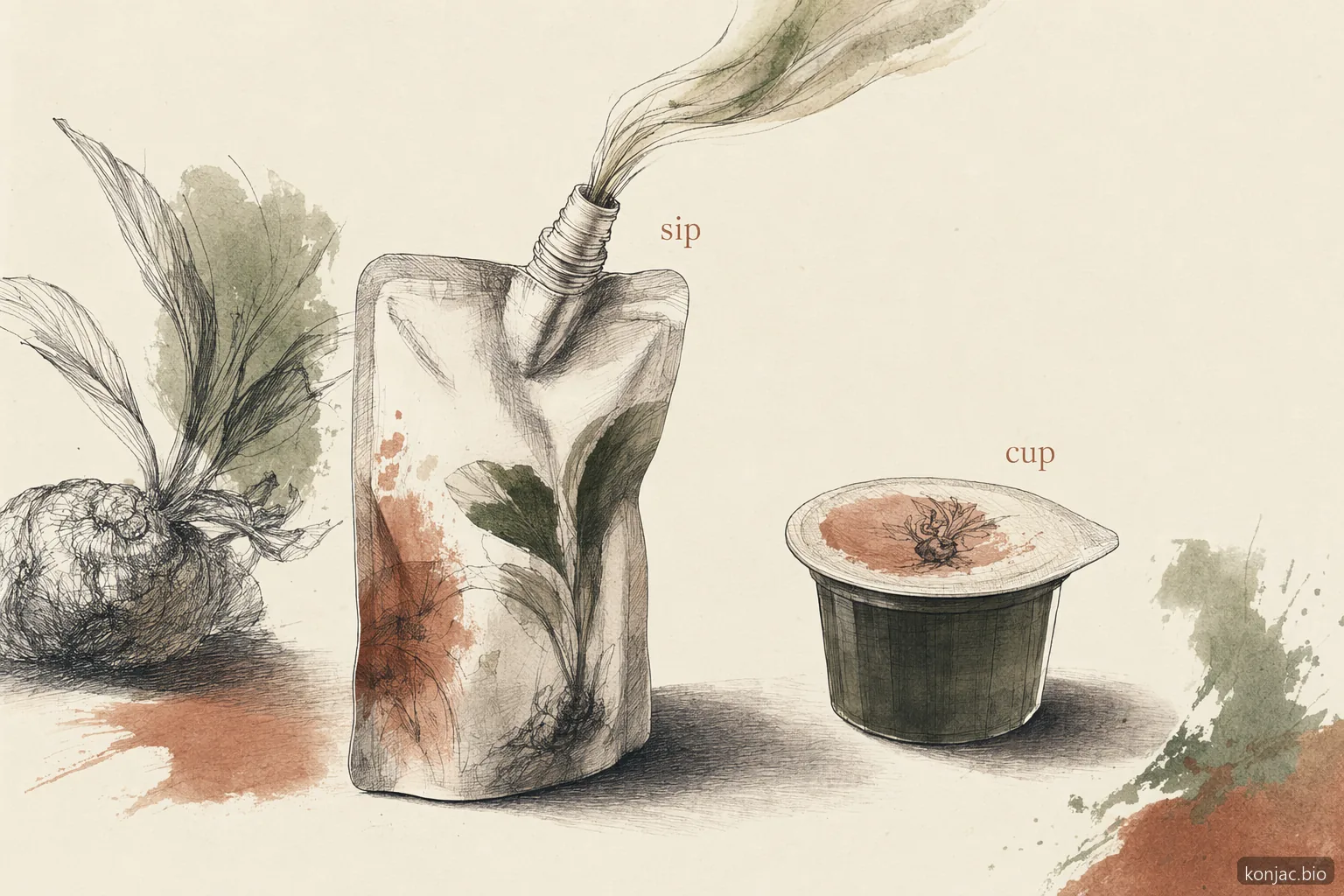
How does jelly.b drinkable konjac jelly compare with mini-cup jelly?
jelly.b drinkable konjac jelly usually differs from mini-cup jelly by package shape, gel flow, and eating behavior. A pouch can be squeezed gradually, while mini-cup jellies are small, firm units that may be swallowed whole if eaten carelessly.
The safety distinction matters because the FDA has warned about choking hazards linked to some konjac mini-cup gel candies, especially products that are firm, slippery, and bite-sized. The agency’s [konjac candy](https://www.fda.gov/food/information-consumers-using-dietary-supplements/konjac-candy) page focuses on mini-cup formats, not every konjac jelly format.
| Format | Typical package | Texture goal | Main buyer concern |
|---|---|---|---|
| Drinkable konjac jelly | Flexible pouch | Soft, squeezable gel | Calories, sweeteners, portion size |
| Mini-cup konjac jelly | Small cup | Firm bite-sized gel | Choking hazard, especially for children |
| Tray or dessert jelly | Cup, bowl, or tray | Spoonable gel | Sugar, serving size, storage |
Pouch packaging does not remove every practical caution. Any gel food can be risky if consumed too quickly, frozen into a hard shape, or given to a child without supervision. Labels may include age guidance, chewing instructions, or warnings to squeeze the gel into smaller portions.
For calorie-focused shoppers, a pouch is also easier to portion than a family-size dessert. For a deeper nutrition breakdown by serving style, see konjac jelly calories.
What should you check on a drinkable konjac jelly label?
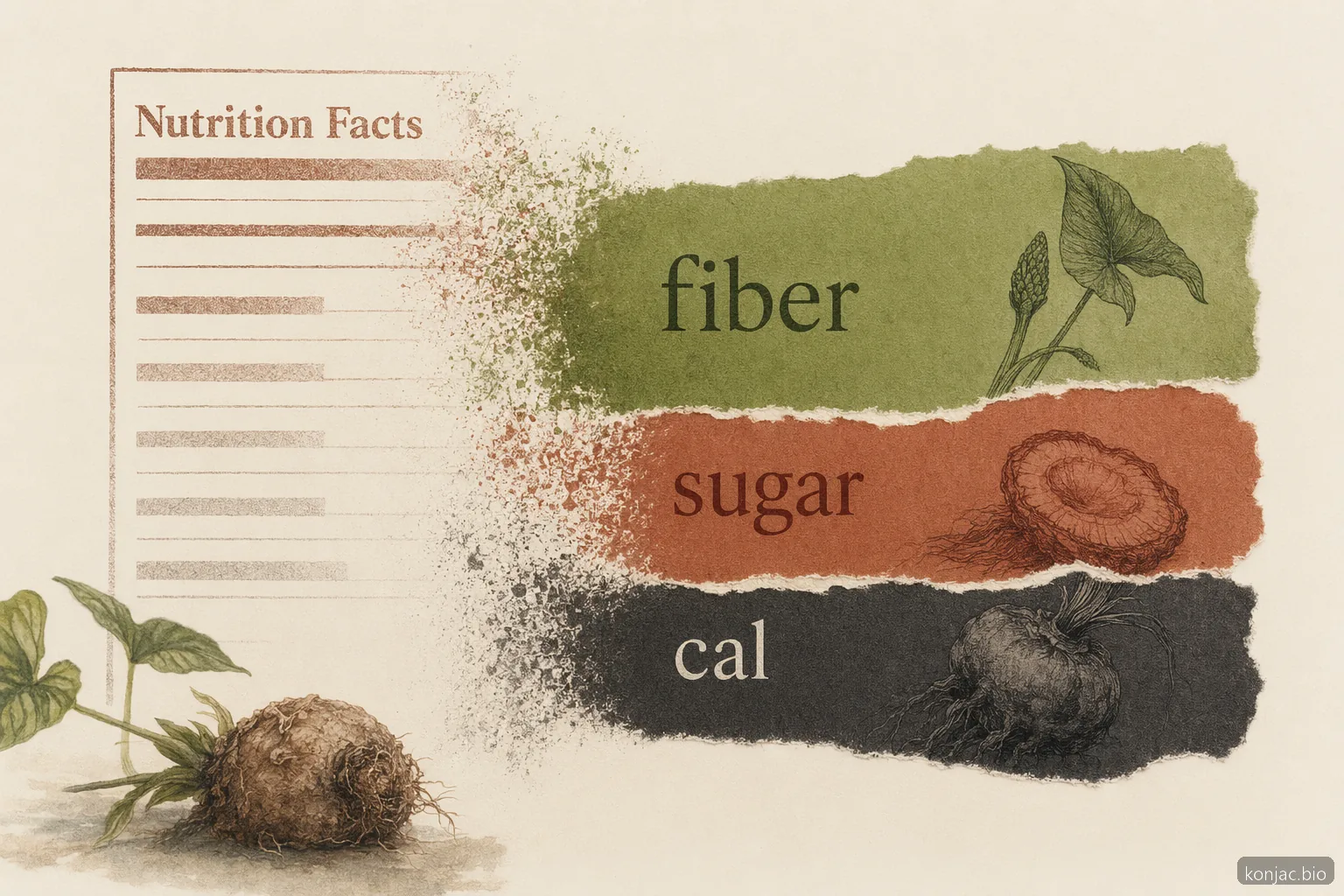
You should check serving size, calories, fiber grams, sweetener type, caffeine, allergens, and choking warnings on a drinkable konjac jelly label. The front panel may say “low calorie” or “fiber,” but the nutrition panel tells you what one pouch actually contributes.
Start with serving size because pouches vary. A 150 g pouch and a 300 g pouch can look similar online, but the calorie and sweetener load can double. If a pack contains multiple servings, compare nutrition per pouch and per serving.
Next, check fiber. Glucomannan is a soluble fiber, and soluble fibers are included in U.S. nutrition labeling when they have a beneficial physiological effect accepted by the FDA. The FDA explains dietary fiber rules in its [fiber guidance](https://www.fda.gov/food/food-labeling-nutrition/questions-and-answers-dietary-fiber).
Sweeteners deserve a close read. Some low-sugar konjac jellies use erythritol, sorbitol, sucralose, stevia glycosides, or blends. Sugar alcohols can cause digestive discomfort for some people when eaten in larger amounts, a point NIH notes for several polyols in its [sweetener overview](https://www.niddk.nih.gov/health-information/digestive-diseases/gas-digestive-tract).
- Calories: compare per pouch, not only per 100 g.
- Fiber: identify actual grams, not only a front-panel claim.
- Sweeteners: check sugar alcohols if your stomach is sensitive.
- Caffeine: some “energy” jelly pouches include tea or coffee extracts.
- Warnings: follow chewing, age, and storage instructions.
Texture, flavors, and serving occasions
Drinkable konjac jelly succeeds when texture feels intentional: thick enough to satisfy, soft enough to squeeze, and stable enough to survive shipping. The gel should not feel like water, but it also should not behave like a firm candy.
Flavor systems often follow Asian dessert patterns. Peach, grape, lychee, mango, apple, and yogurt-style flavors are common because they work with acidity and a chilled serving temperature. Citrus flavors can taste cleaner in low-sugar formulas, while milk or yogurt profiles may need extra stabilizers to avoid separation.
Serving occasions are practical rather than formal. People buy pouches for desk snacks, lunch boxes, post-workout bags, road trips, and late-night sweet cravings. The appeal is portion control: one pouch, one texture, one clearly labeled serving.
Konjac glucomannan has also been evaluated for satiety and weight-management claims. EFSA’s approved EU wording is: “Glucomannan in the context of an energy restricted diet contributes to weight loss,” with conditions described in the [EFSA opinion](https://www.efsa.europa.eu/en/efsajournal/pub/1798). That claim should not be simplified into stronger health promises for a snack product.
For ingredient formulators, texture comes from the full system, not konjac alone. Acidity, heat processing, water quality, sugar solids, calcium salts, and other hydrocolloids can all change gel strength and mouthfeel. For a closer look at raw materials, see konjac jelly ingredients.
How should brands evaluate jelly.b drinkable konjac jelly trends?
Brands should evaluate jelly.b drinkable konjac jelly trends by separating consumer demand from formulation, regulatory, and supply-chain requirements. A search trend can show interest, but a sellable product still needs safe texture, compliant labels, stable packaging, and reliable raw material specifications.
A useful product-development checklist includes:
- Target texture: squeezable, spoonable, or hybrid gel.
- Serving size: commonly 100 g to 300 g depending on market.
- Nutrition target: low calorie, high fiber, low sugar, or functional positioning.
- Packaging: spout pouch, tear pouch, or cup format.
- Process controls: heat, pH, fill temperature, and seal integrity.
- Food safety system: supplier programs aligned with standards such as [ISO 22000](https://www.iso.org/iso-22000-food-safety-management.html).
Claims should be conservative. “May support fullness” is safer than overpromising, and any weight-management language should match the exact conditions of authorized claims where applicable. In the EU, the EFSA-2010 glucomannan claim requires an energy-restricted diet and specified daily intake conditions.
B2B note: konjac.bio sources konjac ingredients at wholesale for jelly, pouch snack, and dessert manufacturers. For specifications, volume pricing, and samples, contact the team at /contact/.
Frequently asked questions
01 Is jelly.b drinkable konjac jelly a drink or a snack?
02 Is drinkable konjac jelly low calorie?
03 Does glucomannan help with weight management?
04 Is drinkable konjac jelly safer than mini-cup konjac jelly?
05 What ingredients should I avoid if my stomach is sensitive?
06 Can food brands make private-label drinkable konjac jelly?
- Scientific Opinion on the substantiation of health claims related to glucomannan and reduction of body weight · European Food Safety Authority · 2010
- Konjac Candy · U.S. Food and Drug Administration · 2024
- 21 CFR 184.1396, Konjac flour · Electronic Code of Federal Regulations · 2024
- Questions and Answers on Dietary Fiber · U.S. Food and Drug Administration · 2024
- ISO 22000 Food safety management · International Organization for Standardization · 2018