What is jelly b konjac jelly?
jelly b konjac jelly is a fruit-style konjac jelly cup or pouch made with konjac-derived glucomannan as a key gelling ingredient.
The phrase usually appears in shopper searches for Asian-style jelly snacks with a firm, bouncy bite. The category overlaps with konjac jelly cups, jelly pouches, and mini-cup gel candies, but formulas vary by market, serving size, sweetness, and packaging style.
Konjac comes from the corm of Amorphophallus konjac. Its main functional component, glucomannan, is a water-binding polysaccharide that helps create the elastic gel texture associated with konjac jelly. For a wider category overview, see konjac jelly.
A typical consumer is not only asking whether the snack tastes good. They are also asking whether the gel is easy to chew, whether it contains sugar alcohols or high-intensity sweeteners, and whether the cup format is suitable for the intended eater.
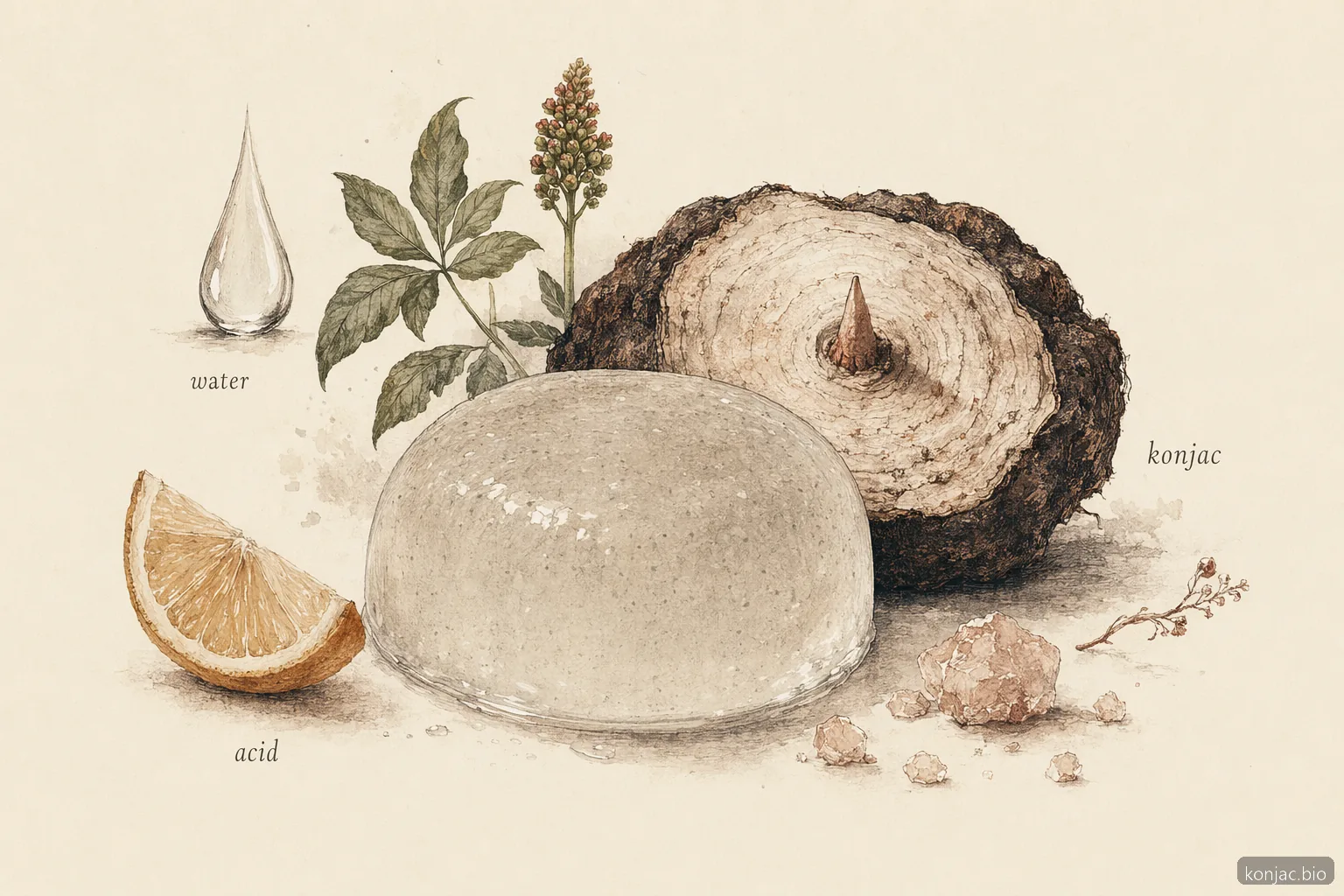
What ingredients are in jelly b konjac jelly?
jelly b konjac jelly typically contains water, konjac glucomannan or konjac flour, sweetener, fruit flavor, acidulant, coloring, and one or more gelling salts.
The ingredient that makes the snack recognizable is konjac. In the European Union, konjac gum and konjac glucomannan are identified as food additives E 425 i and E 425 ii, and EFSA has reviewed their specifications and safety context for food use in its EFSA additive opinion.
Common formula components include:
- Konjac glucomannan: creates the firm, elastic bite.
- Carrageenan or agar: may round out gel strength and cut.
- Citric acid: adds tartness and helps balance fruit flavor.
- Sugar, erythritol, sucralose, or stevia: determines sweetness and calorie profile.
- Fruit juice or flavor: provides peach, grape, lychee, mango, apple, or citrus notes.
- Calcium salts: can strengthen gel structure in some systems.
Ingredient lists should be read in order by weight. If konjac appears near the end, the product may still have konjac character, but its texture may depend heavily on other hydrocolloids.
Texture, flavors, and nutrition label signals
Konjac jelly is valued for a springy, slippery, chewy texture that differs from gelatin dessert, pectin gummies, and agar cubes. A well-made cup should hold its shape, release cleanly from packaging, and break apart with chewing rather than swallowing pressure alone.
Fruit flavors are usually built around acidity and aroma rather than high fruit content. Peach, grape, lychee, mango, and citrus are common because they pair well with a clear or translucent gel. Some versions include small fruit pieces, but inclusions can affect gel cut, water release, and choking warnings.
| Label item | What to check | Why it matters |
|---|---|---|
| Serving size | One cup, one pouch, or multi-cup pack | Calories and sweeteners change by serving basis |
| Total sugars | Added sugar versus fruit sugar | Controls sweetness, calories, and positioning |
| Dietary fiber | Declared grams per serving | Confirms whether fiber is a meaningful feature |
| Sweeteners | Sugar alcohols or high-intensity sweeteners | Impacts taste, aftertaste, and tolerance |
| Warning label | Choking statement and age guidance | Critical for mini-cup and firm gel formats |
Health-positioned labels should stay precise. EFSA has authorized the wording: Glucomannan in the context of an energy restricted diet contributes to weight loss, under specific intake conditions in its EFSA claim opinion. A konjac jelly cup should not imply that benefit unless the product delivers the required glucomannan amount and directions.
Is jelly b konjac jelly safe to eat?
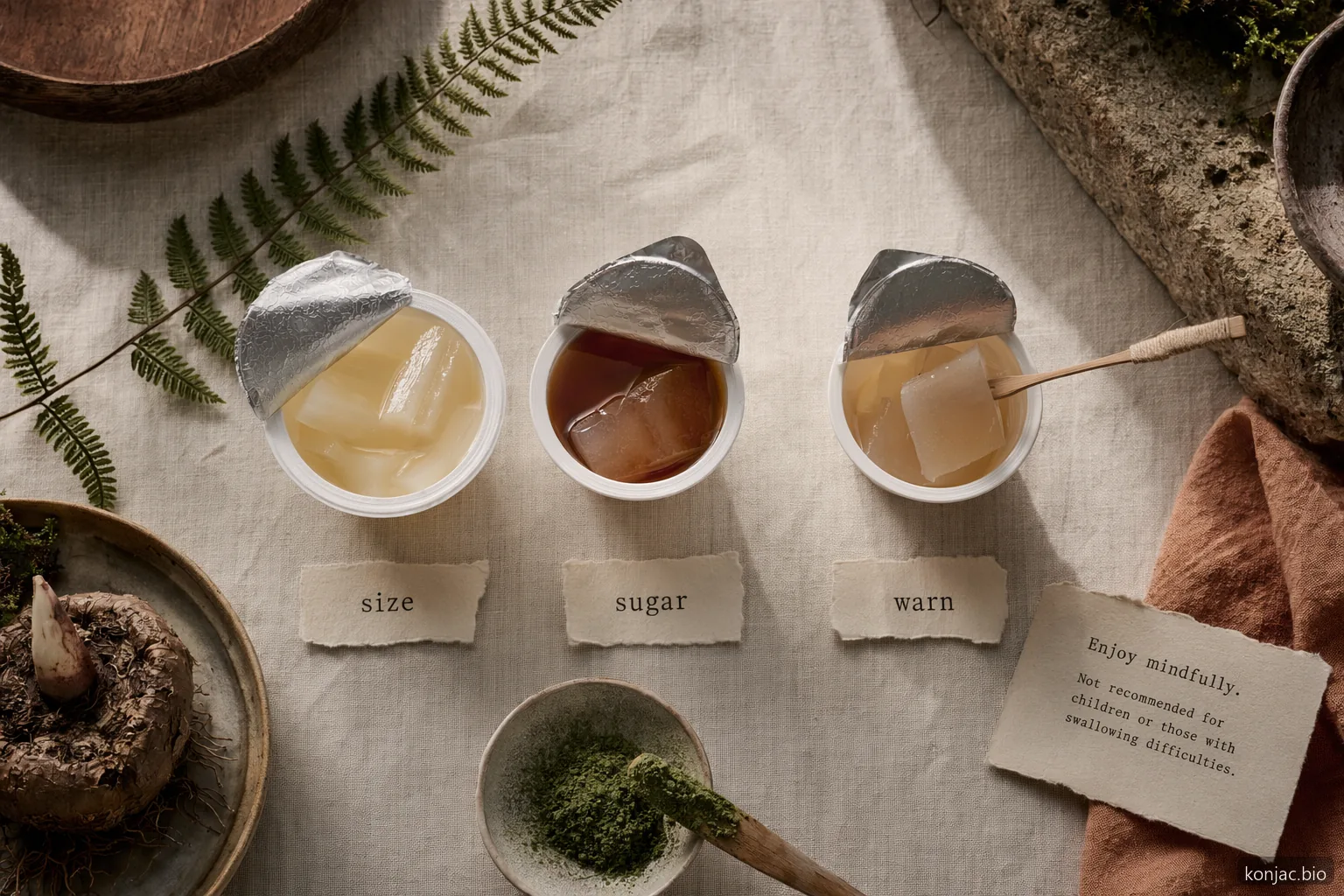
jelly b konjac jelly can be safe for appropriate consumers when it is eaten slowly, chewed thoroughly, and packaged with clear choking warnings.
The main safety issue is physical choking risk, especially with firm mini-cup gels that can be swallowed whole. The FDA has warned consumers about mini-cup gel candies containing konjac because the gel shape and texture can create a choking hazard, particularly for children and older adults, in its FDA warning.
Safer use depends on format and behavior. Larger pouches that encourage squeezing and chewing may behave differently from small cups designed to pop into the mouth. Even so, any firm, slippery gel should be chewed, not swallowed whole.
- Do not freeze firm konjac jelly cups unless the label allows it.
- Cut large gels into smaller pieces for controlled eating.
- Keep mini-cup formats away from young children unless the product is specifically designed and labeled for them.
- Follow the package warning, not social media eating habits.
For a deeper category-level view, read our konjac jelly safety guide.
How to compare retail cups and wholesale specs
Retail buyers should compare konjac jelly by formula, packaging, compliance documents, and eating experience, not by flavor name alone. Two peach cups can differ sharply in gel strength, sugar level, warning language, shelf life, and carton efficiency.
A practical buyer checklist includes:
- Formula target: regular sugar, reduced sugar, added fiber, vegan, halal, or clean-label.
- Format: mini-cup, spoonable cup, pouch, stick pack, or bulk foodservice gel.
- Texture spec: soft bite, medium elastic bite, or firm chew.
- Pack size: single serve, multipack, club pack, or private-label carton.
- Documents: ingredient specification, allergen statement, nutrition panel, COA, and shelf-life data.
- Food safety system: supplier audits may request HACCP, GFSI-benchmarked certification, or ISO 22000 documentation.
For nutrition-led positioning, compare label claims against our konjac jelly benefits guide before placing claims on front-of-pack artwork. A 2015 systematic review indexed in PubMed found glucomannan has been studied for weight, lipid, and glucose markers, but product-specific claims still depend on dose, instructions, and local rules PubMed review.
B2B aside: konjac.bio sources konjac ingredients and konjac jelly inputs at wholesale scale for product developers, importers, and private-label teams. Send specs through our contact page to request pricing and availability.
Frequently asked questions
01 Is jelly b konjac jelly the same as regular konjac jelly?
02 Does jelly b konjac jelly contain gelatin?
03 How many calories are in jelly b konjac jelly?
04 Why do some konjac jelly cups carry choking warnings?
05 Can jelly b konjac jelly support weight management?
06 What should wholesale buyers ask before sourcing konjac jelly?
- Re-evaluation of konjac gum and konjac glucomannan as food additives · European Food Safety Authority · 2017
- Scientific Opinion on glucomannan and reduction of body weight · European Food Safety Authority · 2010
- FDA Warns Consumers Not to Eat Mini-Cup Gel Candies Containing Konjac · U.S. Food and Drug Administration · 2001
- Effect of glucomannan on body weight in overweight or obese children and adults · PubMed · 2015
- ISO 22000 Food safety management · International Organization for Standardization · 2024