What is tastelli konjac jelly?
tastelli konjac jelly is a fruit-flavored konjac gel snack made around konjac-derived glucomannan, water, sweeteners, acids, flavors, and gelling ingredients.
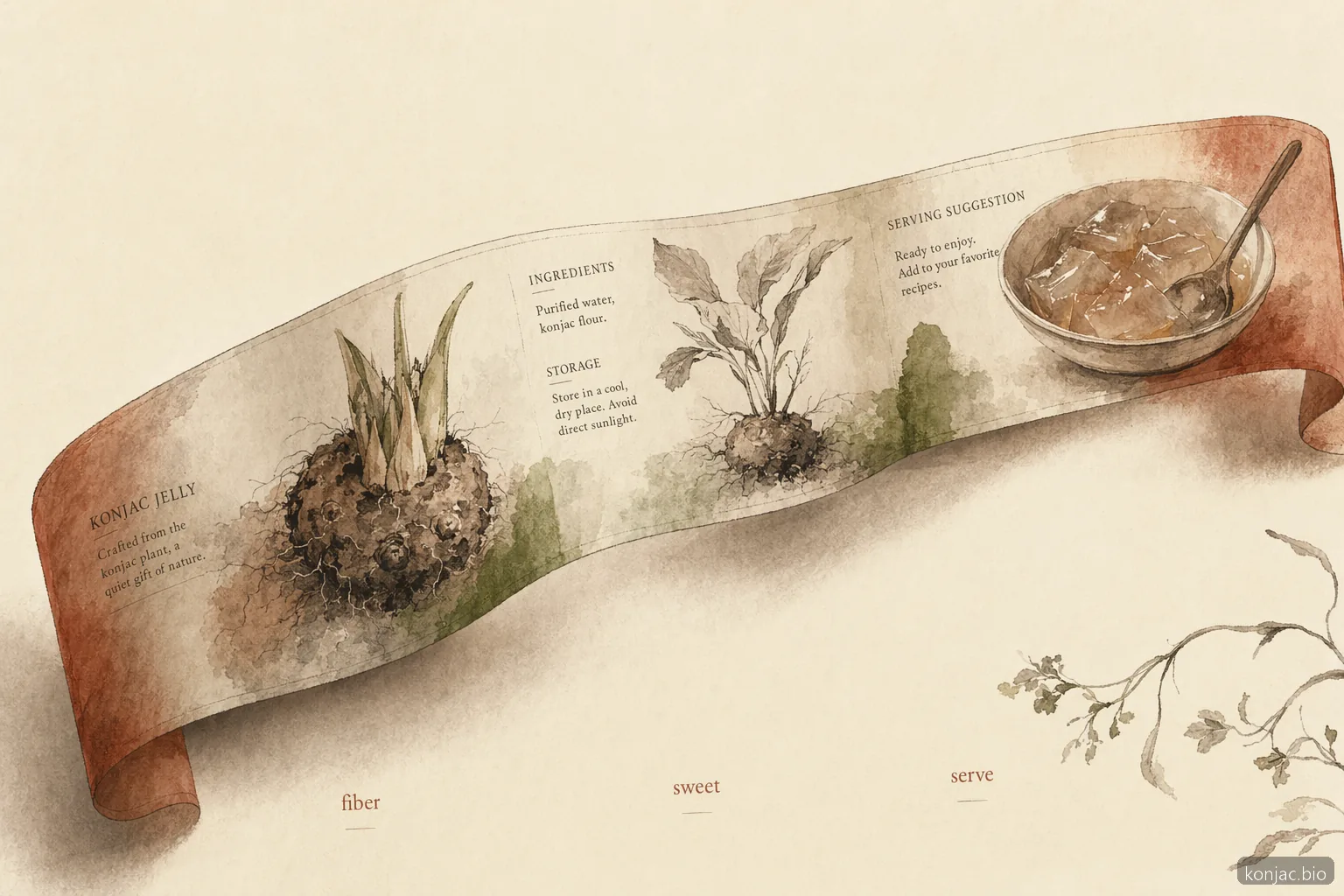
The defining ingredient is konjac, commonly sourced from the corm of Amorphophallus konjac, a plant used to make flour, glucomannan powder, shirataki noodles, and jelly-style snacks. Glucomannan is a highly water-binding soluble dietary fiber described in food science literature for its viscosity and gel-forming behavior [konjac glucomannan](https://www.ncbi.nlm.nih.gov/pmc/articles/PMC9609202/).
Konjac jelly sits in the same dessert family as Asian fruit jelly cups and pouch gels, but it differs from gelatin desserts because it relies on plant-derived hydrocolloids. A typical label may include konjac powder, carrageenan, citric acid, fruit juice concentrate, erythritol, sucralose, or other sweeteners depending on the formula.
For broader context on the category, see Konjac Jelly: The Asian Dessert and Its Western Successors. That pillar explains how konjac jelly moved from East Asian convenience stores into Western low-calorie snack aisles.
How should you read a tastelli konjac jelly label?
You should read a tastelli konjac jelly label by checking serving size, calories, total carbohydrate, dietary fiber, sweeteners, allergens, and choking-risk instructions first.
The Nutrition Facts panel matters because pouch jellies and cup jellies can look similar but contain different serving sizes. The FDA explains that serving size reflects the amount people typically eat, not a recommended amount [Nutrition Facts](https://www.fda.gov/food/nutrition-facts-label/how-understand-and-use-nutrition-facts-label).
| Label item | Why it matters |
|---|---|
| Serving size | One pouch may be one serving, while multi-cup packs may list one cup as one serving. |
| Calories | Many konjac jelly snacks are positioned as low-calorie desserts, but formulas vary by sugar and juice content. |
| Dietary fiber | Konjac glucomannan contributes fiber, but the amount per serving depends on the recipe. |
| Sweeteners | Labels may list sugar alcohols, high-intensity sweeteners, fruit juice concentrate, or cane sugar. |
| Directions | Firm gels should be chewed well and not swallowed whole. |
Marketing phrases such as “zero sugar,” “keto,” or “low calorie” should be checked against the numbers on the panel. A product can be low in calories yet still contain sweeteners, acidity regulators, flavorings, and preservatives that affect taste and digestive comfort.
Texture, flavors, and formats
Konjac jelly is known for a firm, springy bite rather than the soft melt of gelatin. That texture comes from hydrocolloids that bind water into a stable gel, with konjac glucomannan often combined with other plant gums for bounce and shape.
Flavor is usually fruit-led: grape, peach, lychee, mango, apple, strawberry, and citrus are common profiles. Acids such as citric acid or malic acid sharpen the fruit note, while sweeteners control calories and aftertaste.
| Format | Typical use | Main caution |
|---|---|---|
| Pouch jelly | Squeezed slowly, often as a chilled snack | Do not gulp large pieces quickly |
| Cup jelly | Eaten with a spoon or squeezed from a small cup | Small firm cups need extra chewing care |
| Multipack cups | Portion-controlled lunchbox or pantry snack | Check age guidance and warning labels |
Pouch texture is usually easier to control because the gel is consumed gradually. Small rigid cups have drawn regulator attention because firm gels can release as a single plug if squeezed directly into the mouth, a risk described in FDA guidance on mini-cup gel candies [mini-cup guide](https://www.fda.gov/regulatory-information/search-fda-guidance-documents/small-entity-compliance-guide-mini-cup-gel-candies-guidance-industry).
Is tastelli konjac jelly safe to eat?
tastelli konjac jelly can be eaten like other konjac jelly snacks when the label directions are followed, the gel is chewed well, and small rigid cups are not swallowed whole.
The main safety issue is physical choking risk, not the konjac plant itself. The FDA has issued guidance on mini-cup gel candies because certain firm gel candies can pose a choking hazard when eaten by suction or squeezed directly from small cups [FDA guidance](https://www.fda.gov/regulatory-information/search-fda-guidance-documents/small-entity-compliance-guide-mini-cup-gel-candies-guidance-industry).
Practical safety steps are simple:
- Chill the jelly if preferred, but do not freeze it into a hard plug.
- Open pouch formats fully and consume slowly.
- Cut cup-style jelly into smaller pieces when serving it to children.
- Chew thoroughly before swallowing.
- Follow the manufacturer’s age guidance and warning label.
Digestive comfort also depends on the amount eaten. Konjac glucomannan is a soluble fiber, and fiber intake can affect fullness, stool bulk, or gas in some people, especially when intake rises quickly [fiber review](https://www.ncbi.nlm.nih.gov/pmc/articles/PMC7589116/).
How does konjac jelly compare with konjac noodles and powder?
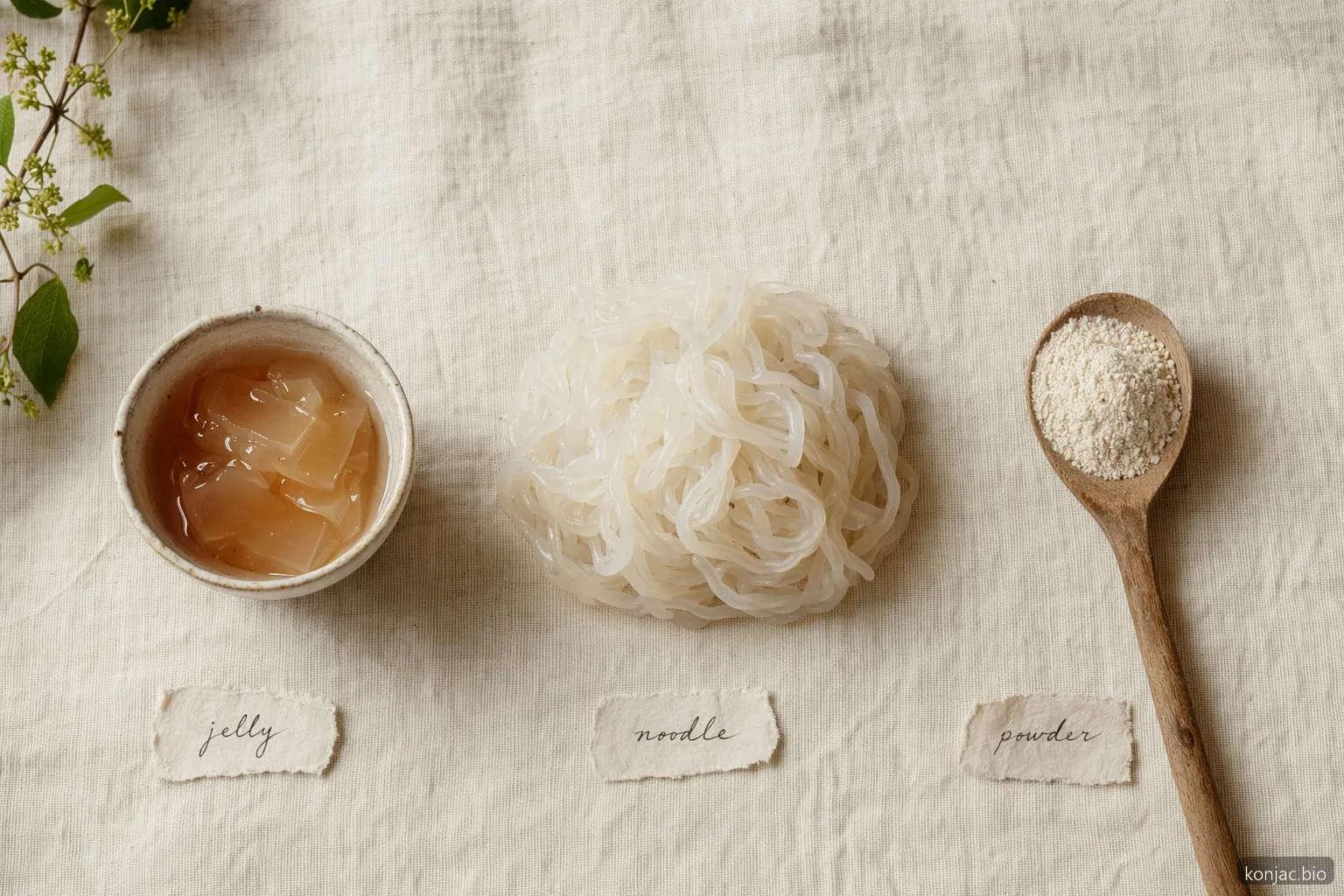
Konjac jelly is a flavored snack, while konjac noodles and konjac powder are usually used as meal ingredients or functional fiber ingredients.
Shirataki noodles are typically made from water, konjac flour, and a setting agent, then rinsed and cooked into savory meals. Konjac powder is the concentrated ingredient used by food manufacturers for thickening, gelling, viscosity, and fiber enrichment.
Health-claim language should stay precise. EFSA’s approved claim states: “Glucomannan in the context of an energy restricted diet contributes to weight loss,” and EFSA’s conditions specify 3 g daily in 3 doses of 1 g with 1 to 2 glasses of water before meals [EFSA claim](https://www.efsa.europa.eu/en/efsajournal/pub/1798). That claim applies to glucomannan under those conditions, not automatically to every sweet jelly snack.
For product developers, konjac jelly is mainly a texture system plus flavor system. For consumers, it is best evaluated as a snack: serving calories, ingredients, sweetness, format, and chewing safety matter more than broad fiber claims.
Buying checklist for tastelli konjac jelly
A useful buying checklist for tastelli konjac jelly starts with the product format, then moves to nutrition, ingredient quality, and storage instructions.
- Choose the format: pouch for slow sipping, cups for portion control, multipacks for pantry storage.
- Compare calories per serving: do not compare one pouch with one multi-cup box unless serving sizes match.
- Check sweeteners: sugar alcohols and high-intensity sweeteners taste different from juice or cane sugar.
- Review warning labels: firm konjac gels should be chewed and not swallowed whole.
- Inspect storage: shelf-stable jellies still need clean handling after opening.
If you are comparing adjacent products, our sibling guide to konjac jelly safety focuses on choking-risk formats, while konjac jelly ingredients breaks down gums, acids, flavors, and sweeteners.
B2B aside: konjac.bio sources konjac ingredients at wholesale scale for jelly, noodle, beverage, and snack applications. For specifications, minimums, and pricing, contact the team at /contact/.
Frequently asked questions
01 Is tastelli konjac jelly the same as regular fruit jelly?
02 How many calories are in tastelli konjac jelly?
03 Can children eat konjac jelly?
04 Does konjac jelly help with weight management?
05 What should I look for before buying tastelli konjac jelly online?
- Scientific Opinion on the substantiation of health claims related to konjac mannan · European Food Safety Authority · 2010
- Small Entity Compliance Guide: Mini-Cup Gel Candies · U.S. Food and Drug Administration · 2002
- How to Understand and Use the Nutrition Facts Label · U.S. Food and Drug Administration · 2024
- Konjac glucomannan: A review of structure, properties, and applications · National Library of Medicine · 2022