How does konjac and weight loss work?
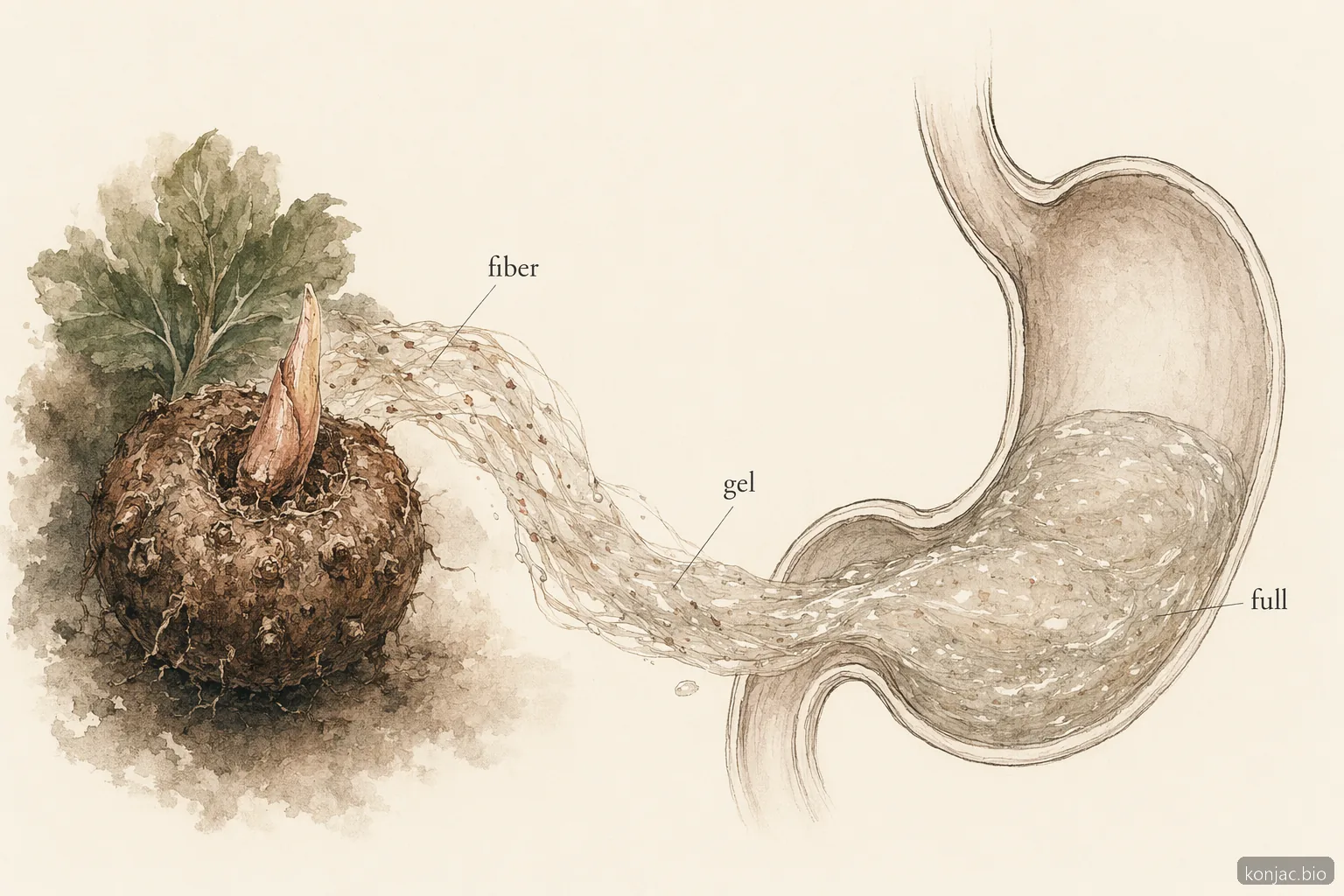
Konjac and weight loss work through glucomannan, a highly viscous soluble fiber that absorbs water and adds bulk with very few digestible calories.
Glucomannan comes from the corm of Amorphophallus konjac, a plant used to make konjac flour, shirataki noodles, konjac rice, and gelled konjac foods. The fiber is valued because it forms a thick gel in water, which can help meals feel larger without adding many calories.
The European Food Safety Authority reviewed konjac mannan, also called glucomannan, and approved the wording: “Glucomannan in the context of an energy restricted diet contributes to weight loss” under defined use conditions, including 3 g daily in three 1 g doses with water before meals EFSA opinion.
Three practical mechanisms matter most for consumers:
- Meal volume: hydrated glucomannan increases physical bulk in the stomach.
- Satiety: viscous fibers can support fullness, which may reduce snacking.
- Food swaps: shirataki noodles can replace higher calorie pasta, rice noodles, or ramen.
Konjac is not a stand-alone weight-loss solution. It works best as a low-calorie tool inside a structured eating pattern, especially one built around protein, vegetables, hydration, and an energy deficit. For a broader practical framework, see Konjac for Keto and Weight Loss.
What does evidence say about konjac and weight loss?
The evidence for konjac and weight loss is mixed but credible enough for a narrow EFSA claim when glucomannan is used with an energy-restricted diet.
A systematic review and meta-analysis published in 2014 evaluated randomized controlled trials of glucomannan for overweight and obesity outcomes and reported modest body-weight effects, with variation across study design, dose, duration, and diet control PubMed review.
EFSA’s conclusion is more specific than many marketing claims. The approved wording is not that konjac alone reduces body weight. The wording is tied to an energy-restricted diet and to a specific intake pattern: 1 g glucomannan with 1 to 2 glasses of water before each of three daily meals EFSA claim.
That distinction matters. A konjac capsule taken after a high-calorie meal is not the same intervention as hydrated glucomannan before meals in a lower-calorie plan. A bowl of shirataki noodles also works differently from a supplement because the main benefit is usually calorie displacement.
| Use case | Likely weight role | Key limitation |
|---|---|---|
| Glucomannan powder | Pre-meal fullness support | Needs careful hydration |
| Capsules | Convenient 1 g dosing | Must be swallowed with enough water |
| Shirataki noodles | Lower calorie meal base | Flavor and texture depend on preparation |
| Konjac rice | Low-calorie rice substitute | Lower protein than balanced meals need |
The fairest summary is simple: glucomannan may support weight loss when it helps people eat fewer calories consistently. The effect is usually modest, not dramatic.
How much konjac glucomannan is used for weight management?
The best-supported konjac glucomannan amount for weight management is 3 g per day, split into three 1 g servings before meals with water.
EFSA’s weight-management condition specifies 3 g daily in three doses of at least 1 g each, taken with 1 to 2 glasses of water before meals and in the context of an energy-restricted diet EFSA wording. That protocol is the cleanest reference point for responsible product labeling and consumer use.
A simple daily structure looks like this:
- Breakfast: 1 g glucomannan with 250 to 500 ml water before eating.
- Lunch: 1 g glucomannan with 250 to 500 ml water before eating.
- Dinner: 1 g glucomannan with 250 to 500 ml water before eating.
Powder should be mixed into enough liquid and consumed before it becomes too thick to drink comfortably. Capsules should be swallowed one at a time with a full glass of water, not dry.
For food-based konjac, dosing is less exact because shirataki noodles and konjac rice contain water, konjac flour, and sometimes calcium hydroxide. The weight-loss benefit usually comes from replacing a higher calorie starch. For example, swapping a 200 kcal pasta portion for a very low-calorie shirataki serving can reduce meal calories while keeping a noodle-style plate. For keto meal ideas, see shirataki noodles keto.
Konjac foods versus supplements for calorie control
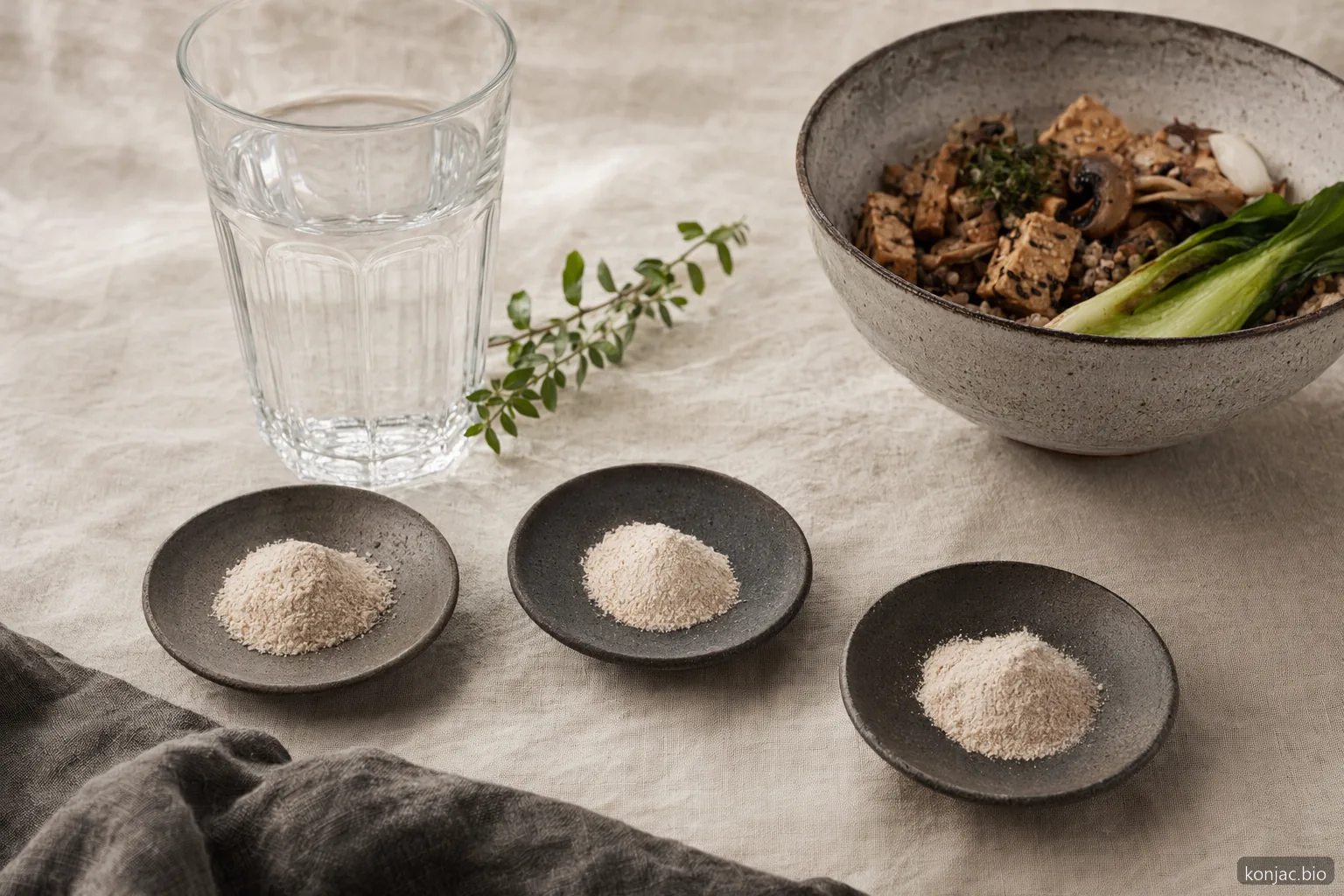
Konjac foods and glucomannan supplements can both support calorie control, but they solve different problems. Foods replace calories on the plate, while supplements aim to increase fullness before meals.
Shirataki noodles, konjac rice, and konjac pasta substitutes are mostly water plus konjac fiber. Their strongest practical use is substitution: a noodle bowl, stir-fry, soup, or curry can keep familiar volume while reducing starch calories.
Supplements are more precise for gram dosing. A 1 g capsule or measured powder serving maps more closely to the EFSA intake condition than a random serving of noodles. The tradeoff is that supplements require more attention to water intake and timing.
| Format | Best for | Watch point |
|---|---|---|
| Shirataki noodles | Pasta and ramen-style swaps | Rinse well and dry-pan for better texture |
| Konjac rice | Rice bowls and stir-fries | Add protein and vegetables for balance |
| Glucomannan powder | Flexible pre-meal fiber | Mix with enough water immediately |
| Capsules | Measured 1 g servings | Use a full glass of water |
For manufacturers, konjac.bio sources wholesale konjac ingredients for noodles, gels, blends, and fiber applications, with specification support available through contact.
Consumers who prefer food-first strategies often tolerate konjac better when it is introduced gradually. Start with one konjac meal swap several times per week, then adjust based on fullness, digestion, and meal satisfaction. For ingredient behavior, see glucomannan fiber.
Safety, timing, and realistic expectations
Konjac is generally used as a food fiber, but dry or poorly hydrated glucomannan can expand quickly and create choking concerns. The safety priority is simple: take powder or capsules with plenty of water and avoid dry swallowing.
The FDA has recognized certain non-digestible carbohydrates, including glucomannan, within its dietary fiber framework for food labeling when they meet the definition and demonstrate beneficial physiological effects FDA fiber. That does not remove the need for practical use instructions.
Konjac gels can also create choking hazards when formulated as small, firm, slippery mini-cup jellies. FDA safety communications have addressed mini-cup gel candies containing konjac because their size, shape, and firmness can be difficult for some people to swallow safely FDA warning.
Use these practical rules:
- Take glucomannan before meals, not while lying down.
- Use 250 to 500 ml water per 1 g serving.
- Start with smaller amounts if fiber intake is currently low.
- Keep konjac gels away from young children unless the product is designed for safe chewing.
- Stop use if swallowing discomfort occurs.
Weight expectations should be realistic. Konjac may help reduce calories through fullness and food substitution, but lasting weight change still depends on total energy intake, protein adequacy, sleep, activity, and adherence over weeks or months.
Frequently asked questions
01 Does konjac help with weight loss?
02 How long does konjac take to work for weight management?
03 Is konjac better as noodles or capsules?
04 Can I take konjac on keto?
05 What is the safest way to take glucomannan powder?
06 Does konjac have side effects?
- Scientific Opinion on the substantiation of health claims related to konjac mannan (glucomannan) · European Food Safety Authority · 2010
- The efficacy of glucomannan supplementation in overweight and obesity: a systematic review and meta-analysis · PubMed · 2014
- Questions and Answers on Dietary Fiber · U.S. Food and Drug Administration · 2024
- FDA Warns Consumers Not to Eat Mini-Cup Gel Candies · U.S. Food and Drug Administration · 2001