Is shirataki keto friendly?
Yes, shirataki keto meals are usually compatible with ketogenic eating because plain shirataki noodles are very low in digestible carbohydrate.
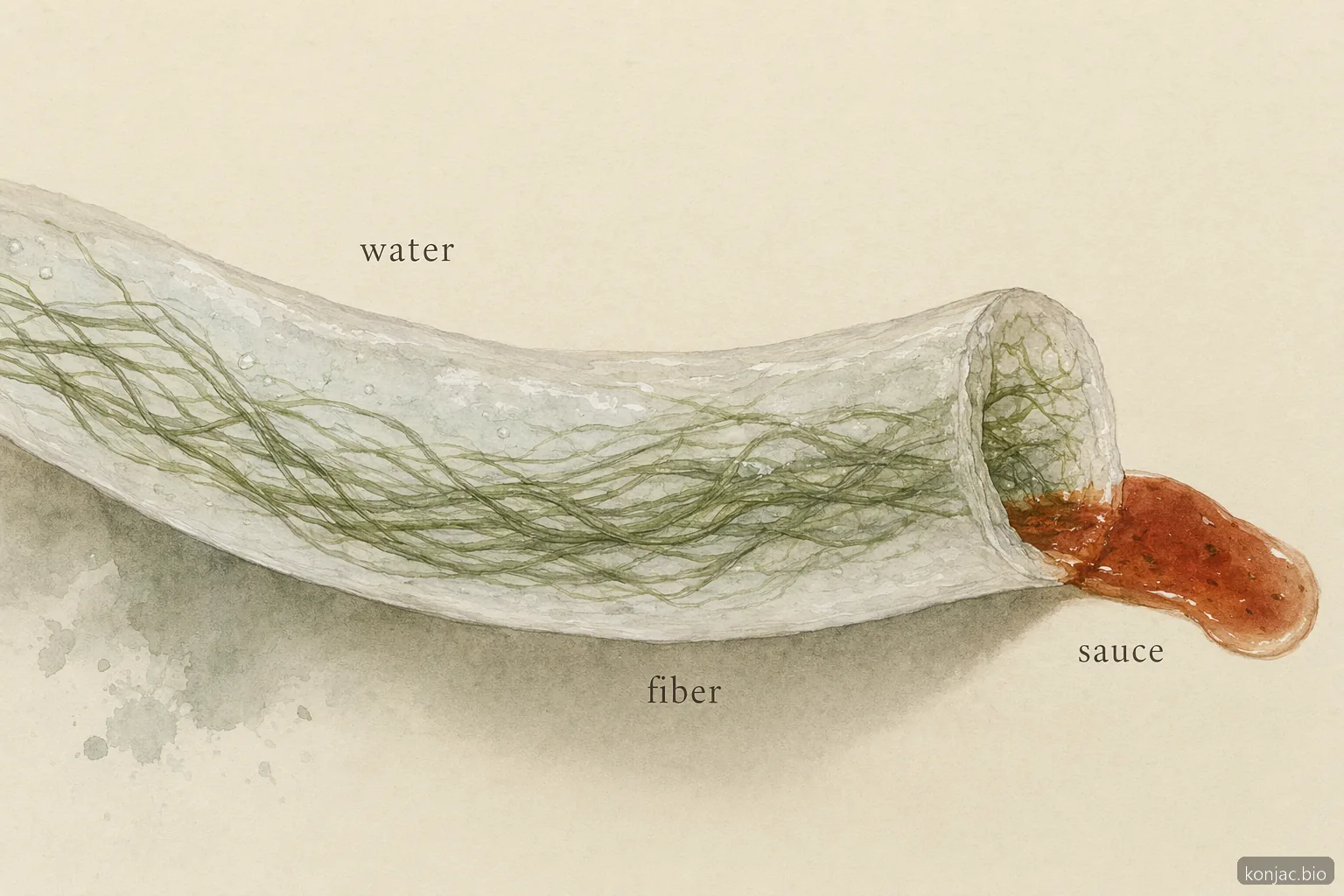
Shirataki noodles are made from konjac glucomannan, a soluble dietary fiber from the corm of Amorphophallus konjac. Glucomannan is not starch in the way wheat noodles, rice noodles, or ramen are starch based, which is why shirataki is often used as a low carb noodle swap.
The main keto value is displacement: replacing 1 serving of wheat pasta with shirataki can remove a large portion of starch from a meal. Standard cooked pasta commonly carries about 30 to 45 grams of carbohydrate per serving, while shirataki labels often show 0 to 5 grams per serving depending on formulation and serving size. Nutrition data can vary by product, so the label matters more than the category name [FoodData Central](https://fdc.nal.usda.gov/).
Shirataki does not make a meal ketogenic by itself. A bowl with sweet teriyaki sauce, cornstarch thickener, and breaded chicken can exceed low carb targets even if the noodles are konjac based. A keto plate pairs shirataki with eggs, tofu, chicken, shrimp, beef, leafy vegetables, olive oil, avocado oil, butter, or unsweetened sauces.
How many net carbs are in shirataki keto noodles?
Most plain shirataki keto noodles contain roughly 0 to 5 grams of net carbs per labeled serving, but the exact number depends on the brand formula and serving size.
Net carbs are generally calculated as total carbohydrate minus fiber and certain sugar alcohols. For shirataki, the important ingredient is glucomannan fiber, which contributes bulk and viscosity but little digestible carbohydrate. In the United States, nutrition labels can show total carbohydrate and dietary fiber separately, so shoppers should calculate from the actual panel rather than assume every pack is zero carb.
| Food | Main base | Keto fit | Typical use |
|---|---|---|---|
| Plain shirataki | Konjac glucomannan and water | Very strong | Ramen, stir fry, pad thai style bowls |
| Tofu shirataki style noodles | Konjac plus soy ingredients | Often strong | Creamy pasta swaps, soups |
| Wheat pasta | Durum wheat semolina | Weak for strict keto | Traditional pasta dishes |
| Rice noodles | Rice starch | Weak for strict keto | Pho, pad see ew, cold noodle salads |
For practical keto tracking, count the full serving you actually eat. Many pouches contain 2 servings, and sauces can add more carbohydrate than the noodles. If a sauce lists sugar, maltodextrin, tapioca starch, or cornstarch near the top of the ingredient list, it can change the meal quickly.
For ingredient comparisons beyond noodles, see konjac flour for keto.
How to cook shirataki keto noodles without rubbery texture
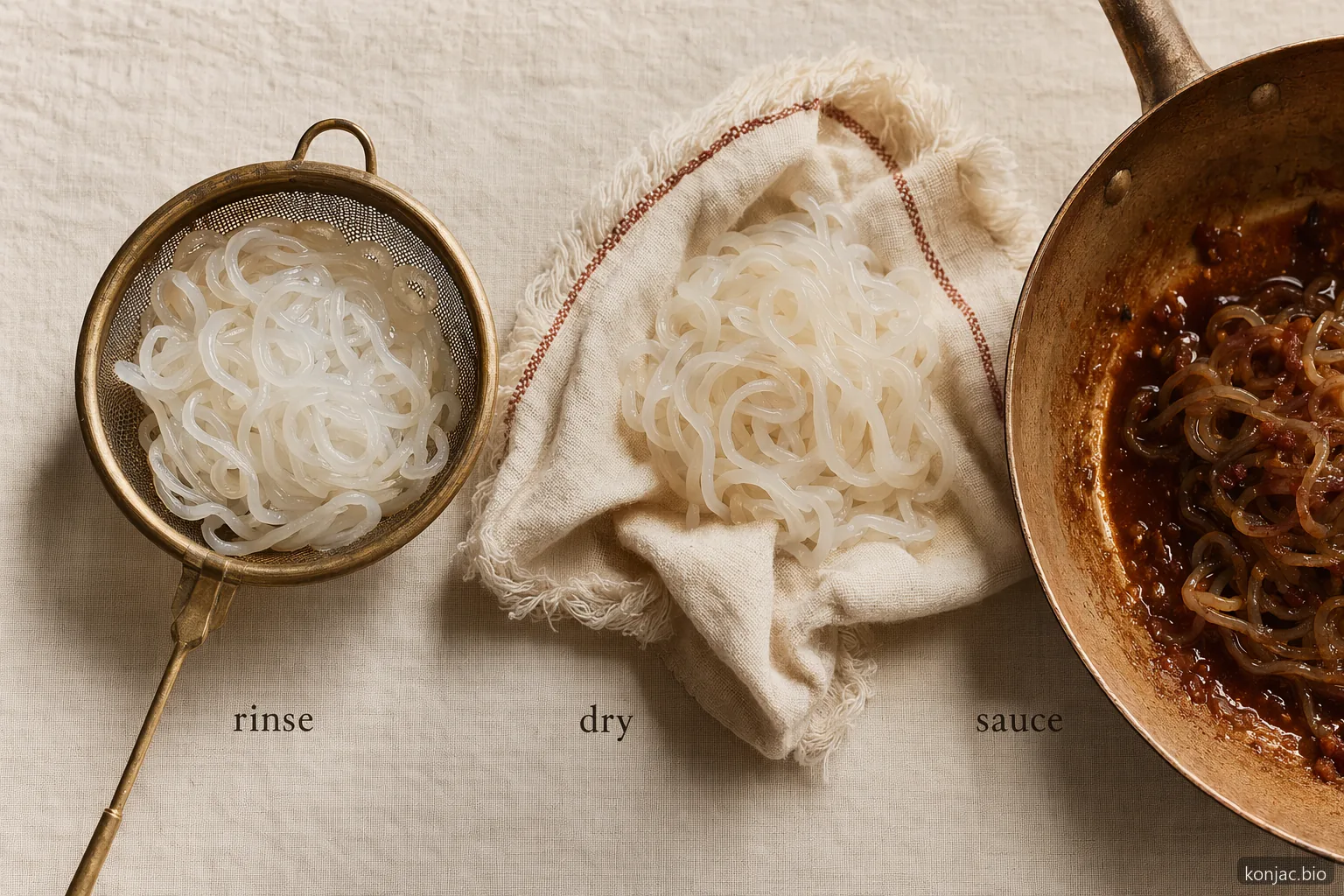
Good shirataki texture comes from rinsing, briefly boiling, and dry-pan heating before adding sauce. The process removes pack liquid aroma, reduces surface moisture, and helps sauces cling.
- Drain: Empty the pouch into a sieve and discard the storage liquid.
- Rinse: Rinse under cold running water for 30 to 60 seconds.
- Boil: Simmer for 2 to 3 minutes, then drain well.
- Dry-pan: Heat in a dry skillet for 3 to 5 minutes until squeaky and less wet.
- Sauce last: Add fat, protein, vegetables, and sauce after moisture is reduced.
The dry-pan step is the difference between watery noodles and a meal that eats like a stir fry. Konjac glucomannan binds water strongly, so adding sauce before driving off surface moisture can dilute flavor. Garlic butter, sesame oil with tamari, coconut curry, and egg yolk based sauces tend to coat shirataki well because fat carries flavor.
Cut long noodles with kitchen scissors if the dish is meant for children, older adults, or quick office meals. Shorter strands are easier to portion and easier to mix with protein and vegetables.
B2B aside: konjac.bio sources konjac ingredients and shirataki formats at wholesale for food brands. For specifications, volumes, and pricing, contact the team at /contact/.
What does glucomannan add to shirataki keto meals?
Glucomannan adds soluble fiber, water-binding texture, and meal volume to shirataki keto meals without adding meaningful starch.
Konjac glucomannan is a high molecular weight polysaccharide known for viscosity and gel-forming behavior. That physical property explains why konjac can become noodles, gels, and thickened foods rather than behaving like ordinary flour. Reviews describe konjac glucomannan as a soluble, fermentable fiber with strong hydration capacity [PubMed review](https://pubmed.ncbi.nlm.nih.gov/23186556/).
For weight management language, the most precise regulatory wording comes from the European Food Safety Authority. EFSA concluded that the authorized claim is: “Glucomannan in the context of an energy-restricted diet contributes to weight loss” when conditions of use are met, including 3 grams daily in 3 portions before meals with water [EFSA opinion](https://www.efsa.europa.eu/en/efsajournal/pub/1798).
That claim does not mean shirataki automatically changes body weight. A pouch of noodles may contain less than the 3 grams daily intake condition, and a meal’s calories still depend on oil, cheese, cream, nuts, sauces, and portion size. Shirataki works best as a structure food: it creates a larger plate for fewer digestible carbs when paired with protein and non-starchy vegetables.
For the evidence base around glucomannan and body composition, see glucomannan for weight loss.
Safety, portions, and smart shirataki keto meal building
Shirataki is best used in normal food portions, with enough fluid, thorough chewing, and attention to product form. Plain noodles are different from konjac mini-cup jelly candies, which have raised choking concerns because of firmness, size, and swallowing behavior. The U.S. Food and Drug Administration has published safety information on mini-cup gel candy containing konjac [FDA jelly](https://www.fda.gov/food/information-selected-products/mini-cup-gel-candy).
Adults new to konjac should start with 1 serving rather than a very large bowl. A sudden jump in soluble fiber can be uncomfortable for some people, especially when total daily fiber intake was previously low. Drinking water with fiber-rich meals is a practical habit, particularly when glucomannan powders or capsules are used rather than hydrated noodles.
A balanced shirataki keto plate is simple:
- Protein: 25 to 40 grams from eggs, fish, poultry, beef, tofu, or tempeh.
- Low carb vegetables: 1 to 2 cups of spinach, cabbage, zucchini, bok choy, or mushrooms.
- Fat: 1 to 2 tablespoons of olive oil, avocado oil, butter, or sesame oil.
- Sauce: unsweetened broth, tamari, pesto, cream sauce, or curry paste checked for sugar.
For strict ketogenic tracking, use a food scale for sauces and calorie-dense toppings. The noodles are rarely the macro problem, but 3 tablespoons of sweet sauce or 2 ounces of cashews can shift the meal away from keto targets.
Frequently asked questions
01 Are shirataki noodles zero carb?
02 Can I eat shirataki every day on keto?
03 Why do shirataki noodles smell fishy when opened?
04 Do shirataki noodles help with weight loss?
05 What sauces work best with shirataki keto meals?
06 Are shirataki noodles the same as konjac noodles?
- Scientific Opinion on the substantiation of health claims related to konjac mannan (glucomannan) · European Food Safety Authority · 2010
- Glucomannan and obesity: a critical review · PubMed · 2013
- Mini-Cup Gel Candy · U.S. Food and Drug Administration · 2023
- FoodData Central · U.S. Department of Agriculture · 2024