Does weight loss with glucomannan actually work?
Weight loss with glucomannan may support modest weight reduction when paired with an energy-restricted diet and correct dosing.
Glucomannan is a highly viscous soluble fiber from the corm of Amorphophallus konjac. EFSA evaluated human evidence and approved the exact claim: “Glucomannan in the context of an energy restricted diet contributes to weight loss” under defined intake conditions in its EFSA opinion.
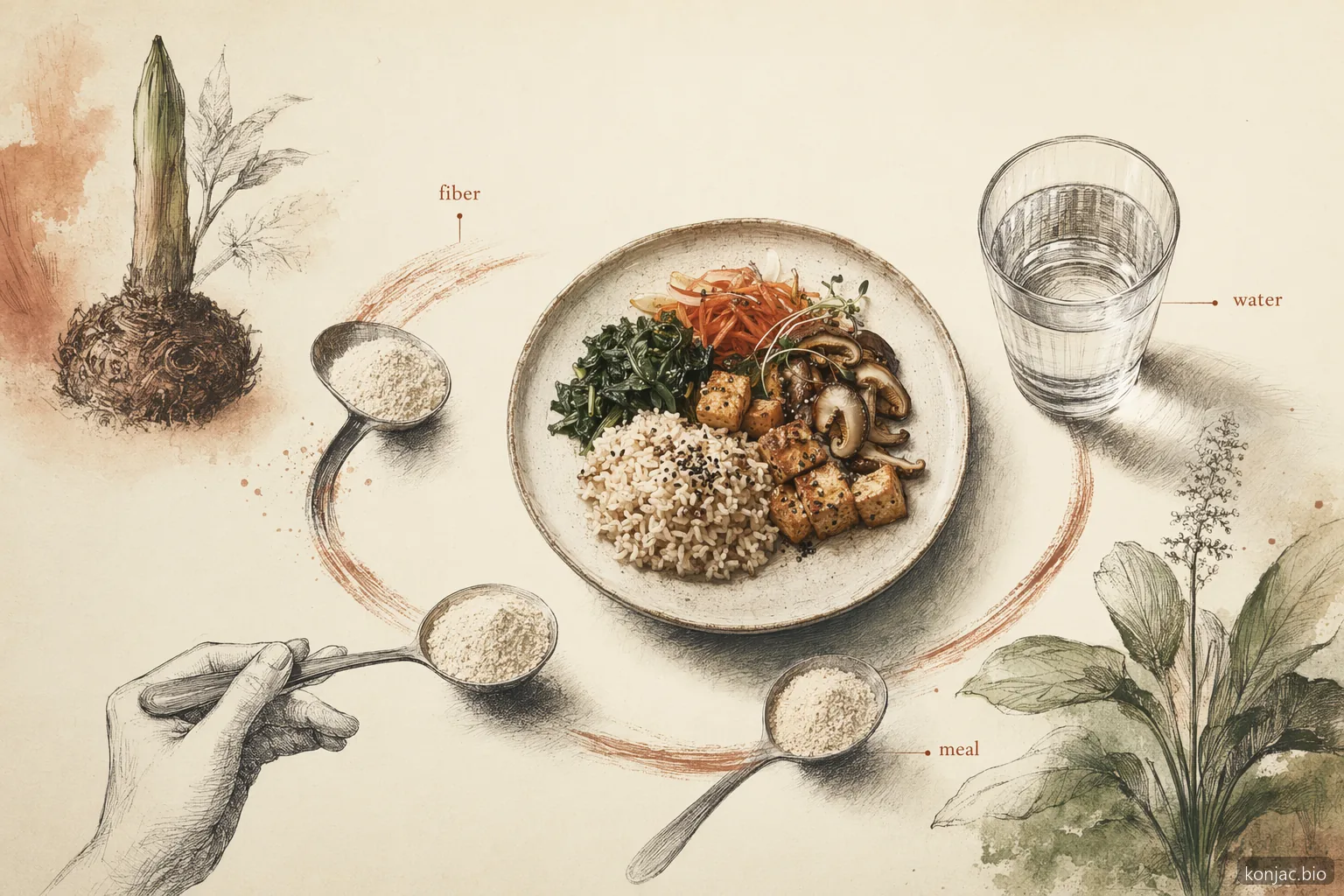
The condition of use is specific: 3 g per day, split into three 1 g doses, each taken with 1 to 2 glasses of water before meals. That timing matters because hydrated glucomannan forms a thick gel that can increase meal volume without adding digestible carbohydrate.
Clinical findings are not identical across trials. A 2014 systematic review found that glucomannan did not generate statistically significant weight loss across selected randomized trials in overweight and obesity groups, as summarized in PubMed. A practical reading is simple: glucomannan can be useful, but it is not a replacement for calorie control, protein targets, sleep, and adherence.
What dose supports weight loss with glucomannan?
The evidence-based dose for weight loss with glucomannan is 3 g per day, taken as 1 g before each of three meals.
EFSA’s approved condition is unusually clear: each 1 g serving should be consumed with 1 to 2 glasses of water before meals. The water is not optional because dry or under-hydrated glucomannan expands and thickens quickly.
| Use point | Practical target |
|---|---|
| Daily amount | 3 g glucomannan |
| Meal timing | Before breakfast, lunch, and dinner |
| Single serving | 1 g glucomannan |
| Water | 1 to 2 full glasses per serving |
| Diet context | Energy-restricted eating pattern |
Capsules, powder, and konjac foods behave differently. Capsules are easy to dose, while powder disperses best when whisked into plenty of liquid and consumed promptly. Shirataki noodles and konjac rice contain water-rich konjac gel, but their glucomannan amount varies by product and serving size.
For keto users, glucomannan is attractive because it is a soluble fiber rather than starch. For a broader keto framework, see konjac keto guide, which covers energy balance, net carbs, and food formats.
Glucomannan inside keto meals
Glucomannan fits keto best as a low-digestible-carbohydrate texture tool that makes meals larger, slower, and more filling. It works in foods because hydrated konjac gel provides bulk with very few calories compared with wheat pasta, rice, or flour-based noodles.
Common keto formats include shirataki noodles, konjac rice, thickened sauces, and fiber blends. Shirataki noodles are typically packed in water, rinsed, and pan-dried before adding sauce or protein. A serving can replace higher-carbohydrate noodles in ramen bowls, stir-fries, and cold sesame salads.
Konjac rice works differently: it is usually used as a bulk base for eggs, seafood, tofu, chicken, or high-fiber vegetables. For product-specific kitchen use, compare shirataki keto noodles and konjac rice keto.
A simple plate method keeps the fiber useful without turning it into the whole meal:
- Start with 20 to 40 g protein from eggs, fish, poultry, tofu, or meat.
- Add 1 to 2 cups low-starch vegetables such as spinach, bok choy, zucchini, or cabbage.
- Use shirataki or konjac rice as the volume base.
- Add fat deliberately: olive oil, sesame oil, avocado, butter, or tahini.
- Check satiety after 20 minutes before adding more food.
Konjac.bio sources konjac ingredients for wholesale buyers developing noodles, rice alternatives, bakery systems, and fiber blends. For specifications and supply options, contact the team at konjac.bio wholesale.
Safety, water, and choking risk
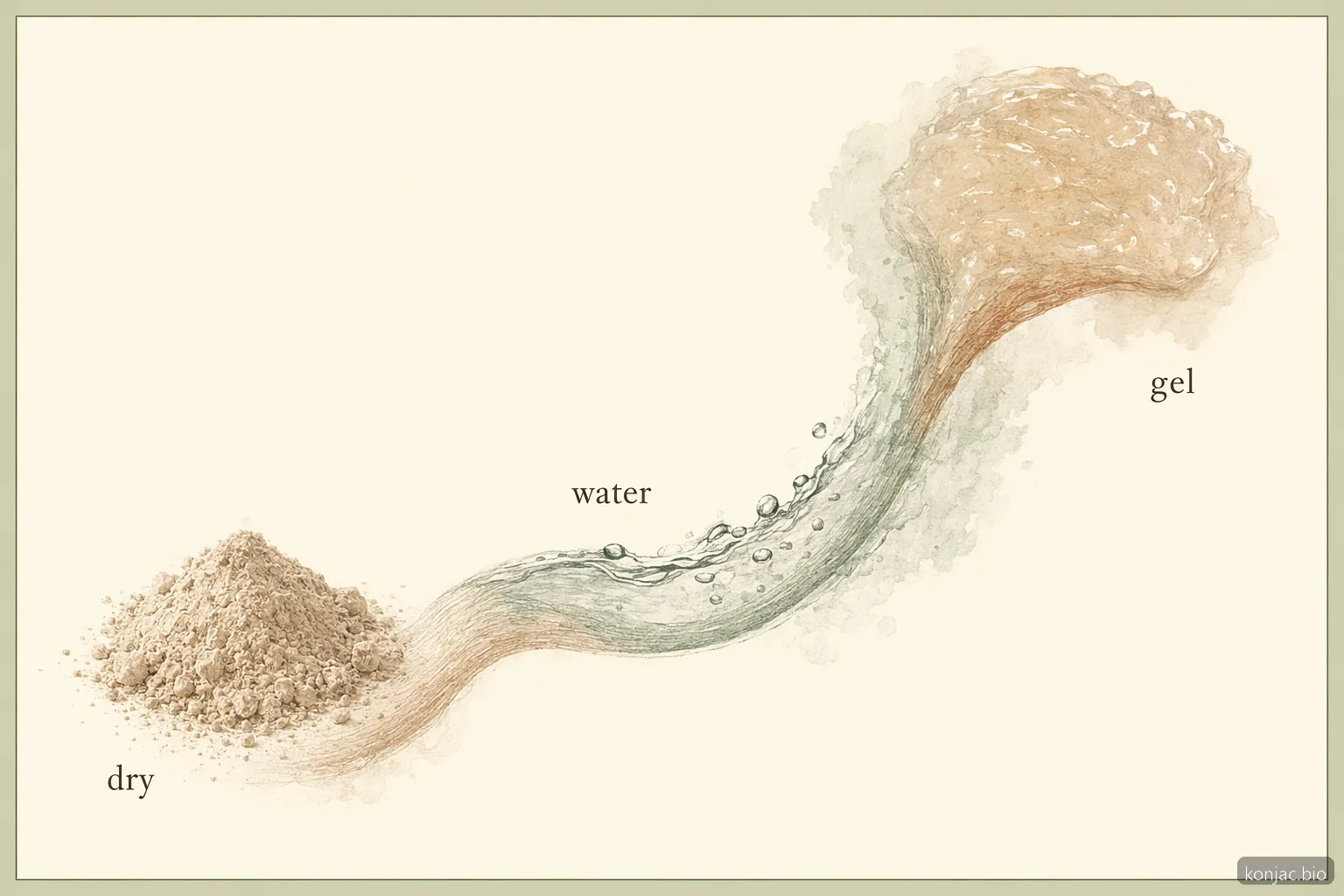
Glucomannan safety depends on hydration, format, and serving behavior. The same swelling property that makes glucomannan useful for fullness can create risk if dry powder or tablets are swallowed with too little water.
The FDA has warned about mini-cup jelly products containing konjac because they can present a choking hazard, especially when the gel is firm and consumed in one piece, as described in an FDA notice. That warning is about a specific food format, but it reinforces a broader point: texture and hydration matter.
Use these practical guardrails:
- Do not swallow dry glucomannan powder.
- Take capsules only with a full glass of water, following the product label.
- Keep powders away from children unless a qualified professional has approved the format.
- Stop using a product if it causes persistent digestive discomfort.
- Choose gels, noodles, and rice formats that are easy to chew and swallow.
Digestive effects can include bloating, gas, softer stools, or fullness. Starting with a smaller amount for several days can make intake easier, especially for people who are not used to soluble fiber.
How do you choose glucomannan ingredients or foods?
Choose glucomannan products by dose clarity, hydration instructions, ingredient purity, and the food format you will actually use consistently.
For supplements, the label should make it easy to reach 1 g per serving and 3 g per day without guesswork. For powders, look for clear dispersion instructions and avoid products that encourage dry swallowing. For foods, check serving size, net carbohydrate, sodium, and whether the product uses konjac flour, oat fiber, tofu, seaweed, or other added ingredients.
| Format | Best use | Watch point |
|---|---|---|
| Capsules | Measured pre-meal dosing | Needs enough water |
| Powder | Smoothies, sauces, bakery systems | Can clump quickly |
| Shirataki noodles | Pasta and noodle swaps | Rinse and dry-pan first |
| Konjac rice | Bowls, fried rice, meal prep | Pair with protein |
| Gels | Texture and satiety products | Chewability matters |
Ingredient buyers should also evaluate documentation. ISO 22000, HACCP plans, microbiological specifications, viscosity range, sulfur dioxide limits, and mesh size can all affect finished-product performance. In commercial formulations, glucomannan viscosity and particle size influence hydration speed, gel strength, mouthfeel, and processing tolerance.
For consumers, the best product is the one that supports a repeatable meal routine. A low-calorie noodle bowl eaten twice weekly is more useful than an expensive powder left unopened after three servings.
Frequently asked questions
01 How much glucomannan should I take for weight loss?
02 How long does glucomannan take to work for appetite control?
03 Is glucomannan keto-friendly?
04 Can I get enough glucomannan from shirataki noodles?
05 What are the main side effects of glucomannan?
06 Does glucomannan work without changing diet?
- Scientific Opinion on the substantiation of health claims related to konjac mannan (glucomannan) and reduction of body weight · European Food Safety Authority · 2010
- The efficacy of glucomannan supplementation in overweight and obesity: a systematic review and meta-analysis · PubMed · 2014
- Mini-Cup Jelly Products Containing Konjac Ingredient or Gum Present Choking Hazard · U.S. Food and Drug Administration · 2002
- Glucomannan and obesity: a critical review · PubMed · 2013