What are konjac jellies?
Konjac jellies are gelled snacks made by hydrating konjac flour or purified glucomannan, then setting it with water, sweeteners, flavors, fruit juice, acids, and minerals.
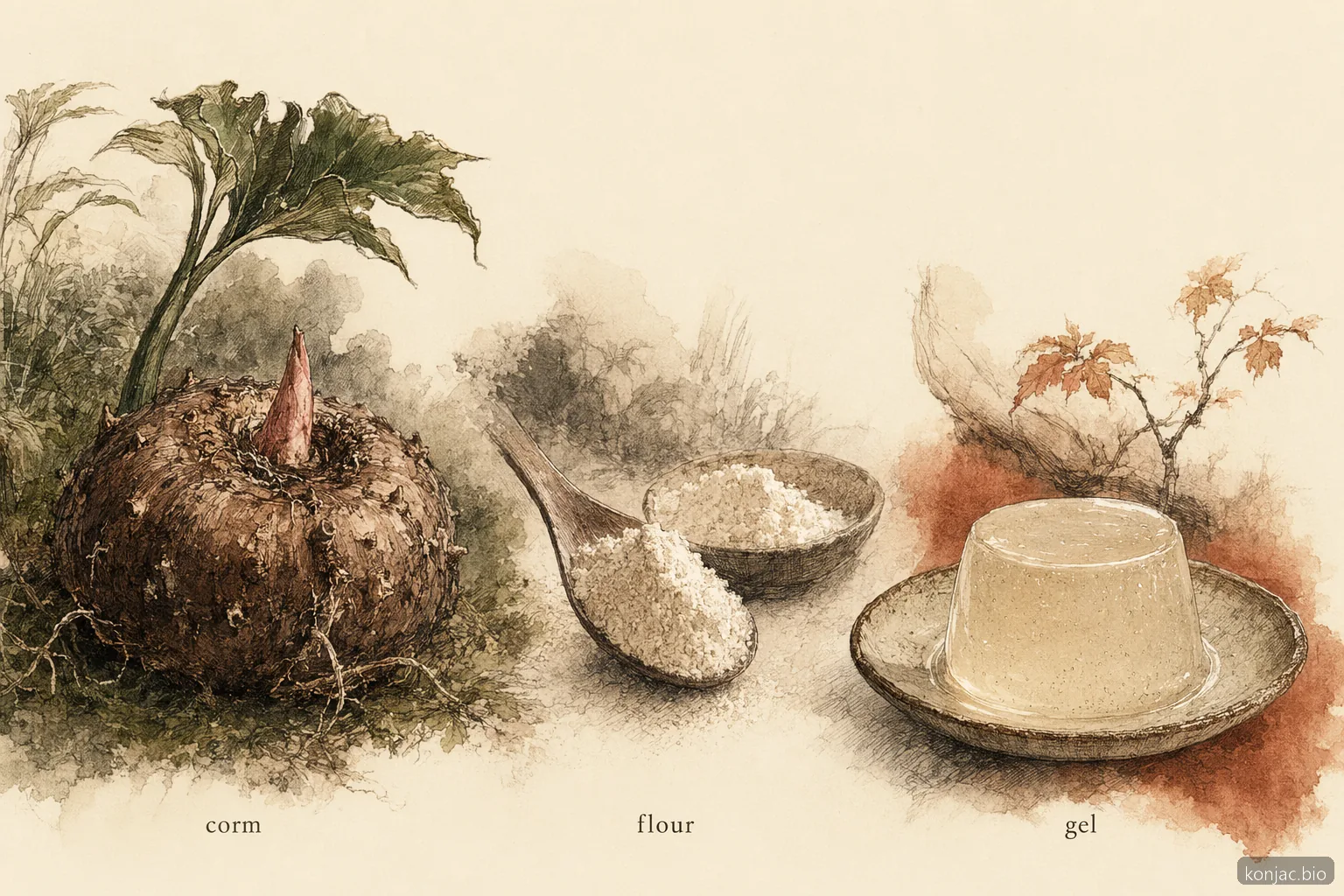
The key ingredient comes from the corm of Amorphophallus konjac, the same plant used in konjac foods, konjac flour, and shirataki noodles. In the United States, konjac flour is listed in federal food regulations as a substance made from the tubers of Amorphophallus konjac under 21 CFR.
Most konjac jellies fit into 4 retail formats:
- Fruit jelly cups: small cups with a firm, slippery bite.
- Squeeze pouches: softer gels designed to be pressed from a spout.
- Jelly drinks: suspended gel pieces in flavored liquid.
- Vegan gummies: bite-size pieces using konjac with pectin, agar, or starch.
Konjac is valued because it forms a resilient gel at low usage levels. The texture is springier than pectin jam, less melty than gelatin, and more elastic than agar when the formula is balanced correctly.
How are konjac jellies made?
Konjac jellies are made by dispersing konjac powder in water, hydrating the fiber, blending flavors and sweeteners, then setting the mixture through controlled pH, heat, minerals, and cooling.
A standard production flow has 6 steps:
- Dry blending: konjac powder is mixed with sugar, erythritol, or another carrier to reduce clumping.
- Hydration: the blend is sheared into water until the viscosity builds.
- Formula adjustment: fruit juice, citric acid, flavors, colors, and sweeteners are added.
- Heat processing: the mix is heated for safety and uniform hydration.
- Filling: the hot gel is portioned into cups, pouches, or molds.
- Cooling: the gel structure firms as the product cools.
Konjac glucomannan is a high-viscosity soluble fiber, which is why small formula changes can create large texture changes. More konjac usually means more chew, more water binding, and slower flow through a nozzle.
Manufacturers often blend konjac with other hydrocolloids. Pectin improves fruit-gummy bite, carrageenan can add sliceable firmness, and agar can add a clean break. The exact blend depends on whether the product should be spoonable, squeezable, or biteable.
Are konjac jellies safe to eat?
Konjac jellies can be safe when they are formulated, portioned, labeled, and consumed appropriately, but small firm gel cups require special choking-risk controls.
The main safety issue is physical, not nutritional. The FDA has warned about mini-cup gel candies containing konjac because some products were associated with choking events, especially when the gel was firm, slippery, and designed to be sucked from a small cup in one piece via FDA.
Risk is shaped by format and texture:
| Format | Typical risk control |
|---|---|
| Mini cups | Soft gel, larger cup design, clear warnings, spoon use |
| Squeeze pouches | Flowable texture, age guidance, tamper-evident cap |
| Jelly drinks | Small suspended pieces, clear serving instructions |
| Gummies | Bite-size pieces, chewable texture, moisture control |
Label checks matter. Look for serving size, fiber grams, sugar alcohols, caffeine, allergens, age guidance, and choking warnings. Adults should chew konjac gels thoroughly, and caregivers should be cautious with young children, older adults with swallowing difficulty, or anyone who struggles with firm gel textures.
Konjac jellies compared with gelatin, pectin, and agar
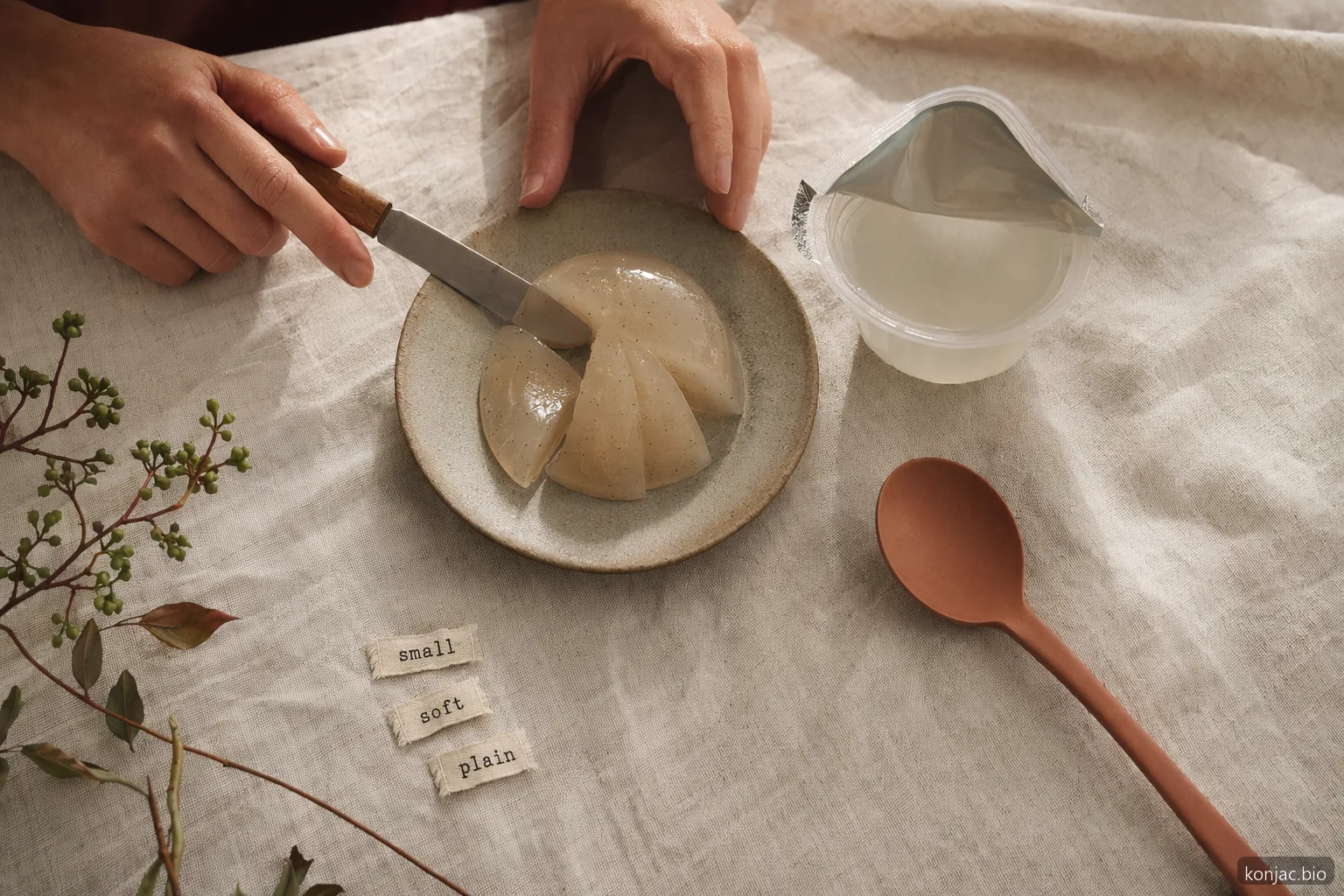
Konjac jellies sit in a different texture family than gelatin desserts, pectin fruit snacks, and agar cubes. The main difference is chew: konjac gives a resilient, elastic bite that resists melting at room temperature.
| Gelling system | Source | Texture | Common use |
|---|---|---|---|
| Konjac | Amorphophallus konjac corm | Elastic, chewy, slippery | Jelly cups, pouches, drinks |
| Gelatin | Animal collagen | Soft, bouncy, melts warm | Desserts, gummies |
| Pectin | Fruit peel and pomace | Tender, short bite | Jams, fruit gummies |
| Agar | Seaweed | Firm, brittle, clean break | Cubes, desserts, vegan gels |
For vegan positioning, konjac has an advantage over gelatin because it is plant-derived. For fruit-forward gummies, pectin may produce a cleaner bite. For a firm Asian-style dessert cube, agar can deliver a sharper fracture than konjac.
Konjac also carries fiber positioning, but brands should be precise. The EFSA-approved claim is: “Glucomannan in the context of an energy restricted diet contributes to weight loss,” and the conditions include 3 g daily in 3 doses of 1 g before meals with water via EFSA. A casual jelly snack should not imply that claim unless the full regulatory conditions are met in the target market.
Buying checklist for konjac jellies
Good konjac jellies should match the intended eater, serving occasion, and channel. A children’s lunchbox pouch, an adult low-sugar snack, and a private-label Asian dessert cup need different texture targets and label controls.
Use this checklist before buying or developing a product:
- Format: cup, pouch, drink, or gummy.
- Texture: spoonable, squeezable, chewable, or sliceable.
- Serving size: small enough for calorie goals, large enough for safe handling.
- Warnings: choking language where format and market require it.
- Sweetener: sugar, fruit juice, erythritol, stevia, sucralose, or blends.
- Fiber claim: verified grams per serving and compliant wording.
- Certifications: vegan, halal, kosher, non-GMO, ISO 22000, or HACCP when needed.
- Packaging: cup seal strength, pouch cap safety, and shelf-life validation.
B2B aside: konjac.bio sources konjac ingredients at wholesale for food, beverage, and supplement teams. For private-label or bulk ingredient needs, request specifications through /contact/.
For consumers, the best konjac jelly is usually the one with the clearest label and safest format. For brands, the best formula is the one that balances chew, flow, cost, shelf stability, and market-specific compliance.
Frequently asked questions
01 Are konjac jellies vegan?
02 Why do konjac jellies have choking warnings?
03 Do konjac jellies help with weight management?
04 What do konjac jellies taste like?
05 Can children eat konjac jellies?
06 How should konjac jellies be stored?
- Mini-Cup Gel Candy · U.S. Food and Drug Administration · 2024
- 21 CFR 184.1350 Konjac flour · Electronic Code of Federal Regulations · 2024
- Scientific Opinion on health claims related to konjac mannan glucomannan · European Food Safety Authority · 2010