Is there a konjac noodle ban in the United States?
No, there is no general konjac noodle ban in the United States for shirataki noodles, konjac pasta, or properly produced konjac flour foods. The US restriction most often confused with noodles concerns gel candies containing konjac, especially small jelly cups that can pose a choking hazard.
The US Food and Drug Administration lists an import control for gel candies containing konjac under Import Alert 33-15. That alert targets gel candies, not noodles, because the candy format can be swallowed whole and may not dissolve quickly in the mouth.
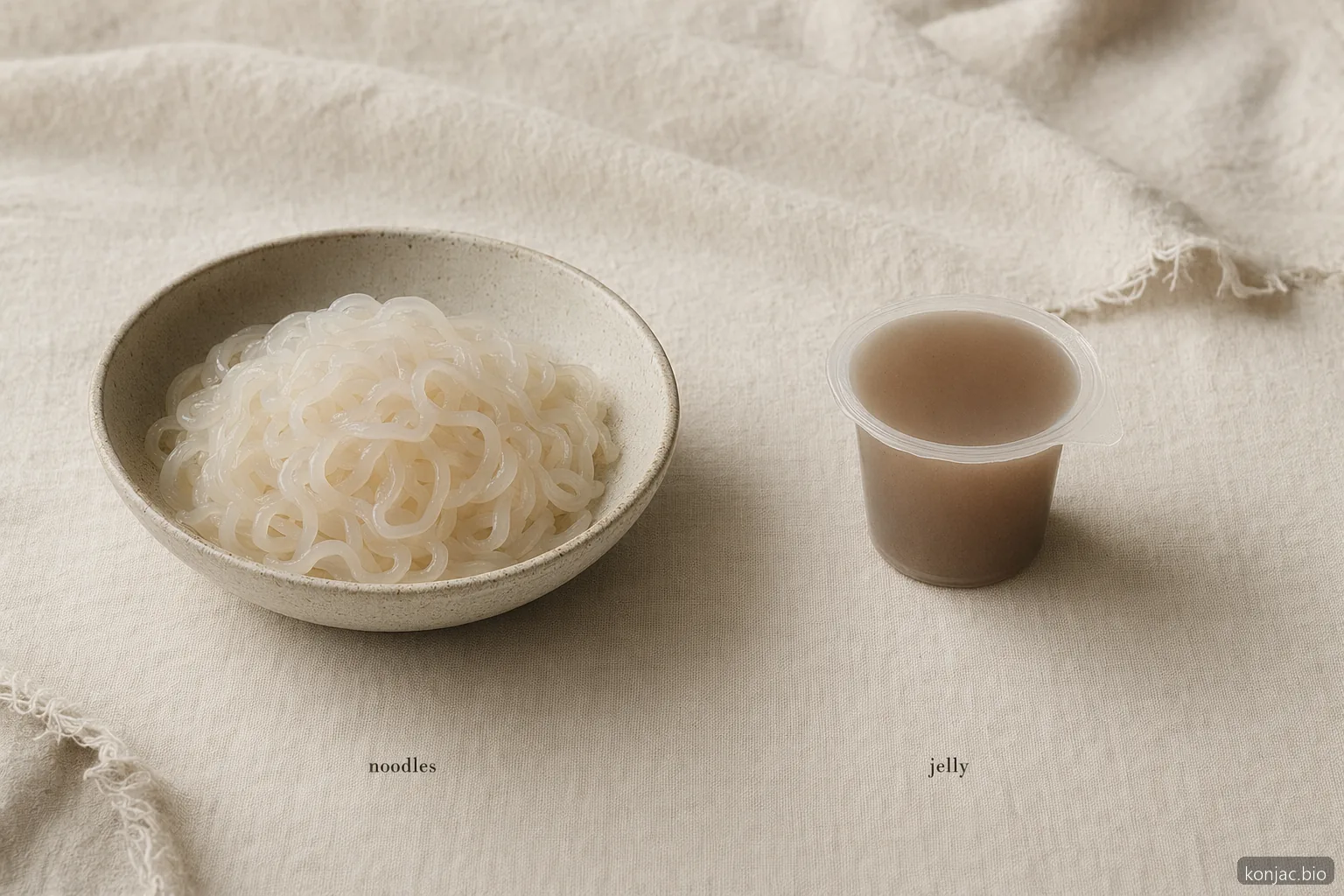
Shirataki noodles are usually made from water, konjac glucomannan, and a setting agent such as calcium hydroxide. Their long noodle shape, high water content, and serving preparation differ from mini-cup jellies. The food safety question is therefore not simply whether a product contains konjac, but how the konjac is structured and consumed.
For a broader ingredient background, see the parent konjac guide. For noodle-specific formulation and cooking details, see shirataki noodles.
What products were actually restricted under the konjac noodle ban?
The products actually restricted were konjac jelly mini-cups and similar gel candies, not standard konjac noodles. These products are small, slippery, elastic gels that can be sucked directly from a plastic cup and swallowed with little chewing.
In the European Union, Commission Decision 2002/247/EC suspended the placing on the market and import of jelly mini-cups containing the additive E425, which includes konjac, because of choking risk in small confectionery formats under EU Decision 2002/247/EC. The decision was about product geometry and gel behavior, not a blanket rejection of Amorphophallus konjac as a food ingredient.
A practical comparison helps separate the categories:
- Restricted concern: small konjac jelly cups eaten by suction or swallowed whole.
- Commonly permitted category: shirataki noodles packed in water and cooked or rinsed before eating.
- Ingredient category: konjac flour or glucomannan used as a thickener, gelling agent, or fiber source.
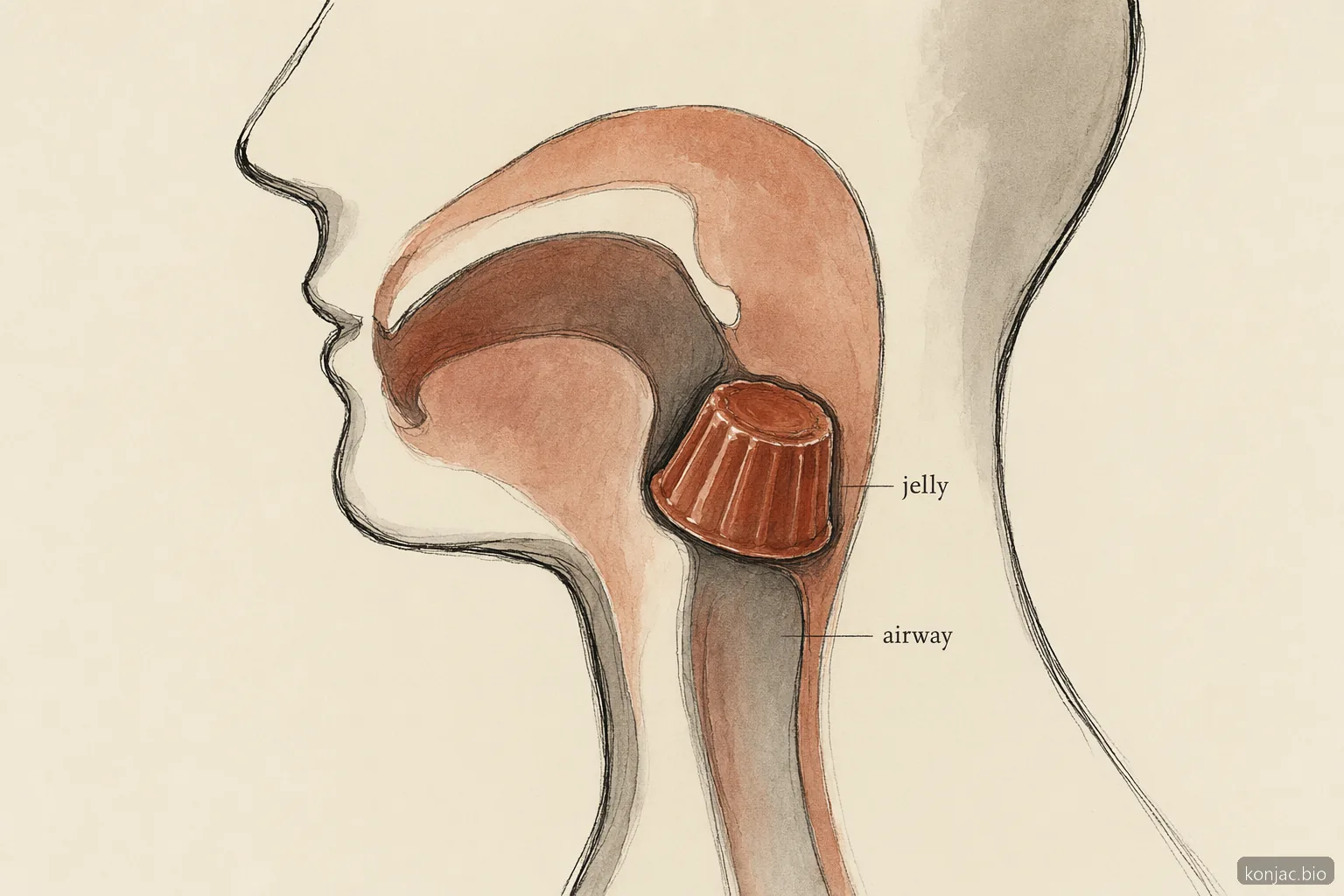
- Risk driver: firm, slippery gel pieces that resist breakdown during swallowing.
Konjac flour itself is widely used in food manufacturing as a hydrocolloid. It forms viscous solutions and heat-stable gels, which is why it appears in noodles, vegan seafood analogs, sauces, and reduced-calorie foods. The same gelling strength that makes konjac useful also explains why regulators focused on mini-cup jelly shape and texture.
If your team is sourcing konjac for noodles, gummies, or hybrid formats, konjac.bio can support wholesale ingredient discussions and specification review through contact.
Why were konjac mini-cup jellies restricted?
Konjac mini-cup jellies were restricted because their size, slippery surface, and elastic gel structure can create a choking hazard. The concern is strongest when the jelly is consumed by suction from a small cup, especially if the gel remains intact.
Konjac glucomannan absorbs water and forms a cohesive gel when processed with alkaline salts. In noodle form, that structure is cut into strands. In mini-cup candy form, the gel may remain as a single plug-like piece that can be inhaled or swallowed without enough chewing.
The FDA import alert identifies gel candies containing konjac as subject to detention because of safety concerns tied to choking, using the product category rather than the noodle category as the regulatory trigger under FDA controls. The EU action similarly focused on jelly mini-cups containing E425 konjac, a food additive designation, in small confectionery portions under E425 konjac rules.
This distinction matters for buyers and brands. A konjac noodle, a konjac capsule, a konjac powder, and a konjac jelly cup can have the same botanical source but different risk profiles. Regulators assess the finished product, serving format, instructions, and foreseeable consumer use.
Konjac is not unique in being assessed by final format. Many hydrocolloids, including carrageenan, pectin, agar, and xanthan gum, behave differently depending on concentration, pH, heat processing, and serving size. With konjac, the strong gel network makes format control especially important.
Compliance checklist for konjac noodles and shirataki products
Konjac noodle compliance starts with treating shirataki as a finished food, not just as a fiber ingredient. Brands should document ingredient identity, manufacturing controls, labeling, texture, and consumer preparation instructions before launch.
A basic compliance checklist for konjac noodles includes:
- Ingredient identity: confirm Amorphophallus konjac source, glucomannan content, and food-grade status.
- Process control: document hydration, alkalization, cutting, rinsing, packing, and heat steps.
- Texture target: avoid large, firm, slippery pieces that resemble mini-cup jelly hazards.
- Label accuracy: list konjac flour, glucomannan, water, calcium hydroxide, and other ingredients as required locally.
- Use directions: include rinse, cook, drain, and chew guidance when appropriate.
- Market review: check US, EU, UK, Canadian, Australian, and Asian rules by product category.
Many konjac noodles are sold as low-calorie foods because the product is mostly water and indigestible soluble fiber. Health claims require more care than calorie statements. The European Food Safety Authority has evaluated glucomannan and the authorized wording is 'Glucomannan in the context of an energy restricted diet contributes to weight loss' under the EFSA opinion. Brands should avoid expanding that claim beyond the allowed conditions of use.
Manufacturers using konjac flour should also validate viscosity and gel strength by lot. Small changes in particle size, acetylation, ash content, or alkalinity can change noodle bite and gel stability. For ingredient properties, see konjac flour.
How to read konjac ban headlines without overreacting
Headlines about a konjac noodle ban often compress three separate issues into one phrase: konjac as a plant, glucomannan as a fiber, and mini-cup jelly as a high-risk format. A good reading starts by identifying the exact product category.
Use this quick screen when evaluating a regulatory story:
- Does it say noodles? If not, it may concern jelly cups or confectionery gels.
- Does it mention E425? In Europe, E425 is the additive code for konjac and konjac glucomannan.
- Does it mention choking? That usually points to gel candy format, not pasta.
- Does it cite FDA or EUR-Lex? Primary sources are stronger than recycled retail summaries.
- Does it specify country? Food rules differ by market and product form.
Consumers can usually buy shirataki noodles through mainstream grocery and online channels where local rules permit them. The more sensitive category is jelly confectionery, especially mini-cup formats, because those products are closer to the specific formats named by regulators.
For brands, the safest commercial posture is narrow and factual: konjac noodles are not the same as banned mini-cup jellies, but konjac-containing products still need format-specific safety review. That sentence is clearer than claiming all konjac products are legal everywhere or that all konjac products are restricted.
Frequently asked questions
01 Are konjac noodles banned in the US?
02 Why are konjac jelly cups banned in some places?
03 Is konjac flour banned?
04 Are shirataki noodles the same as banned konjac jelly?
05 Can brands make health claims about konjac noodles?
06 What should buyers check before importing konjac products?
- Import Alert 33-15: Detention Without Physical Examination of Gel Candies Containing Konjac · US Food and Drug Administration · 2001
- Commission Decision 2002/247/EC on Jelly Mini-Cups Containing E425 Konjac · EUR-Lex · 2002
- Scientific Opinion on Health Claims Related to Konjac Mannan Glucomannan · European Food Safety Authority · 2010