What is konjac plant pasta?
Konjac plant pasta is a gelled noodle made from konjac glucomannan, water, and an alkaline setting agent.
The raw material comes from the corm of Amorphophallus konjac, a perennial plant widely used in East Asian food systems. Glucomannan is a water-soluble polysaccharide extracted from the corm, and konjac foods often rely on its strong water-binding and gel-forming behavior, described in konjac hydrocolloid reviews such as konjac glucomannan.
In retail, the same base food may appear as shirataki, konjac noodles, konjac spaghetti, konjac fettuccine, or miracle noodles. These names usually describe the shape and marketing position, not a different plant. For a broader view of the plant, powder, and finished foods, see the konjac guide.
The pasta is usually packed in water because its structure is a hydrated gel. That is why a 200 g drained pack can feel substantial while still contributing very few calories compared with wheat pasta.
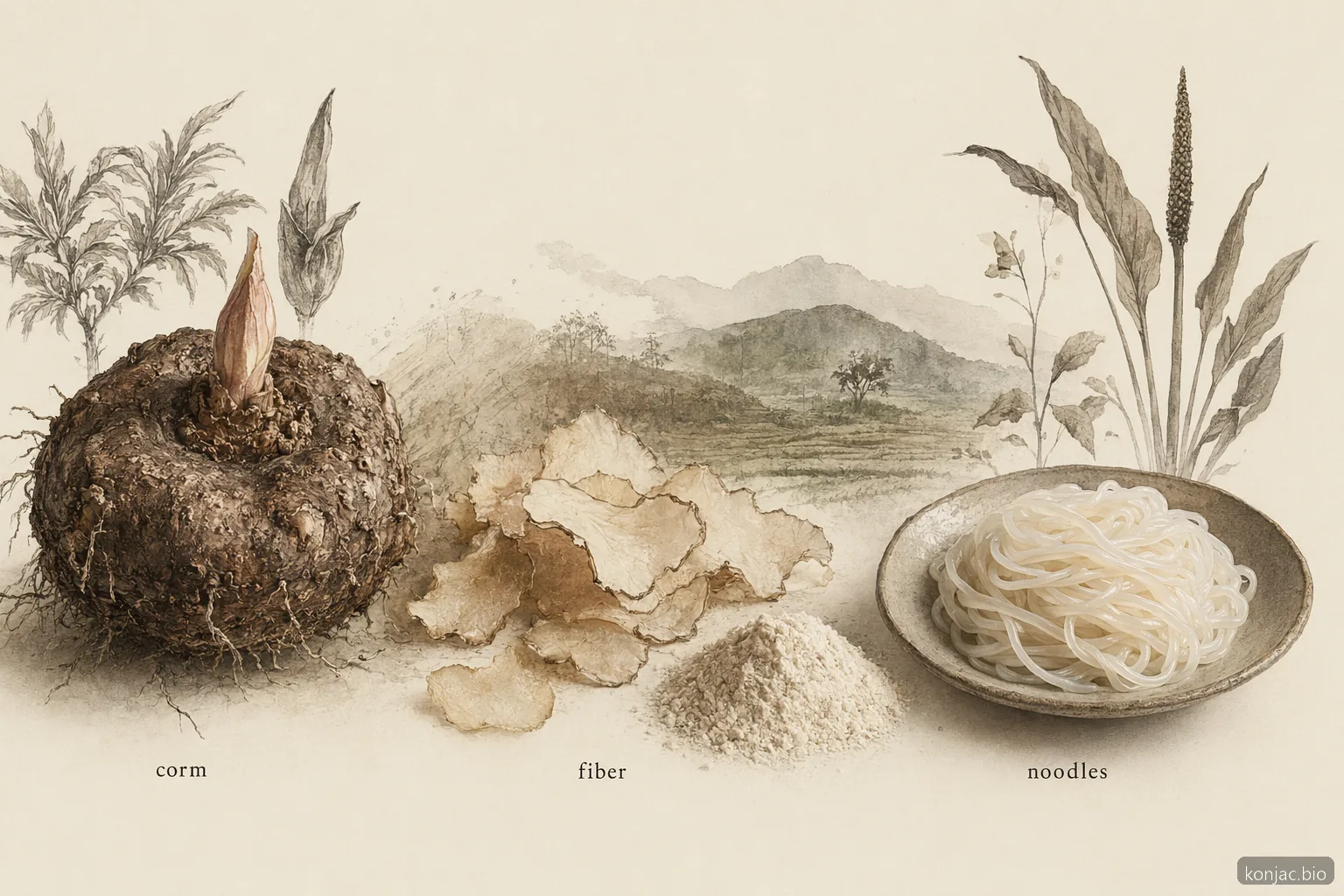
How is konjac plant pasta made from Amorphophallus konjac?
Konjac plant pasta is made by hydrating konjac flour, setting the gel with food-grade alkali, shaping the gel, and packing the noodles in water.
A typical process has five steps:
- Konjac flour hydration: refined konjac powder is dispersed into water so glucomannan can swell.
- Alkaline setting: calcium hydroxide or a similar food-grade alkali raises pH and helps the gel set.
- Shaping: the gel is extruded or cut into spaghetti, fettuccine, rice-like grains, or sheets.
- Heat setting: the shaped pasta is heated so the gel becomes more stable.
- Water packing: the finished noodles are sealed in liquid to preserve hydration and texture.
The ingredient list is usually short: water, konjac flour or konjac glucomannan, and calcium hydroxide. Some formats include oat fiber, soy fiber, seaweed powder, or vegetable powders to change color, bite, or label positioning.
Konjac flour quality affects finished pasta texture. Higher-purity glucomannan typically gives stronger gel formation, less odor, and more predictable water binding. Buyers comparing raw materials can review the related konjac flour guide for powder grades and application fit.
Konjac plant pasta nutrition: what does the label mean?
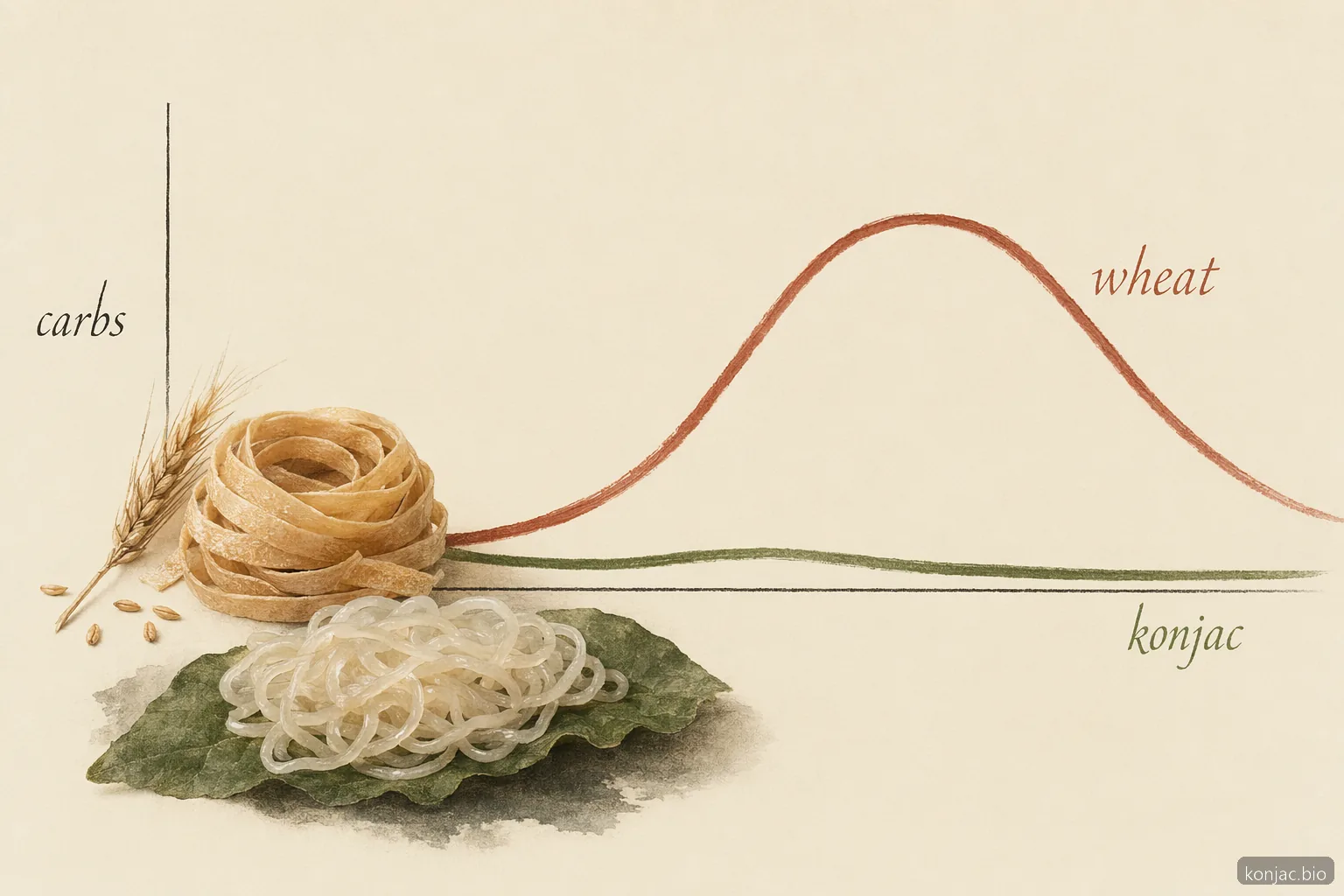
Konjac plant pasta is usually very low in calories because it is mostly water and soluble fiber, not starch.
Most products provide a small amount of energy per serving, often in the range of 5 to 20 calories per 100 g, depending on added fibers and solids. Wheat spaghetti is starch-based, while konjac pasta is gel-based, so the nutrition panels are not directly comparable by weight.
| Attribute | Konjac plant pasta | Wheat pasta |
|---|---|---|
| Main structure | Hydrated glucomannan gel | Durum wheat starch and protein |
| Digestible carbohydrate | Very low | High |
| Gluten | Typically gluten-free if produced without cross-contact | Contains wheat gluten |
| Texture | Springy, slippery, chewy | Firm, starchy, elastic |
| Flavor | Neutral after rinsing | Grain-like |
Glucomannan has been studied for weight-management and cholesterol-related outcomes. The EFSA-approved wording for body weight is: “Glucomannan in the context of an energy restricted diet contributes to weight loss,” with conditions described in the EFSA opinion. A PubMed-indexed meta-analysis also evaluated glucomannan and several cardiometabolic markers in controlled trials, including body weight and blood lipids, in clinical trials.
Those findings do not mean every bowl of konjac noodles creates the same outcome. Serving size, daily intake, water intake, total diet, and product formulation all matter. For consumer products, benefit language should stay close to approved wording or use cautious phrasing such as “may support satiety” or “is associated with fiber intake.”
How do you cook konjac plant pasta so it tastes better?
Konjac plant pasta tastes best when it is rinsed, briefly boiled, dry-heated, and then added to a flavorful sauce.
The liquid in the pack can have a mild sea-like or alkaline smell. That aroma usually drops after rinsing and heating. The pasta itself is neutral, so it needs sauce, salt, acid, aromatics, or broth to taste finished.
- Drain: pour off the packing liquid completely.
- Rinse: rinse under cold water for 30 to 60 seconds.
- Boil: simmer for 2 to 3 minutes to reduce pack aroma.
- Dry-pan heat: cook in a nonstick pan for 2 to 4 minutes until surface moisture drops.
- Sauce: add to tomato sauce, stir-fry sauce, ramen broth, curry, pesto, or sesame dressing.
Texture is the main difference from wheat pasta. Konjac noodles are springy and slippery rather than starchy. They do not absorb sauce like durum pasta, so clingy sauces, thick broths, minced vegetables, grated cheese, sesame paste, or egg-based coatings work better than thin watery sauces.
For a dedicated look at noodle formats, cuts, and foodservice uses, see the related shirataki noodles guide.
Safety, labeling, and quality checks
Konjac plant pasta is widely sold as a food, but texture, water binding, and package format make safety and labeling checks important.
Whole noodles are different from small konjac jelly cups. The FDA has warned consumers about mini-cup gel candy products that may pose a choking concern because of their shape and gel strength, especially when eaten by children or older adults, in its FDA warning. Pasta formats are normally larger, cooked, and chewed, but product developers should still evaluate bite size, chewiness, target audience, and package directions.
Good retail or B2B specifications should cover:
- Ingredient declaration and country of origin
- Net weight, drained weight, and serving size
- pH range and calcium hydroxide use
- Microbiological limits and shelf-life validation
- Allergen cross-contact controls
- Certifications such as HACCP, BRCGS, FSSC 22000, ISO 22000, halal, kosher, or organic where relevant
For manufacturers, consistency matters as much as nutrition. A noodle that breaks during retort, smells strongly after opening, or varies in drained weight can create quality complaints even when the ingredient list is clean.
B2B aside: konjac.bio sources konjac raw materials and finished formats at wholesale scale for brands, distributors, and foodservice buyers. For specs, MOQ, and pricing, contact konjac.bio wholesale.
Frequently asked questions
01 Is konjac plant pasta the same as shirataki noodles?
02 Does konjac plant pasta have carbs?
03 Why does konjac plant pasta smell when opened?
04 Can konjac plant pasta support weight management?
05 Is konjac plant pasta safe for children?
- Scientific Opinion on the substantiation of health claims related to konjac mannan · European Food Safety Authority · 2010
- FDA Warns Consumers Not to Eat Mini-Cup Gel Candy Products · U.S. Food and Drug Administration · 2001
- Effect of glucomannan on plasma lipid and glucose concentrations, body weight, and blood pressure · PubMed · 2008
- Konjac glucomannan: A review of structure, physicochemical properties, and applications · ScienceDirect · 2020