What is konnyaku konjac?
Konnyaku konjac is a Japanese food gel made by setting konjac glucomannan with an alkaline ingredient, usually calcium hydroxide.
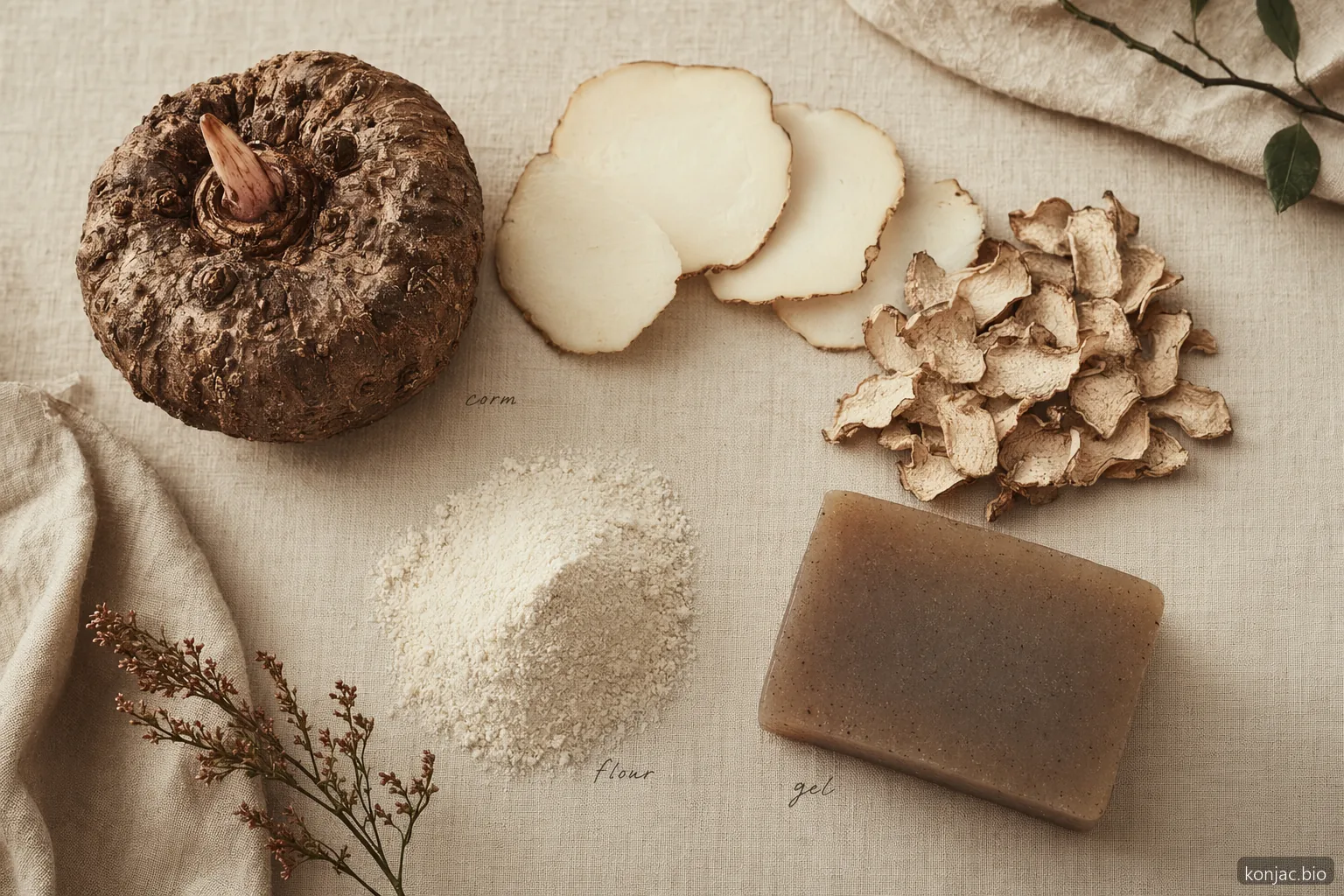
The plant source is Amorphophallus konjac, a perennial aroid grown for its starchy underground corm. The corm is processed into konjac flour or powder, then hydrated and gelled to form konnyaku blocks, balls, slabs, and noodles. For a broader plant and ingredient overview, see the konjac guide.
Plain konnyaku has a mild flavor, a springy texture, and a faint alkaline aroma before rinsing. It is common in Japanese oden, nimono simmered dishes, sukiyaki, hot pot, and bento sides. In retail, grey konnyaku often contains seaweed powder for color and subtle flavor, while white konnyaku is usually made without seaweed.
The key functional compound is glucomannan, a water-soluble polysaccharide that forms highly viscous gels. EFSA has evaluated konjac mannan, another name for glucomannan, for specific health claims including weight management and cholesterol maintenance under defined conditions [EFSA weight](https://www.efsa.europa.eu/en/efsajournal/pub/1798).
How is konnyaku konjac made?
Konnyaku konjac is made by hydrating konjac flour in water, adding an alkaline coagulant, heating or resting the mixture, and shaping it into a firm gel.
The industrial and kitchen process follows the same logic. Konjac flour swells rapidly because glucomannan binds large amounts of water. An alkaline setting agent, commonly calcium hydroxide, changes the hydrated paste into a heat-stable gel with the familiar elastic bite.
- Hydrate: Konjac flour is dispersed into water and mixed until uniform.
- Set: Calcium hydroxide solution is added to trigger gel formation.
- Shape: The gel is poured into trays, extruded as noodles, or tied into knots.
- Heat: Blocks or noodles are boiled or steamed to stabilize texture.
- Pack: Finished konnyaku is packed in water to keep it hydrated.
Traditional konnyaku can be made from grated fresh corm, but commercial products usually start with refined flour for consistency. Flour grade affects gel strength, color, odor, hydration speed, and specking. If you are comparing raw materials, the related konjac flour guide explains powder specifications and common food uses.
For manufacturers, the control points are particle size, viscosity, ash, sulfur dioxide where used, microbial status, and hydration behavior. Food safety systems such as ISO 22000 or HACCP are typically used to manage ingredient, processing, and packing risks in konjac gel production.
How does konnyaku konjac compare with shirataki?
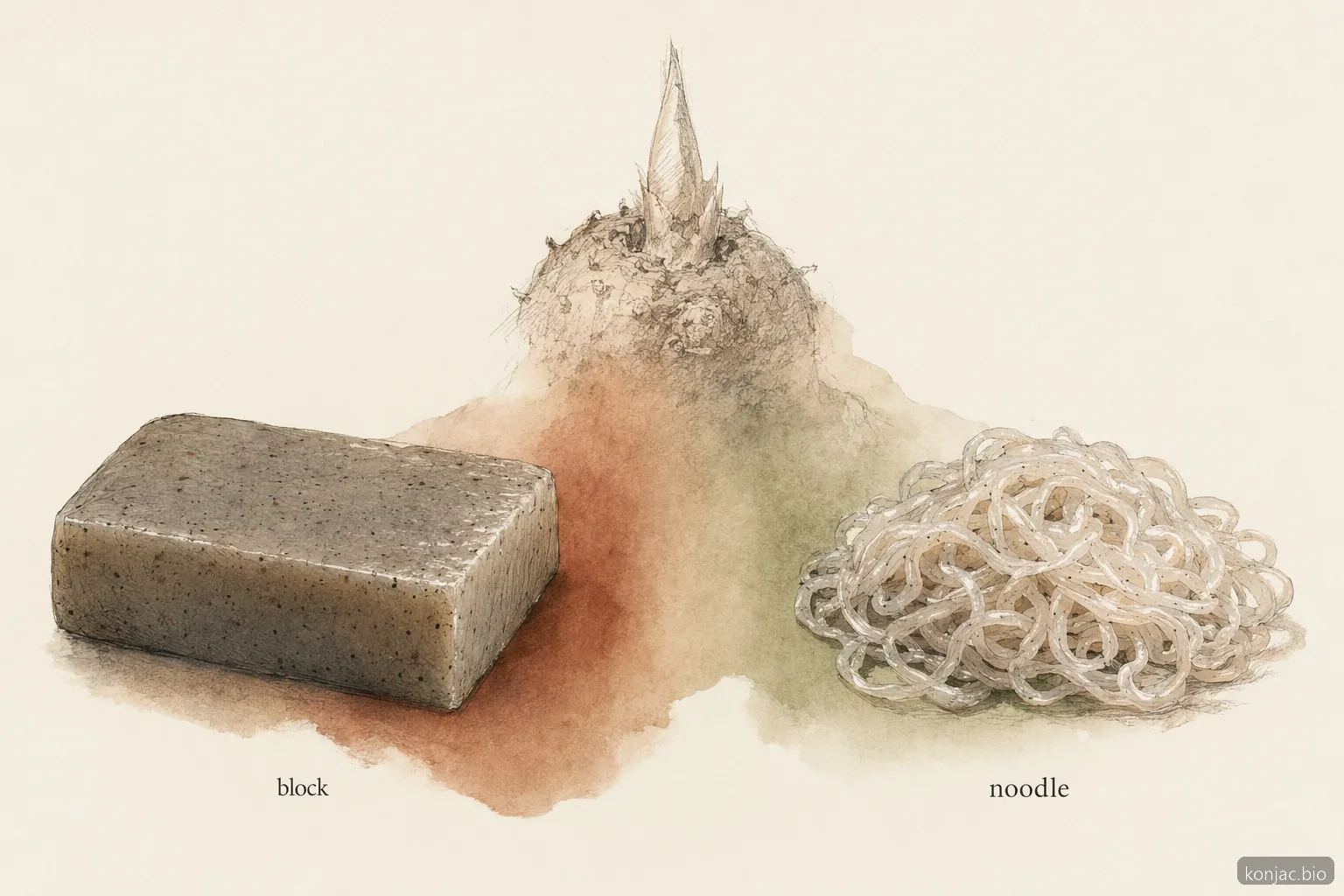
Konnyaku konjac and shirataki are made from the same konjac gel system, but konnyaku is usually sold as blocks or pieces while shirataki is extruded into noodles.
The difference is mostly format, not botanical origin. Shirataki means waterfall-like in Japanese, referring to the thin, translucent noodle shape. Konnyaku blocks are sliced, scored, cubed, or torn for simmered dishes, while shirataki is rinsed and used where a noodle shape fits.
| Feature | Konnyaku block | Shirataki noodles |
|---|---|---|
| Typical shape | Block, slab, cube, knot | Thin or flat noodle |
| Main ingredient | Konjac flour or corm | Konjac flour or corm |
| Texture | Dense, springy, sliceable | Slippery, elastic, noodle-like |
| Common use | Oden, hot pot, simmered sides | Soup, stir-fry, low calorie noodle bowls |
| Prep step | Rinse, blanch, score, simmer | Rinse, blanch, dry-pan, sauce |
Both formats are mostly water by weight and contribute little digestible carbohydrate compared with wheat pasta or rice noodles. Their value in recipes comes from texture, volume, sauce absorption after drying, and compatibility with broths and seasonings.
For noodle-specific preparation, texture tips, and food applications, see the sibling guide to shirataki noodles.
Nutrition, glucomannan, and approved claims
Konnyaku is low in calories because it is primarily water and gel-forming fiber rather than starch, fat, or protein. Exact nutrition varies by formula, serving size, and whether the product includes seaweed, calcium salts, or flavorings.
Glucomannan is the defining konjac fiber. EFSA’s approved wording for weight management is: “Glucomannan in the context of an energy restricted diet contributes to weight loss” [EFSA weight](https://www.efsa.europa.eu/en/efsajournal/pub/1798). The same opinion states the claim applies when foods provide 3 g of glucomannan daily in three 1 g doses with 1 to 2 glasses of water before meals, within an energy-restricted diet.
EFSA also evaluated the claim “Glucomannan contributes to the maintenance of normal blood cholesterol levels” [EFSA cholesterol](https://www.efsa.europa.eu/en/efsajournal/pub/1799). That opinion identifies 4 g of glucomannan daily as the condition of use for the cholesterol claim.
These claims are about glucomannan intake, not a guarantee from every konnyaku dish. A serving of prepared konnyaku block may contain less glucomannan than a concentrated supplement or measured functional food portion. Labels, serving weight, and fiber content matter when comparing products.
Because konnyaku is filling yet low in energy, it is often used to add bulk to soups, stews, salads, rice blends, and noodle bowls. It should not be the only fiber source in a diet, since beans, vegetables, oats, fruit, seeds, and whole grains contribute different fibers, micronutrients, and phytochemicals.
Buying, cooking, storage, and safety checkpoints
Good konnyaku should have a clean gel structure, neutral to mildly alkaline aroma, intact packaging, and clear storage instructions. Most refrigerated or shelf-stable packs are stored in water, then rinsed before cooking.
For better flavor and texture, use a 4-step preparation method:
- Rinse: Drain the packing liquid and rinse under cool water.
- Blanch: Boil for 2 to 3 minutes to reduce alkaline aroma.
- Dry-pan: Heat in a skillet until surface moisture evaporates.
- Season: Simmer with broth, soy sauce, miso, curry, chili oil, or dashi.
Scoring a block with shallow crosshatch cuts increases surface area and helps sauces cling. Tearing konnyaku by hand creates rough edges that hold broth better than smooth knife cuts. For stews and oden, simmered konnyaku becomes more flavorful after 20 to 40 minutes in seasoned liquid.
Safety depends strongly on format. The U.S. FDA has warned consumers and importers to avoid konjac mini-cup gel candies because they have been associated with choking incidents, especially due to their small cup shape and firm gel texture [FDA warning](https://www.fda.gov/food/alerts-advisories-safety-information/fda-warns-consumers-and-importers-avoid-konjac-mini-cup-gel-candies). Blocks, noodles, and sliced pieces are different formats, but chewing well and preparing pieces appropriately remains sensible.
B2B note: konjac.bio sources konjac ingredients and konnyaku-ready materials for wholesale buyers with specification-led documentation. For pricing, pack sizes, and application fit, contact the team at /contact/.
Frequently asked questions
01 Is konnyaku the same as konjac?
02 What does konnyaku konjac taste like?
03 Is konnyaku konjac low in calories?
04 What is glucomannan in konnyaku?
05 How should I cook konnyaku blocks?
06 Are konjac mini-cup jellies the same as konnyaku blocks?
- Scientific Opinion on the substantiation of health claims related to konjac mannan and reduction of body weight · European Food Safety Authority · 2010
- Scientific Opinion on the substantiation of health claims related to konjac mannan and maintenance of normal blood cholesterol concentrations · European Food Safety Authority · 2010
- FDA Warns Consumers and Importers to Avoid Konjac Mini-Cup Gel Candies · U.S. Food and Drug Administration · 2023
- Health benefits of konjac glucomannan · PubMed · 2008