How to cook shirataki noodles for the best texture?
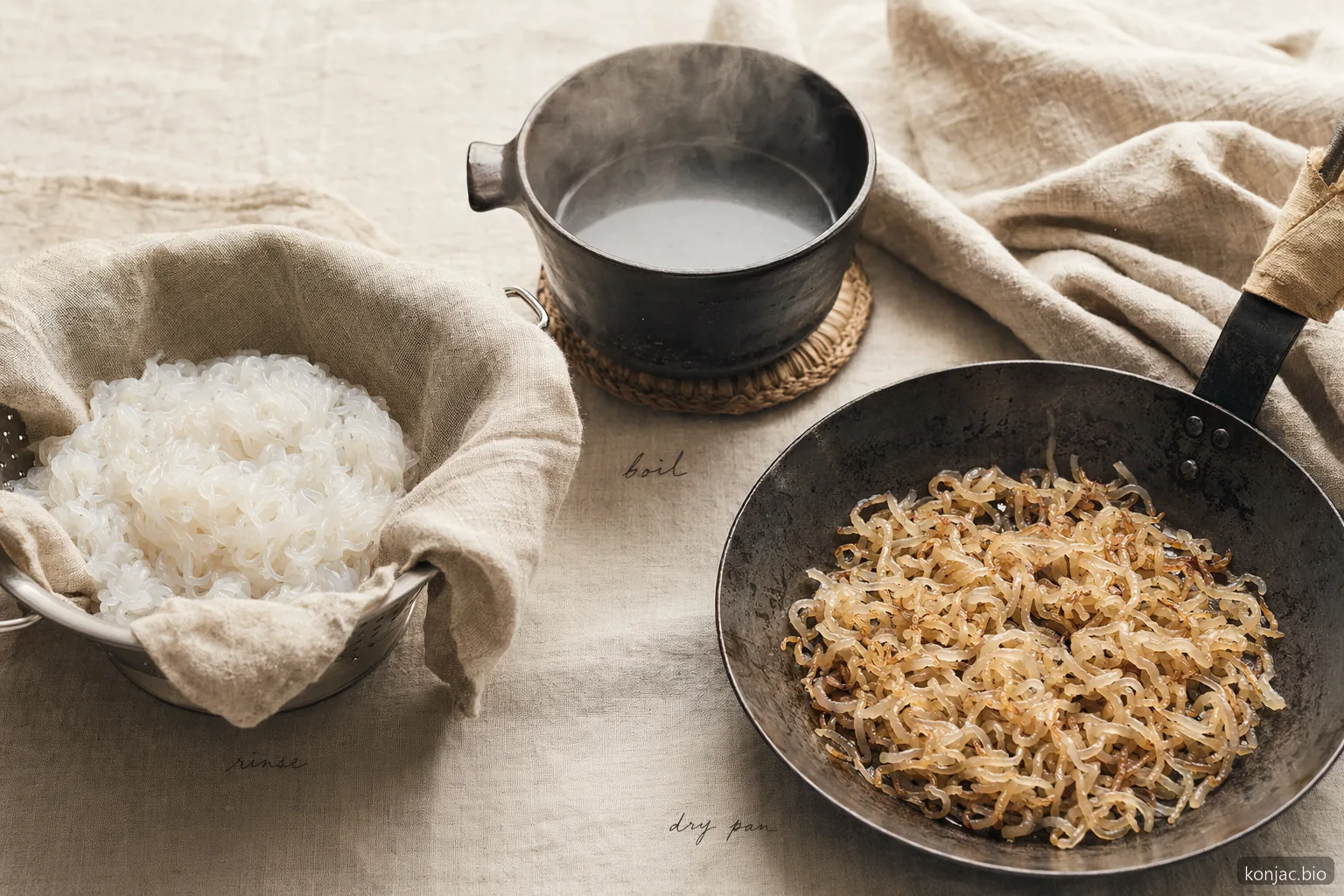
The best way to cook shirataki noodles is to rinse them, boil them briefly, dry-fry them, and add sauce only after the pan looks dry.
Shirataki noodles are made mostly from water and konjac glucomannan, a soluble fiber associated with the corm of Amorphophallus konjac. Glucomannan has been reviewed by food safety and nutrition authorities, including the EFSA claim opinion on konjac mannan.
- Drain: Empty the pouch into a strainer and discard the liquid.
- Rinse: Rinse under cold running water for 30 seconds.
- Boil: Simmer in plain water for 2 to 3 minutes.
- Dry-fry: Move noodles to a dry skillet over medium-high heat for 3 to 6 minutes.
- Sauce: Add sauce, aromatics, broth, or vegetables after steam slows down.
The dry-fry step matters most. Shirataki arrives fully hydrated, so extra water can dilute soy sauce, tomato sauce, curry, or broth if it is not cooked off first.
Why do shirataki noodles smell fishy before cooking?
Shirataki noodles can smell fishy because they are packed in alkaline water, and rinsing plus boiling removes most of that aroma.
The smell does not mean the noodles are seafood, spoiled, or flavored. Plain shirataki is usually made from water, konjac flour, and a calcium ingredient that helps the gel hold shape. Konjac glucomannan forms strong water-binding gels, a property summarized in food science references on glucomannan.
Use this quick odor fix:
- Rinse for 30 seconds, moving the noodles with your fingers or tongs.
- Boil 2 to 3 minutes in fresh water, not the pouch liquid.
- Drain hard, then dry-fry until the pan stops steaming heavily.
A splash of rice vinegar or lemon in the boiling water can help for cold salads. For ramen, boiling is usually enough because broth, ginger, garlic, miso, and chili oil add stronger aromas.
How to cook shirataki noodles without sauce turning watery?
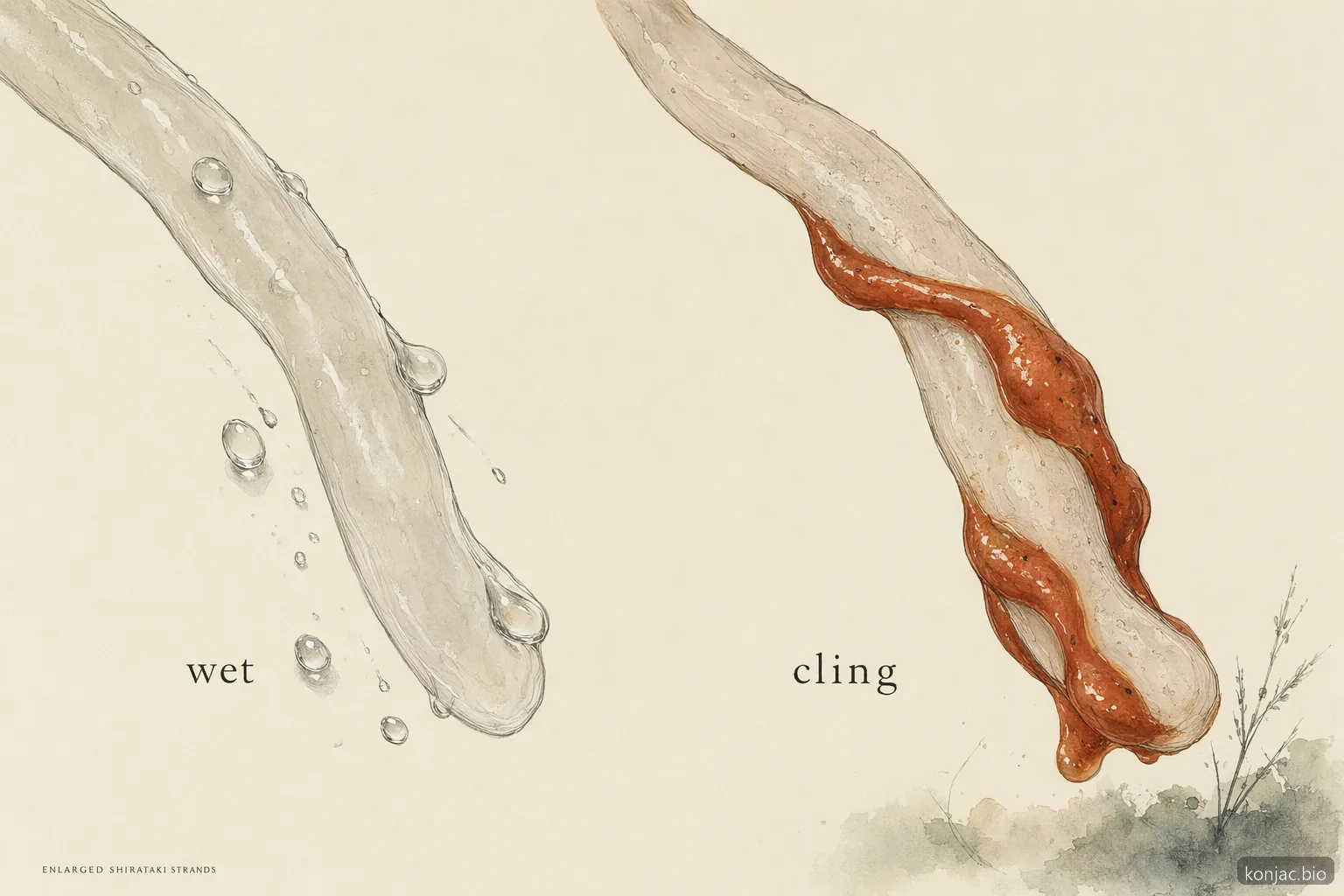
To keep sauce from turning watery, dry-fry shirataki noodles until they squeak lightly and release much less steam before any sauce enters the pan.
Shirataki has very little starch, so it does not thicken sauces like wheat pasta does. That makes pan moisture control the main cooking skill. The noodles should look glossy, separated, and slightly springy before you add sauce.
| Dish | Best sauce timing | Texture tip |
|---|---|---|
| Stir-fry | Add sauce after vegetables are crisp-tender | Use 1 to 2 tablespoons sauce per serving first |
| Tomato pasta | Warm sauce separately, then toss | Simmer sauce thicker than usual |
| Ramen | Add noodles to hot broth at serving | Keep broth concentrated |
| Cold salad | Chill noodles after boiling and draining | Pat dry before dressing |
For bigger flavor, coat dry-fried noodles with toasted sesame oil, garlic oil, chili crisp, or a spoon of concentrated tomato paste before adding liquid. This gives the noodle surface fat-soluble flavor before broth or sauce dilutes the pan.
Best sauces, seasonings, and meal formats for shirataki noodles
Shirataki noodles work best with concentrated, aromatic sauces because the noodles themselves are neutral. Think of them as a texture carrier rather than a wheat pasta duplicate.
Reliable flavor pairings include:
- Soy ginger: soy sauce, ginger, garlic, scallion, sesame oil.
- Spicy peanut: peanut butter, lime, chili paste, tamari, warm water.
- Tomato basil: thick tomato sauce, olive oil, basil, parmesan-style seasoning.
- Curry broth: curry paste, coconut milk, vegetables, herbs.
- Ramen bowl: miso, mushrooms, bok choy, soft egg, chili oil.
For more meal ideas, use the parent guide Konjac Recipes, then branch into shirataki recipes or konjac flour recipes when you want sauces, batters, gels, or bakery-style applications.
For product developers, konjac.bio sources konjac ingredients at wholesale volumes for noodle and fiber-forward formulations. Specifications and volume pricing are available through contact.
What mistakes make shirataki noodles rubbery?
Shirataki noodles turn rubbery when they are over-dried, overheated for too long, or paired with too little sauce.
The goal is dry on the surface, not dehydrated throughout. A dry skillet for 3 to 6 minutes is usually enough for one 7 to 8 ounce pouch. If the noodles shrink dramatically, tighten into knots, or squeak aggressively, they have cooked too long.
- Skipping the boil: leaves more package aroma in the finished dish.
- Adding sauce too early: makes the pan watery and dulls flavor.
- Over-dry-frying: creates a bouncy texture that can feel rubbery.
- Using thin sauce: gives bland noodles because shirataki does not absorb starch-based sauce like pasta.
- Freezing by accident: can make the bite firmer and chewier.
Nutrition claims should stay precise. The FDA recognizes dietary fiber as non-digestible carbohydrates with beneficial physiological effects under its fiber guidance, and EFSA authorized the wording: "Glucomannan in the context of an energy restricted diet contributes to weight loss." That claim applies under specified intake conditions, not to any single bowl by itself.
Frequently asked questions
01 Do shirataki noodles need to be boiled?
02 How long should I dry-fry shirataki noodles?
03 Can I microwave shirataki noodles?
04 Why does sauce not stick to shirataki like pasta?
05 Are shirataki noodles the same as konjac noodles?
- Scientific Opinion on konjac mannan glucomannan health claims · European Food Safety Authority · 2010
- Dietary Fiber · U.S. Food and Drug Administration · 2024
- Glucomannan topic overview · ScienceDirect · 2024
- PubMed search for glucomannan konjac · National Library of Medicine · 2024