How do shirataki yam noodles recipes taste better?
Shirataki yam noodles recipes taste better when you remove the packing liquid, reduce surface moisture, and add high-flavor sauces after heating.
Shirataki noodles are typically made with water and glucomannan, a soluble fiber from the corm of Amorphophallus konjac. EFSA identifies konjac mannan, also called glucomannan, as a non-digestible polysaccharide with high water-holding capacity in its scientific opinion on konjac mannan.
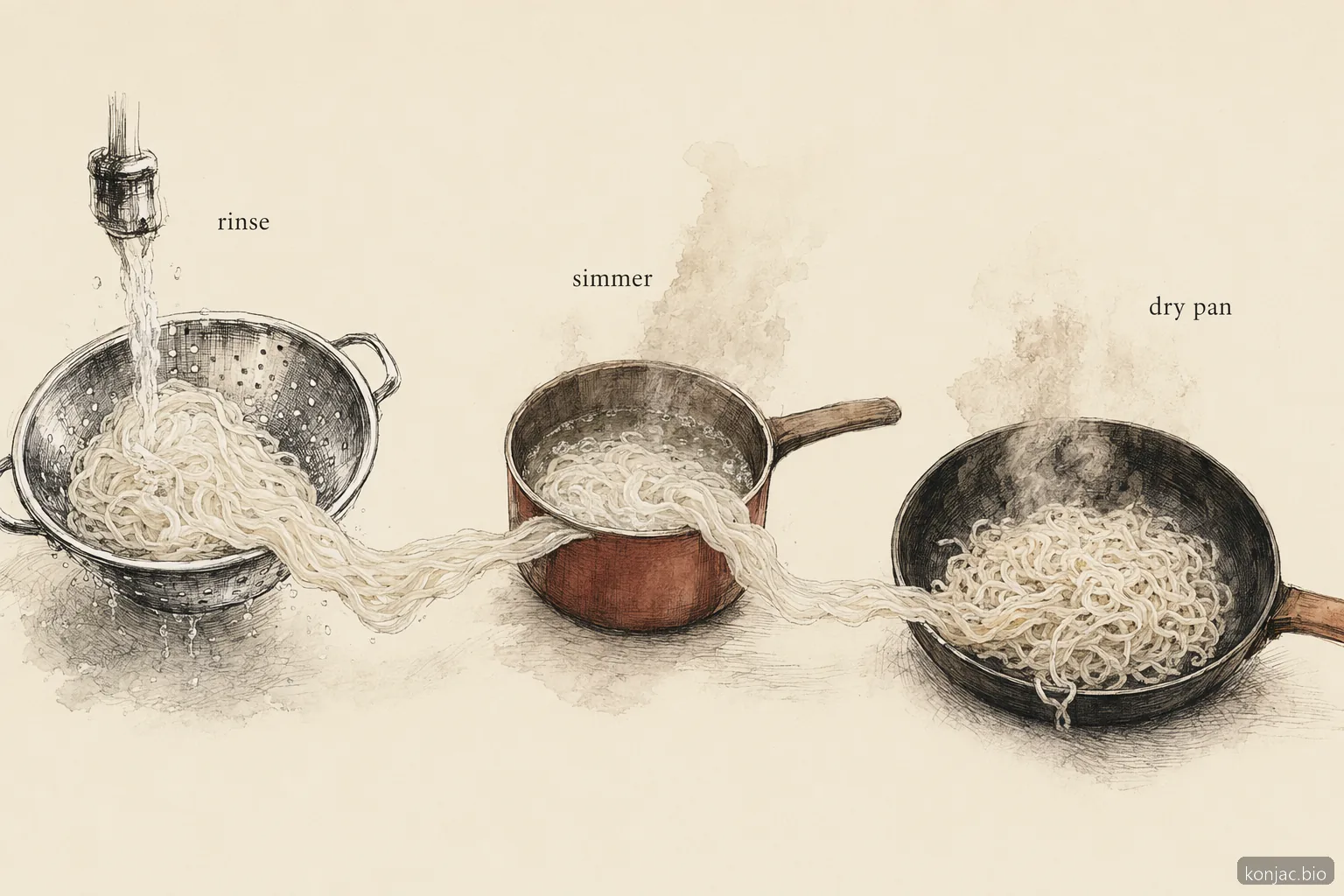
- Drain: Empty the pouch into a sieve and discard the liquid.
- Rinse: Rinse under cool running water for 30-45 seconds.
- Simmer: Boil in plain water for 2 minutes to soften aroma.
- Dry-pan: Heat in a nonstick skillet for 3-5 minutes, stirring often.
- Sauce last: Add sauce only after steam slows and the pan looks dry.
The dry-pan step is the difference between watery noodles and glossy noodles. Konjac fibers hold water strongly, so sauce clings best after the noodle surface has been warmed and dried.
For a neutral base, finish with 1 teaspoon sesame oil, 1 tablespoon tamari or soy sauce, 1 teaspoon rice vinegar, and sliced scallion. That simple ratio turns one 200 g pouch into a fast side dish or a base for egg, tofu, shrimp, chicken, or mushrooms.
Which shirataki yam noodles recipes work best for weeknights?
The best weeknight shirataki yam noodles recipes use fast sauces, quick proteins, and vegetables that keep their texture.
Shirataki noodles are already formed, so the cooking goal is not starch hydration like wheat pasta. The goal is flavor concentration. Use ingredients that cook in 2-8 minutes, then combine them with dry-panned noodles at the end.
| Recipe idea | Sauce base | Protein option | Vegetable | Time |
|---|---|---|---|---|
| Garlic soy stir-fry | Soy sauce, garlic, ginger | Egg or tofu | Broccoli slaw | 12 minutes |
| Sesame cold noodles | Tahini, rice vinegar, chili crisp | Chicken or edamame | Cucumber | 10 minutes |
| Miso mushroom soup | Miso, broth, scallion | Tofu | Shiitake | 15 minutes |
| Tomato basil noodles | Crushed tomato, olive oil | Turkey or white beans | Spinach | 16 minutes |
| Curry coconut noodles | Curry paste, coconut milk | Shrimp or tempeh | Snap peas | 14 minutes |
For stir-fries, cook protein first, remove it, then cook vegetables, dry-pan noodles, and sauce. Add protein back during the final 60 seconds so it stays tender and the noodles stay springy.
For cold bowls, rinse, simmer, and dry-pan the noodles first, then chill for 10 minutes. Toss chilled noodles with a thick dressing, shredded cucumber, sesame seeds, and a protein. For rice-style bowls using the same konjac logic, see our shirataki rice recipes.
How do you cook shirataki yam noodles recipes without sogginess?
You cook shirataki yam noodles recipes without sogginess by heating the noodles separately until surface moisture evaporates, then adding concentrated sauce.
Do not pour sauce into wet noodles straight from the pouch. The packing liquid dilutes salt, acid, aromatics, and fat. A 3-5 minute dry-pan step gives the sauce less water to fight.
Use this cooking order for saucy dishes:
- Prepare sauce: Mix 2 tablespoons liquid seasoning, 1 tablespoon acid, 1 teaspoon oil, and aromatics.
- Cook add-ins: Brown mushrooms, tofu, meat, or eggs before the noodles enter the pan.
- Dry noodles: Heat rinsed and simmered noodles in a bare skillet until squeaky and dry.
- Glaze: Add sauce and toss for 60-90 seconds.
- Finish: Add herbs, citrus, sesame, chili, or grated cheese off heat.
Watery vegetables can still work if they are cooked first. Zucchini, cabbage, mushrooms, and spinach release moisture, so sauté them until the pan looks nearly dry before adding noodles.
For soups, sogginess is less of an issue because broth is the intended texture. Add prepared shirataki noodles during the final 2 minutes, just long enough to absorb broth flavor without making the bowl feel flat.
Sauce formulas for shirataki noodles
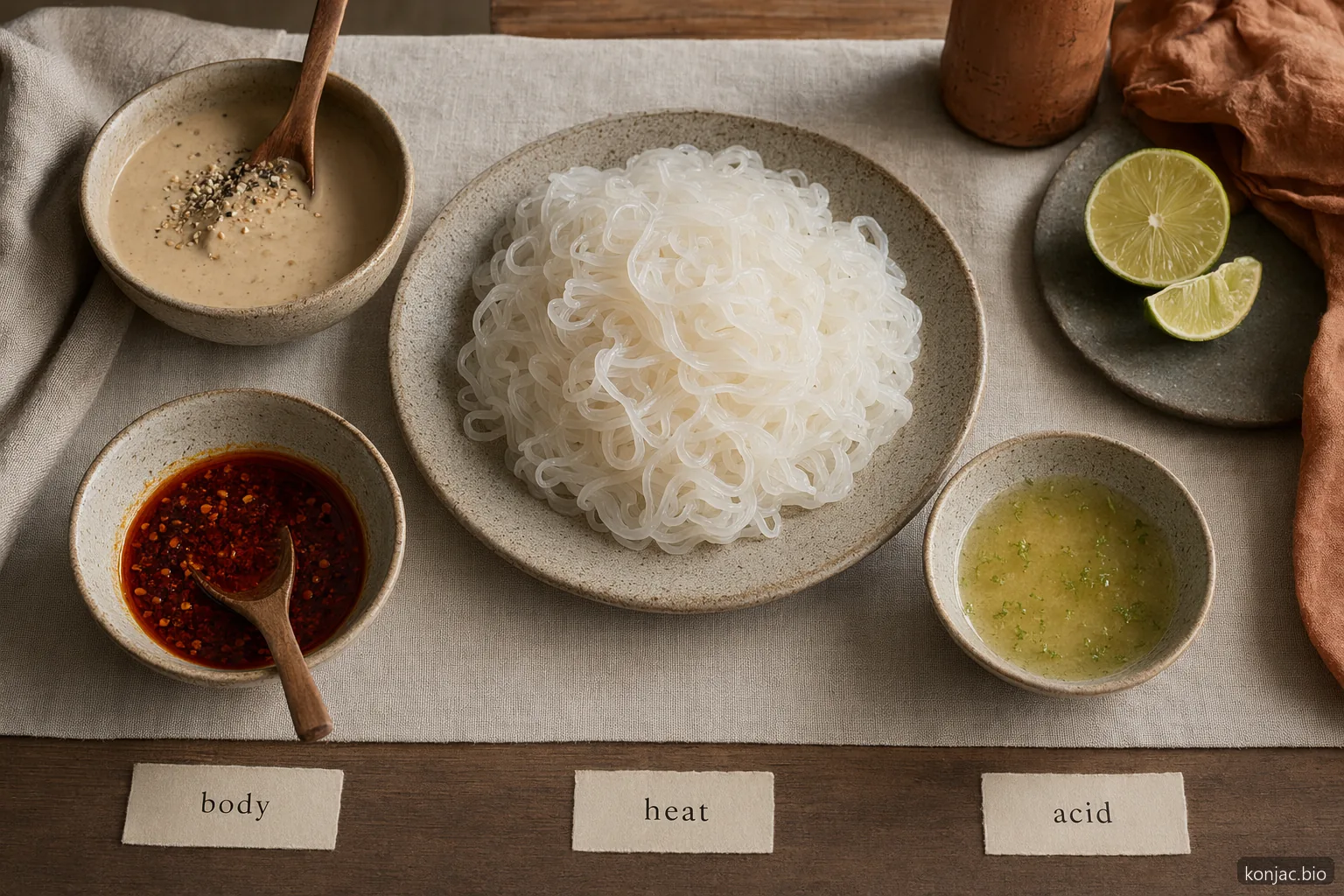
Shirataki noodles are mild, so sauces should be saltier, brighter, and thicker than sauces used for wheat noodles. A small amount of fat also helps carry aromatics because glucomannan noodles do not bring starch to the pan.
Use these ratios for one 200 g pouch of noodles:
- Garlic soy glaze: 1 tablespoon soy sauce, 1 teaspoon sesame oil, 1 teaspoon rice vinegar, 1 minced garlic clove, 1 teaspoon grated ginger.
- Peanut sesame: 1 tablespoon peanut butter, 1 tablespoon warm water, 1 teaspoon soy sauce, 1 teaspoon lime juice, chili to taste.
- Miso broth: 2 cups hot broth, 1 tablespoon miso, 1 teaspoon grated ginger, scallion, mushrooms.
- Tomato basil: 1/2 cup crushed tomato, 1 teaspoon olive oil, 1 garlic clove, basil, black pepper.
- Lemon herb: 1 tablespoon olive oil, 1 tablespoon lemon juice, parsley, capers, cracked pepper.
Acid is useful because shirataki noodles have a clean, neutral bite. Rice vinegar, lime, lemon, and tomato sharpen the dish without adding sugar.
Konjac flour can also thicken sauces when used carefully. Start with 1/8 teaspoon konjac flour whisked into cold liquid before heating, because glucomannan hydrates quickly. For baking, sauces, and thickening beyond noodles, see our konjac flour recipes.
Nutrition, safety, and sourcing notes
Shirataki noodles are commonly chosen for lower-calorie, lower-carbohydrate meals because the noodle structure comes from water and konjac glucomannan rather than wheat starch. Nutrition varies by product, so check the label for serving size, fiber, sodium, and added ingredients.
For dietary fiber context, the FDA lists 28 g as the Daily Value for fiber on updated Nutrition Facts labeling for a 2,000 calorie diet via its Daily Value guidance. If a dish contains fiber-rich shirataki plus vegetables, beans, or seeds, increase water intake and portion size gradually.
For health benefit language, EFSA has authorized the claim: 'Glucomannan in the context of an energy restricted diet contributes to weight loss.' EFSA ties that wording to 3 g of glucomannan daily in three 1 g doses with 1-2 glasses of water before meals in its EFSA claim opinion. Recipe content should use cautious language such as may support fullness, is associated with fiber intake, or has been studied for weight-management contexts.
Konjac safety depends on format and use. The FDA has warned about choking risk from konjac mini-cup gel candies in a FDA advisory. Noodles are a different format, but they should still be chewed thoroughly and served in age-appropriate portions.
For food developers and distributors, konjac.bio sources konjac flour and shirataki inputs at wholesale scale. Contact konjac.bio for specifications, MOQ, and pricing.
Frequently asked questions
01 What are shirataki yam noodles made from?
02 Why do shirataki noodles smell fishy at first?
03 Can shirataki yam noodles recipes be meal prepped?
04 Are shirataki noodles the same as glass noodles?
05 Do shirataki noodles help with weight management?
06 How much sauce should I use for one pouch of shirataki noodles?
- Scientific Opinion on the substantiation of health claims related to konjac mannan, glucomannan · EFSA Journal · 2010
- Daily Value on the New Nutrition and Supplement Facts Labels · U.S. Food and Drug Administration · 2024
- Consumer Advisory: Konjac Mini-Cup Gel Candies · U.S. Food and Drug Administration · 2002
- Safety and efficacy of glucomannan for weight loss in overweight and moderately obese adults · PubMed · 2005