How many konjac rice calories are in a serving?
A typical drained serving of konjac rice has about 10 to 30 calories, depending on serving size and formulation.
Most retail pouches list a serving between 100 and 150 grams after draining. If a label says 10 calories per 100 grams, a 150 gram bowl counts as 15 calories. If the label says 20 calories per 100 grams, the same 150 gram bowl counts as 30 calories.
The simplest meal math is:
- Drain and rinse the konjac rice.
- Check the labeled serving size in grams.
- Multiply calories per serving by the amount you actually eat.
For example, 200 grams of konjac rice at 10 calories per 100 grams equals 20 calories. The same weight of cooked long-grain white rice is much higher: USDA FoodData Central lists cooked white rice at about 130 calories per 100 grams FoodData.
That gap is why konjac rice is often used as a low-calorie base under stir-fries, curries, fried rice style meals, and meal prep bowls. For a broader ingredient guide, see konjac rice.
Why are konjac rice calories so low?
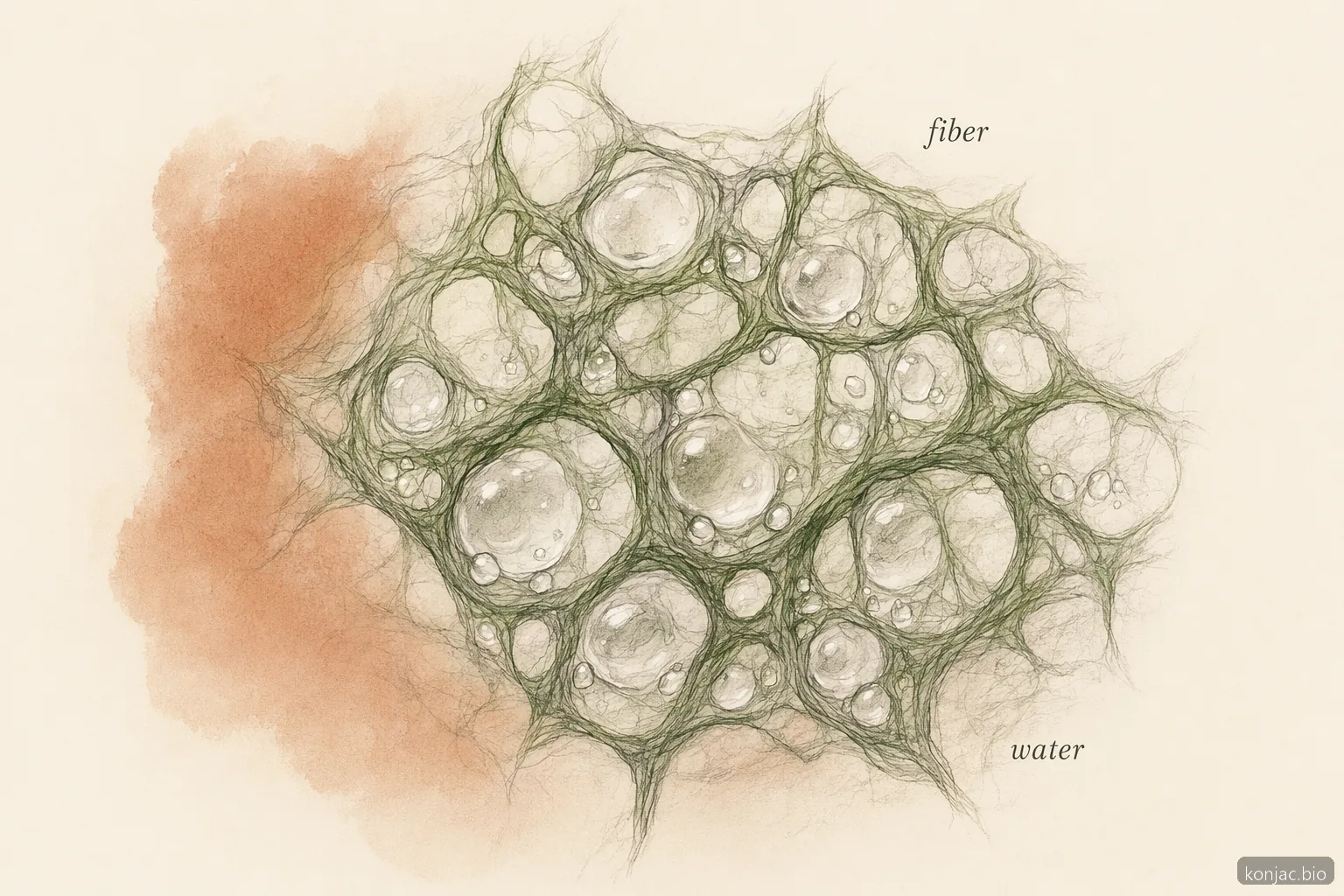
Konjac rice is low in calories because it is mostly water held in a gel network made from konjac glucomannan fiber.
Glucomannan is a water-soluble polysaccharide from the corm of Amorphophallus konjac, a plant used to make konjac flour, shirataki noodles, and rice-shaped konjac pieces ScienceDirect. The finished rice substitute is not a grain. It is a hydrated gel cut or formed into rice-like pieces.
That structure changes the calorie picture. Cooked white rice is mostly digestible starch. Konjac rice is mostly water, with a small amount of fiber and sometimes calcium hydroxide or another food-grade setting ingredient. Because water has zero calories and fiber contributes less usable energy than starch, the labeled calorie number stays low.
Labels can vary for three practical reasons:
- Moisture level: more water usually means fewer calories per 100 grams.
- Fiber amount: more konjac flour can increase firmness and slightly change calories.
- Added ingredients: oat fiber, tapioca starch, or rice flour raise calories if included.
Always read the label if calorie precision matters. FDA guidance explains that packaged foods use a declared serving size, calories, and nutrient values on the Nutrition Facts panel FDA label.
Konjac rice calories vs white rice and cauliflower rice
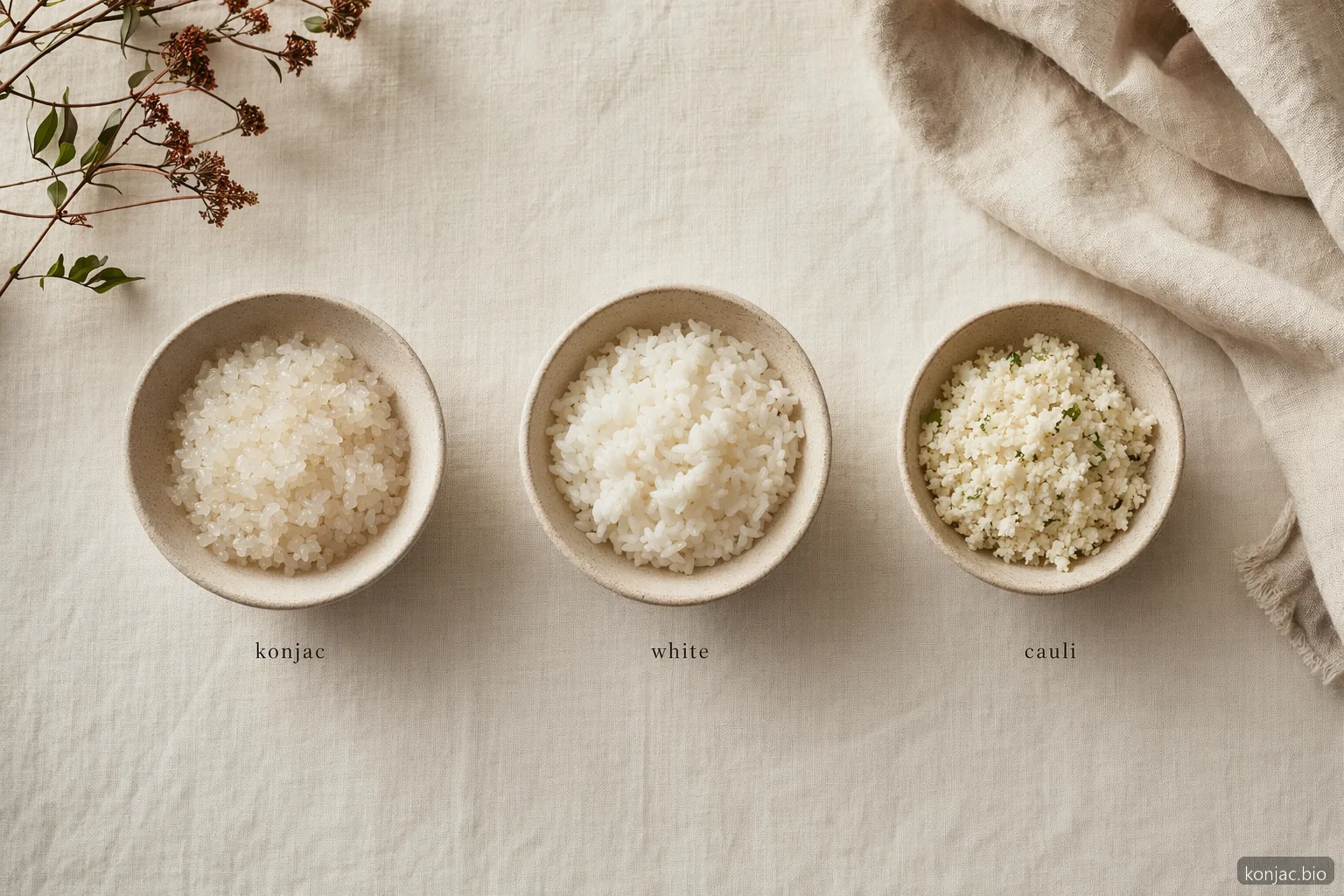
Konjac rice calories are much lower than grain rice and usually lower than cauliflower rice on the same 100 gram basis.
The table below uses common planning ranges for konjac rice and USDA reference data for standard cooked foods. Use it as a meal-building shortcut, then confirm the exact number on the package label.
| Food, cooked or ready to eat | Typical calories per 100 g | Main calorie source | Best use |
|---|---|---|---|
| Konjac rice | 5 to 20 | Mostly water and glucomannan fiber | Very low-calorie rice swap |
| White rice | About 130 | Digestible starch | Traditional rice bowl texture |
| Brown rice | About 123 | Digestible starch plus bran | Whole grain flavor and chew |
| Cauliflower rice | About 25 | Vegetable carbohydrate and fiber | Low-calorie vegetable base |
USDA FoodData Central lists cooked white rice at about 130 calories per 100 grams FoodData. Brown rice and cauliflower values vary by cut, water, and cooking method, but both remain far below many oil-heavy sides and far above most plain konjac rice.
Texture is the tradeoff. White rice absorbs sauce and has a soft starch bite. Cauliflower rice tastes vegetal and releases moisture. Konjac rice is springier and more neutral, so dry-frying it after rinsing improves the finished texture. For a side-by-side swap guide, see konjac rice vs cauliflower rice.
Do konjac rice calories help with weight management?
Konjac rice calories can help reduce total meal calories when it replaces higher-calorie rice, noodles, or grains in the same portion size.
The effect comes from substitution, not magic. A 200 gram bowl of cooked white rice is about 260 calories using the USDA 130 calories per 100 grams reference FoodData. A 200 gram bowl of konjac rice at 10 calories per 100 grams is about 20 calories. That swap saves roughly 240 calories before toppings, oil, sauce, or protein are added.
Glucomannan also has an authorized European health claim. EFSA’s approved wording is: “Glucomannan in the context of an energy restricted diet contributes to weight loss” EFSA opinion. The claim is tied to specific conditions of use, including 3 grams of glucomannan daily in three 1 gram doses with 1 to 2 glasses of water before meals.
Plain konjac rice may contain less glucomannan per serving than a measured supplement dose, so it should be counted mainly as a low-calorie food swap. It may support fullness for some people because hydrated fiber adds volume, but meal satisfaction also depends on protein, vegetables, fat, sodium, and flavor.
A balanced konjac rice bowl often works best with:
- 150 to 250 grams drained konjac rice
- 100 to 150 grams lean protein or tofu
- 1 to 2 cups vegetables
- 1 to 2 teaspoons oil or a measured sauce
How should you count konjac rice calories in meal planning?
Count konjac rice calories by drained weight, labeled serving size, and every added ingredient in the pan.
Konjac rice itself is rarely the calorie driver. Oil, coconut milk, peanut sauce, cheese, and sugary glazes can add 50 to 200 calories quickly. A low-calorie base only stays low-calorie when the toppings are measured with the same care.
Use this practical formula:
- Start with drained konjac rice: 200 grams at 10 calories per 100 grams equals 20 calories.
- Add cooking fat: 1 teaspoon oil adds about 40 calories.
- Add sauce: use the label, especially for teriyaki, curry paste, or dressings.
- Add protein: count chicken, shrimp, tofu, egg, or beans separately.
- Add vegetables: most non-starchy vegetables are modest, but still count them if tracking closely.
For better texture, drain, rinse, and dry-fry konjac rice before adding sauce. This removes packing liquid aroma and helps the rice pieces absorb flavor. A step-by-step method is covered in how to cook konjac rice.
B2B aside: konjac.bio sources konjac rice ingredients at wholesale volumes for food brands, distributors, and manufacturers. For specifications, formats, and pricing, contact the team at konjac.bio contact.
Frequently asked questions
01 How many calories are in one pack of konjac rice?
02 Why do some konjac rice labels show zero calories?
03 Is konjac rice lower in calories than white rice?
04 Does rinsing konjac rice change the calories?
05 Can konjac rice make a meal filling with so few calories?
- How to Understand and Use the Nutrition Facts Label · U.S. Food and Drug Administration · 2024
- FoodData Central: Rice, white, long-grain, regular, cooked · U.S. Department of Agriculture · 2019
- Scientific Opinion on health claims related to konjac mannan glucomannan · European Food Safety Authority · 2010
- 21 CFR 101.9 Nutrition labeling of food · Electronic Code of Federal Regulations · 2025
- Konjac glucomannan topic overview · ScienceDirect · 2024