What is shirataki miracle rice?
Shirataki miracle rice is a rice-shaped version of shirataki, made from water and konjac glucomannan rather than cereal grain.
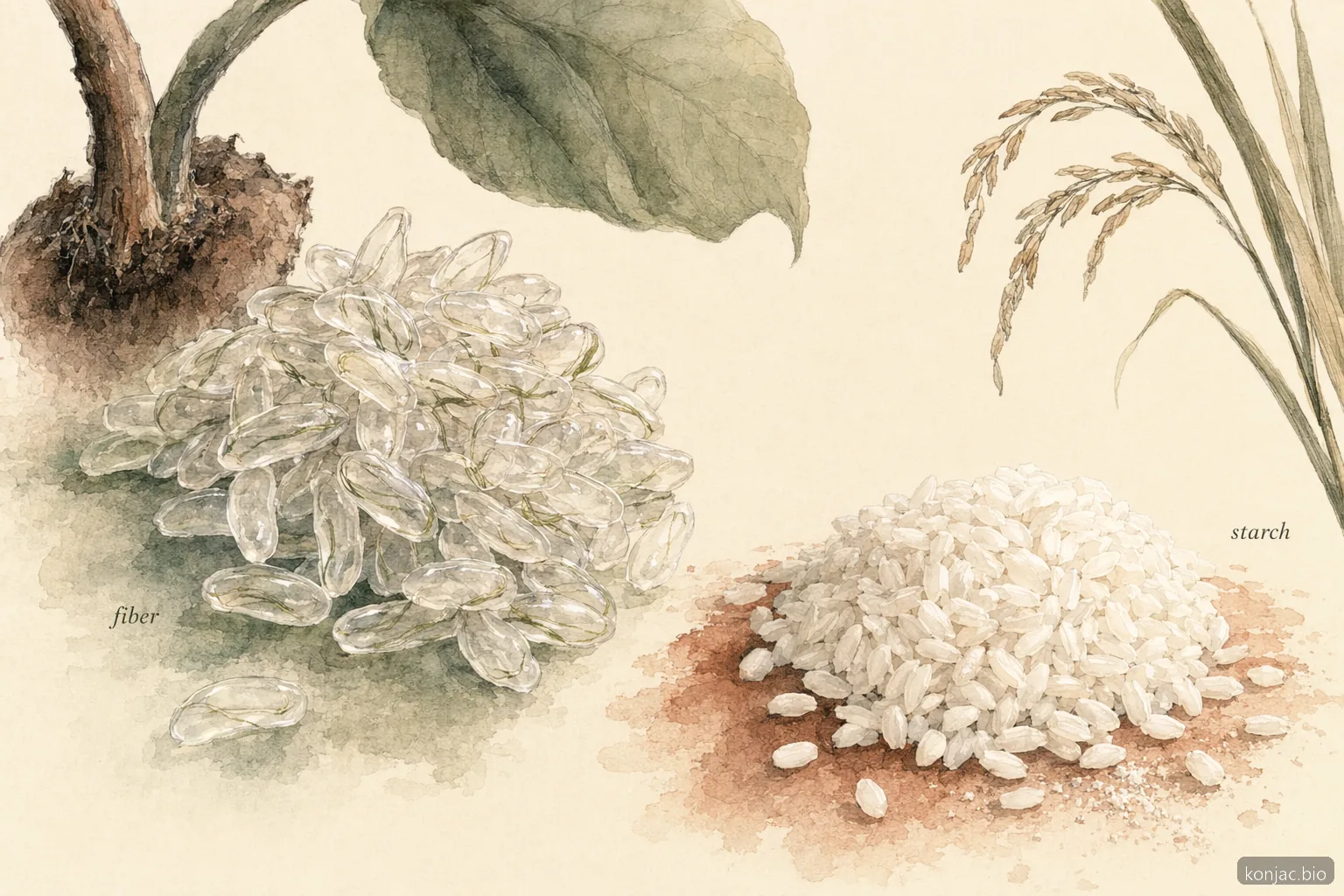
The key ingredient is glucomannan, a highly soluble dietary fiber from the corm of Amorphophallus konjac. EFSA identifies konjac mannan, also called glucomannan, as a soluble fiber used in foods and supplements in its EFSA opinion.
The word shirataki is commonly used for translucent konjac noodles, while shirataki rice refers to the same gelled konjac matrix cut into rice-like pieces. The term miracle rice is a generic marketplace phrase for this low-calorie rice substitute, not a separate botanical ingredient.
Most products contain three functional parts: purified water, konjac flour or glucomannan, and a setting agent such as calcium hydroxide. The result is a springy, neutral food that absorbs surrounding flavors instead of tasting like steamed jasmine, basmati, or short-grain rice.
How is shirataki miracle rice made?
Shirataki miracle rice is made by hydrating konjac glucomannan, setting it into a gel, cutting it into rice-shaped granules, and packing it in water.
The process is simple in concept but precise in manufacturing. Glucomannan swells strongly in water, then forms a heat-stable gel when combined with an alkaline setting agent. Calcium hydroxide is commonly used because it helps the hydrated konjac matrix hold its shape during packing, heating, and storage.
- Hydration: Konjac flour is dispersed in water to avoid clumping.
- Gel setting: A food-grade alkaline coagulant firms the mixture.
- Cutting: The gel is shaped into rice-sized pieces.
- Rinsing: Extra alkaline water is removed to reduce aroma.
- Packing: The rice is sealed with water in shelf-stable or chilled packs.
The faint ocean-like or alkaline aroma in some packs comes from the storage liquid and the konjac gel system. It usually decreases after 30 to 60 seconds of rinsing under cold water, then 2 to 4 minutes of dry-pan heating.
For manufacturers, konjac.bio sources konjac ingredients at wholesale volumes for product development, private label, and foodservice applications. Contact the team at /contact/ for specifications and pricing.
Shirataki miracle rice nutrition compared with white rice
Shirataki miracle rice is mainly water and fiber, while white rice is mainly starch. That difference explains its lower calorie count, lower digestible carbohydrate, and weaker role as an energy source.
Cooked long-grain white rice contains about 130 calories and 28.2 grams of carbohydrate per 100 grams in USDA FoodData Central data, while plain konjac rice products often sit closer to 5 to 15 calories per 100 grams depending on formulation and label rounding. Use the package Nutrition Facts panel for exact values because added oat fiber, soy, seaweed, or starch can change the numbers.
| Food, 100 g | Typical calories | Main component | Best use |
|---|---|---|---|
| Shirataki miracle rice | About 5 to 15 | Water, glucomannan fiber | Low-calorie bowls, saucy meals |
| Cooked white rice | About 130 | Starch | Energy, texture, traditional meals |
| Cauliflower rice | About 25 | Vegetable tissue, water | Vegetable-forward plates |
White rice provides a familiar grain aroma, soft chew, and reliable starch base. Shirataki miracle rice provides volume with minimal calories, but it does not brown, fluff, or absorb liquid like grain rice.
For a wider side-by-side comparison with vegetable substitutes, see konjac rice vs cauliflower rice. For label context, FDA explains that Daily Values are reference amounts used on Nutrition Facts labels in its Daily Value guidance.
How do you cook shirataki miracle rice so it tastes better?
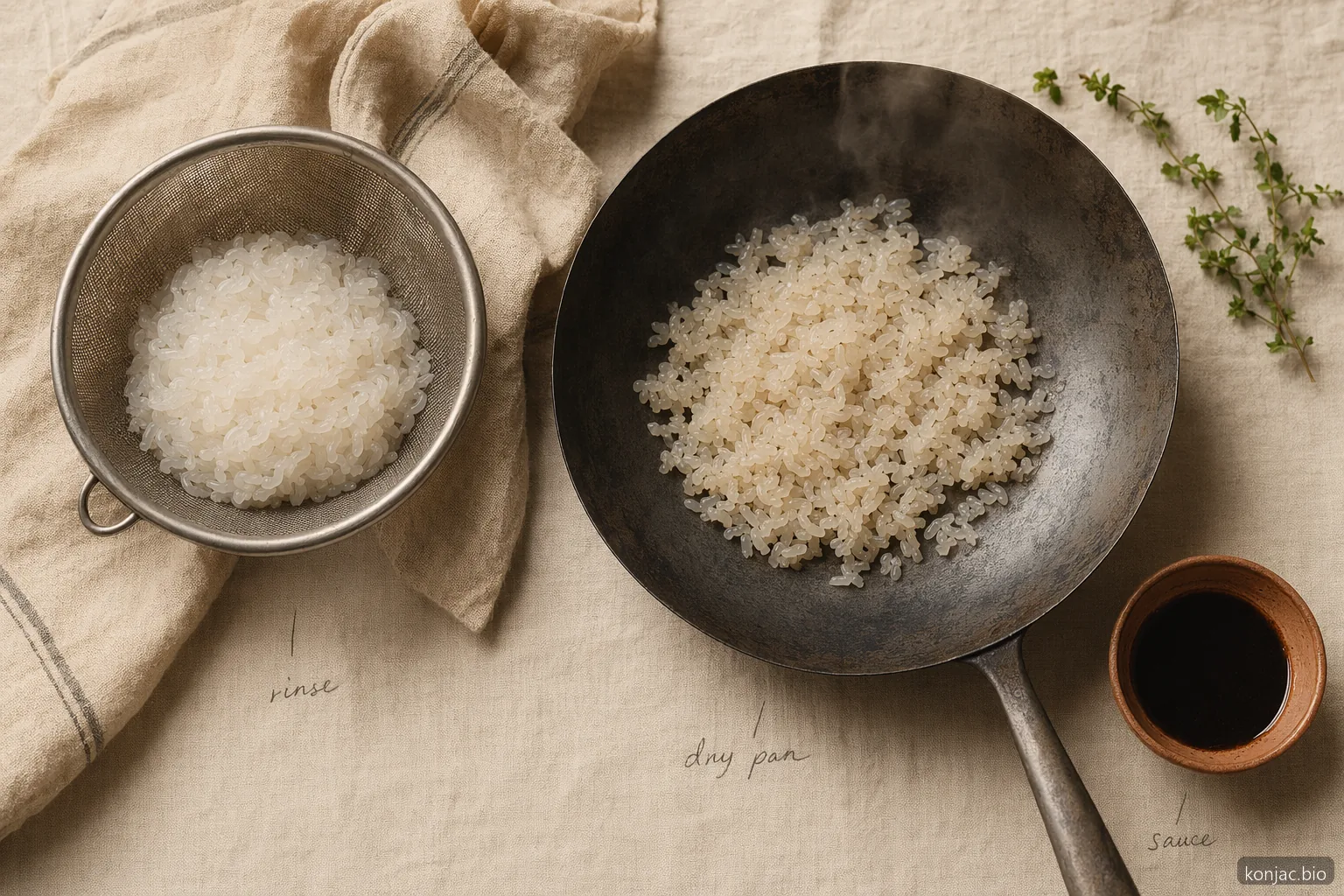
You cook shirataki miracle rice best by rinsing it well, dry-pan heating it, then adding strong flavors after excess water evaporates.
Konjac rice is already cooked during manufacturing, so home preparation is about aroma, texture, and flavor uptake. Boiling it like grain rice usually makes it wetter and less satisfying. Dry heat is more useful because it removes surface moisture and gives the pieces a firmer bite.
- Drain: Pour off the packing liquid completely.
- Rinse: Rinse under cold running water for 30 to 60 seconds.
- Dry heat: Add to a nonstick skillet over medium heat for 2 to 4 minutes.
- Season: Add sauce, salt, aromatics, or broth concentrate after steaming slows.
- Finish: Fold into eggs, tofu, chicken, vegetables, curry, or chili crisp.
Good pairings include soy sauce, sesame oil, garlic, ginger, coconut curry, tomato masala, gochujang, and lime. Mild butter-and-salt preparations can taste flat because konjac rice has little natural starch, fat, or sweetness.
For step-by-step timing and recipe ratios, see how to cook konjac rice. A practical rule is to season shirataki rice like a neutral noodle, not like steamed rice.
Best uses, limits, and safety notes
Shirataki miracle rice works best in high-flavor meals where sauce, protein, and vegetables carry the eating experience. It is less convincing in dishes that depend on rice starch, such as sushi rice, risotto, congee, rice pudding, or crispy fried rice.
Use it when the goal is volume with fewer calories or fewer digestible carbohydrates. Avoid expecting it to replace the energy role of rice for endurance training, high-calorie diets, or meals where starch is the main source of fuel.
Glucomannan has been studied for satiety, body weight, blood lipids, and glycemic response, but food context and serving size matter. EFSA’s authorized wording for weight management is: “Glucomannan in the context of an energy restricted diet contributes to weight loss,” with conditions of use listed in the EFSA opinion. A meta-analysis indexed on PubMed reported effects on several cardiometabolic markers, but results depend on dose, study design, and product form PubMed review.
Safety is mostly about form and hydration. Konjac mini-cup gel candies have faced FDA import actions because their shape and gel texture can create choking risk, as described in an FDA import alert. Rice-shaped shirataki is a different format, but all high-fiber foods should be chewed well and eaten with adequate fluid.
Frequently asked questions
01 Is shirataki miracle rice the same as konjac rice?
02 Does shirataki miracle rice taste like regular rice?
03 Is shirataki miracle rice keto-friendly?
04 Why does shirataki miracle rice smell unusual when opened?
05 Can shirataki miracle rice help with weight management?
06 Can you meal prep shirataki miracle rice?
- Scientific Opinion on the substantiation of health claims related to konjac mannan (glucomannan) · European Food Safety Authority · 2010
- Effect of glucomannan on plasma lipid and glucose concentrations, body weight, and blood pressure · PubMed · 2008
- Daily Value on the Nutrition and Supplement Facts Labels · U.S. Food and Drug Administration · 2024
- Import Alert 33-15: Detention Without Physical Examination of Konjac Candy · U.S. Food and Drug Administration · 2024