What are the most common konjac noodles side effects?
The most common konjac noodles side effects are gas, bloating, abdominal cramps, loose stool, constipation, nausea, and an unusually full feeling.
Konjac noodles, often called shirataki, are made from water and konjac flour. The key fiber is glucomannan, a viscous polysaccharide from Amorphophallus konjac described in an EFSA opinion.
| Side effect | Why it can happen | Practical response |
|---|---|---|
| Gas | Gut bacteria ferment some soluble fiber. | Start with a smaller serving. |
| Bloating | Glucomannan forms a hydrated gel. | Eat slowly and avoid oversized portions. |
| Cramps | A sudden fiber increase can change stool bulk. | Use 100 g drained noodles first. |
| Loose stool | Large servings may move quickly through the gut. | Reduce portion size for several meals. |
| Constipation | Fiber without enough fluid can feel binding. | Drink water with the meal. |
Most symptoms are dose-related. A person who eats a full 200 g to 250 g pouch on the first try is more likely to notice discomfort than someone who starts with half that amount.
Why do these side effects happen?
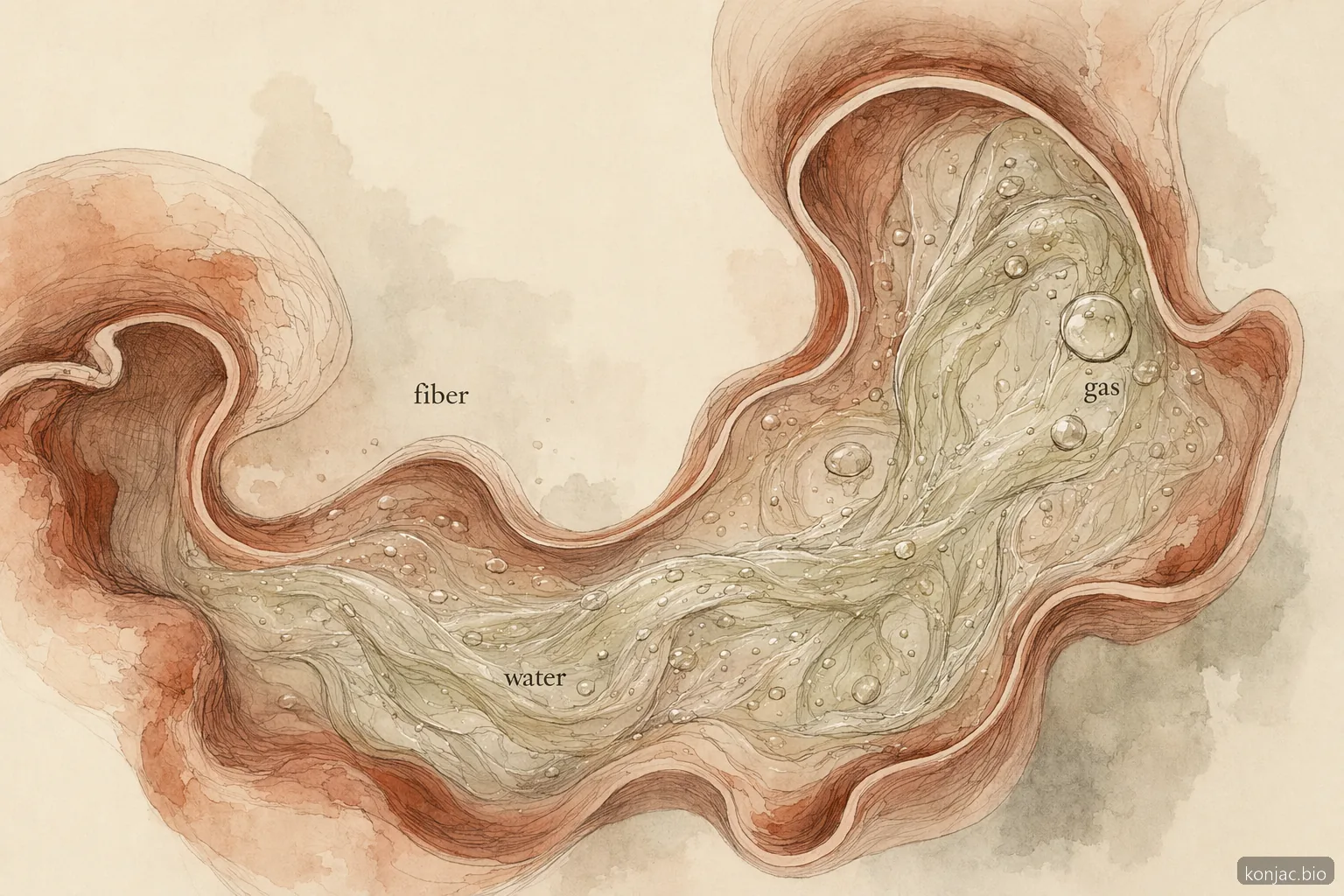
These side effects happen because glucomannan absorbs water, increases viscosity, and adds fermentable fiber to the digestive tract.
The U.S. Food and Drug Administration recognizes dietary fiber as non-digestible carbohydrate that can have beneficial physiological effects, including effects linked to stool bulk and viscosity on its fiber page. Konjac glucomannan is especially notable because it forms a thick gel when hydrated.
That gel-forming property explains both the appeal and the caution. It can make noodles feel filling with few calories, but a large serving can also create pressure, bloating, or a heavy stomach sensation.
Fermentation is another reason symptoms appear. Soluble fibers can be fermented by gut bacteria, producing gas. The amount varies by person, recent fiber intake, meal size, and how quickly the noodles were eaten.
Choking risk is about format, water, and chewing
Konjac noodle choking risk is mainly linked to poorly chewed foods, insufficient fluid, and gel formats that do not break apart easily.
Ordinary cooked shirataki noodles are different from konjac mini-cup gel candies. The FDA has used import controls for gel candies containing konjac because the products can lodge in the throat, especially when swallowed whole, as described in its import alert.
Dry konjac powders, capsules, and compact gels create a different concern from wet noodles. They can swell after contact with liquid, so they require careful use and adequate fluid. For a dedicated format-by-format review, see konjac choking risk.
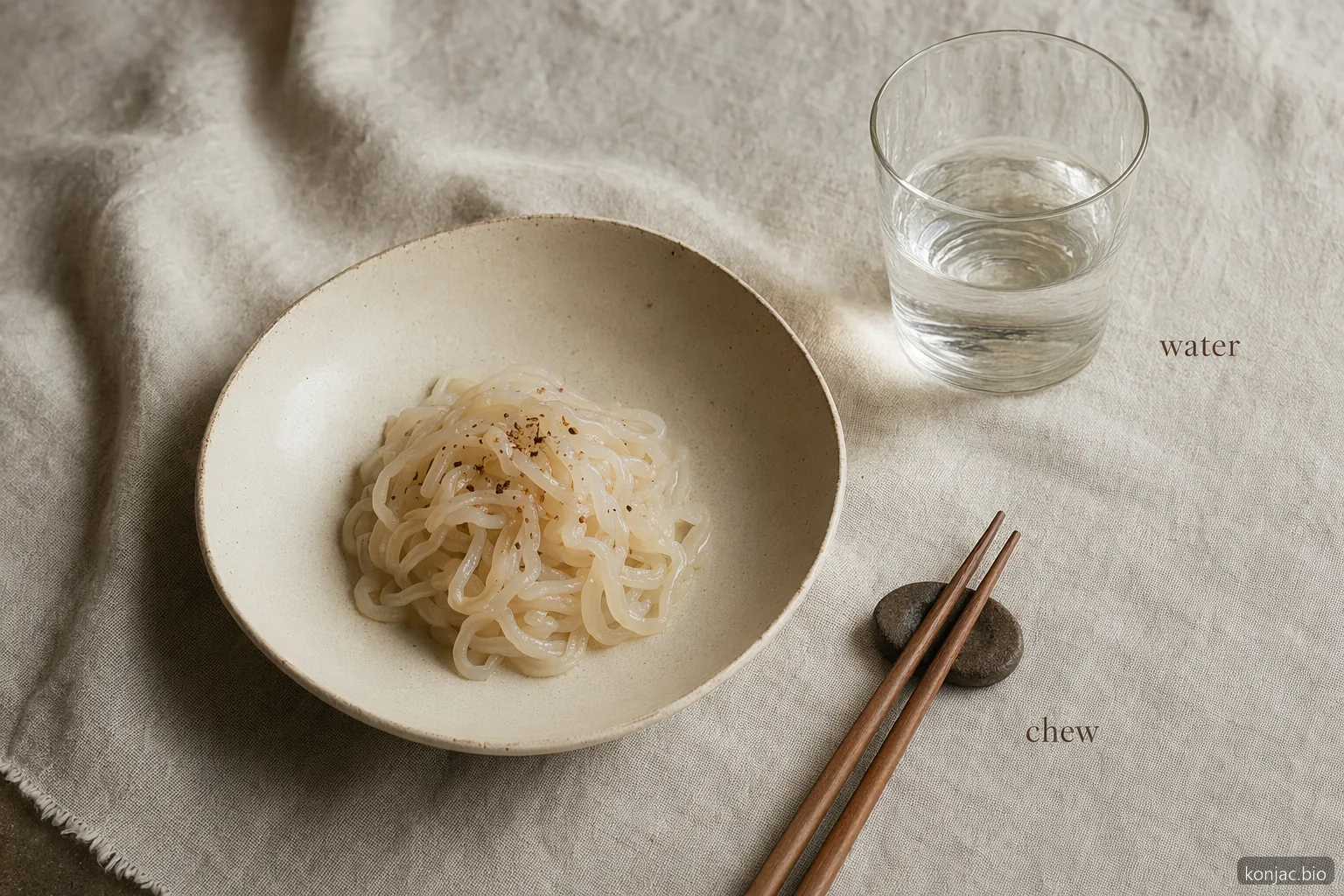
For noodles, risk reduction is practical: rinse, cook, cut long strands for children, chew thoroughly, and avoid eating quickly. Anyone with known swallowing difficulty should choose softer, easier-to-chew foods instead of rubbery or gelled konjac formats.
Who should be cautious about konjac noodles side effects?
People most likely to be cautious about konjac noodles side effects include those with swallowing difficulty, sensitive digestion, recent digestive surgery, or a low-fiber eating plan from a clinician.
Children also need extra care because noodle length and slippery texture can make chewing inconsistent. Cutting noodles into short pieces and serving small portions reduces practical eating risk.
People who are new to high-fiber foods should not use konjac noodles as an all-at-once swap for several meals per day. A gradual increase gives the digestive system time to adjust.
People using konjac for weight management should separate expectations from safety. EFSA authorized the specific wording, “Glucomannan in the context of an energy restricted diet contributes to weight loss,” under stated use conditions in its EFSA claim. That claim does not mean every konjac noodle meal will feel comfortable for every person.
A practical way to eat konjac noodles with fewer problems
The simplest way to reduce discomfort is to start small, hydrate well, chew thoroughly, and avoid stacking konjac with several other high-fiber foods in the same meal.
- Drain and rinse: Rinse noodles for 30 to 60 seconds to remove packing liquid odor.
- Heat thoroughly: Boil or dry-pan for 2 to 3 minutes for a better texture.
- Start with 100 g: Use about half a typical retail pouch if you are new to konjac.
- Chew slowly: Cut long strands if serving children or older adults.
- Drink water: Have fluid with the meal, especially if the dish is salty or spicy.
Avoid making the first konjac meal a giant bowl with beans, bran, raw cruciferous vegetables, and chili oil. That combination makes it harder to identify what caused bloating or cramps.
For manufacturers and foodservice teams, konjac.bio sources konjac ingredients at wholesale and can discuss viscosity, mesh size, and application needs through contact.
Frequently asked questions
01 Are konjac noodles side effects usually serious?
02 Can konjac noodles cause diarrhea?
03 Can konjac noodles cause constipation?
04 Are konjac noodles safe to eat every day?
05 Are konjac noodles the same risk as konjac jelly cups?
- Scientific Opinion on the substantiation of health claims related to konjac mannan (glucomannan) · European Food Safety Authority · 2010
- Import Alert 33-15: Detention Without Physical Examination of Gel Candies Containing Konjac · U.S. Food and Drug Administration · 2024
- Dietary Fiber: Nutrition Facts Label · U.S. Food and Drug Administration · 2024
- Glucomannan and obesity: a critical review · PubMed · 2006