What are the most common konjac root noodles side effects?
The most common konjac root noodles side effects are digestive: bloating, gas, cramping, loose stools, or constipation. These effects are consistent with glucomannan, the soluble fiber in konjac, which the NIH lists as being associated with abdominal discomfort, flatulence, diarrhea, and constipation in some users [NIH fact sheet](https://ods.od.nih.gov/factsheets/WeightLoss-HealthProfessional/).
Konjac root noodles, often called shirataki or miracle noodles, are mostly water plus konjac flour. A typical drained serving may look large on the plate, but the fiber content is still meaningful for people who rarely eat high-fiber foods.
Side effects are more likely when someone eats a full pack on an empty stomach, eats very quickly, or pairs the noodles with other high-fiber foods such as beans, inulin drinks, or fiber gummies. A gradual approach is usually easier: start with half a serving, drink water with the meal, and assess tolerance over 24 hours.
Digestive discomfort does not automatically mean the noodles are unsafe for everyone. It means the serving size, meal context, or hydration level may not match the person’s current fiber tolerance.
Why can konjac root noodles side effects happen?
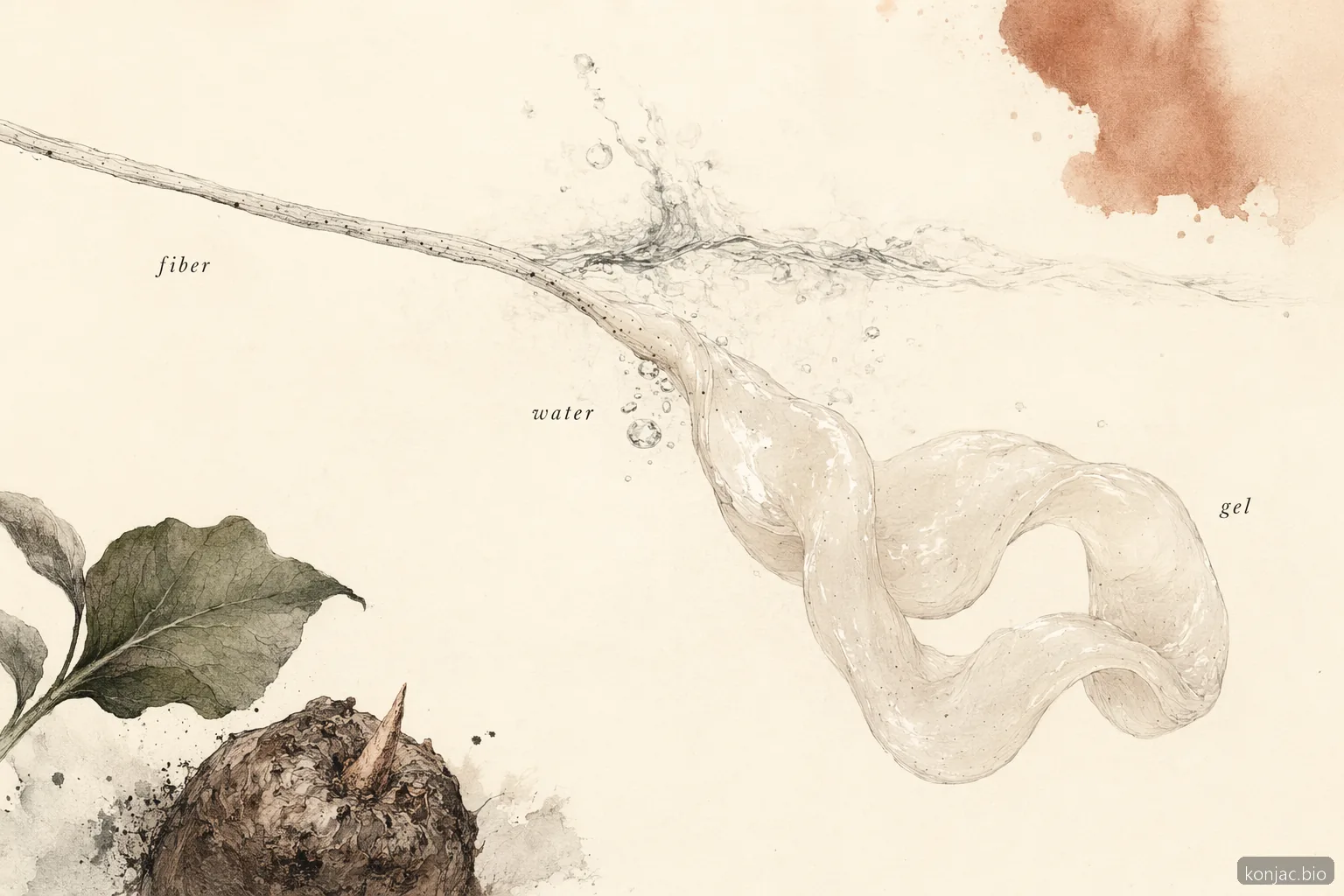
Konjac root noodles side effects can happen because glucomannan absorbs water and forms a viscous gel in the digestive tract. Glucomannan is the main soluble fiber derived from konjac flour, which is identified in U.S. food regulations as a flour from Amorphophallus konjac [eCFR konjac](https://www.ecfr.gov/current/title-21/chapter-I/subchapter-B/part-184/subpart-B/section-184.1335).
This gel-forming property is the same reason glucomannan has been evaluated for satiety and cholesterol-related claims. EFSA authorized the wording “Glucomannan contributes to the maintenance of normal blood cholesterol levels” under specified intake conditions [EFSA opinion](https://www.efsa.europa.eu/en/efsajournal/pub/1798).
The same physical property can feel uncomfortable if the portion is too large. Gel-forming fiber can slow stomach emptying, increase fullness, and change stool texture, which may feel like bloating, pressure, or urgency in sensitive people.
Noodles are generally less concentrated than dry glucomannan powder or capsules because they already contain a high amount of water. The safety profile still depends on chewing, swallowing, meal speed, and how much other fiber is eaten in the same sitting.
Who should be careful with konjac root noodles?
People with swallowing difficulty, very young children, and anyone taking glucose or lipid medications should be more cautious with konjac root noodles. The NIH notes that glucomannan can be linked with gastrointestinal effects and that some glucomannan tablets have been associated with choking or obstruction when taken without enough fluid [NIH fact sheet](https://ods.od.nih.gov/factsheets/WeightLoss-HealthProfessional/).
Choking risk is highest with dry, concentrated forms and firm gels, not with well-cooked, well-chewed noodles. Even so, people who have trouble swallowing should cut noodles shorter, chew thoroughly, and avoid eating them in a hurry.
Mini-cup konjac jelly is a separate category. FDA import controls identify konjac-containing mini-cup gel candies as a choking hazard because their size, firmness, and slipperiness can make them hard to dislodge [FDA alert](https://www.accessdata.fda.gov/cms_ia/importalert_116.html).
Anyone who takes time-sensitive oral medication should ask a pharmacist or qualified clinician about meal timing. High-viscosity fiber can affect the timing of digestion, so a conservative spacing plan may be appropriate for some people.
Serving size, water, and cooking steps that lower discomfort
A practical first serving is half a drained pack, roughly 100 grams, eaten with a normal meal rather than alone. This gives the body a smaller fiber load and makes it easier to identify whether konjac, sauce, spice, oil, or another ingredient caused discomfort.
Use a simple four-step routine:
- Drain and rinse the noodles for 30 to 60 seconds.
- Boil or pan-heat for 2 to 3 minutes to improve texture.
- Cut long strands shorter for easier chewing and swallowing.
- Drink water with the meal, especially if other fiber is present.
Pairing matters. A high-fat cream sauce, chili oil, sugar alcohols, or large portions of cruciferous vegetables can create digestive symptoms that are blamed on the noodles. Testing konjac noodles with a familiar sauce gives a clearer read.
For more detail on swallowing safety, see shirataki noodle choking risk. For concentrated supplements, see glucomannan side effects.
B2B aside: konjac.bio sources konjac ingredients at wholesale scale for food, beverage, and supplement teams, with specification support available through contact.
Konjac root noodles side effects versus capsules and jelly cups
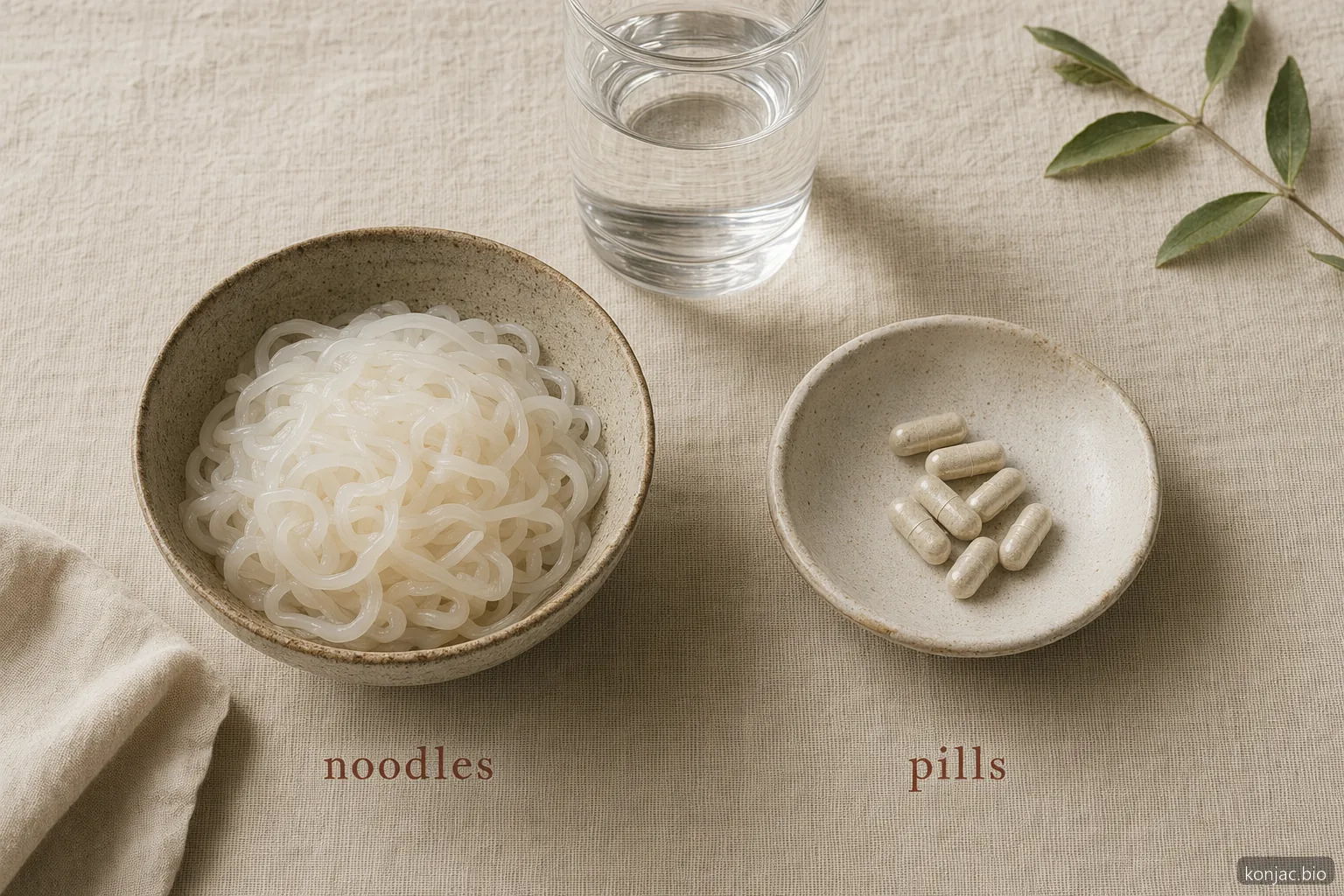
Konjac root noodles side effects are usually milder than concentrated dry glucomannan forms, but product format changes the risk. The same ingredient can behave differently as hydrated noodles, dry powder, tablets, capsules, or firm jelly cups.
| Format | Main concern | Why it differs |
|---|---|---|
| Hydrated noodles | Bloating, gas, stool changes | Already water-rich, but still a soluble fiber food. |
| Dry powder or capsules | Choking or blockage if fluid is inadequate | Glucomannan expands with water, which is why EFSA conditions include taking it with one to two glasses of water [EFSA claim](https://www.efsa.europa.eu/en/efsajournal/pub/1798). |
| Mini-cup jelly | Choking hazard | Firm, slippery gels can lodge in the throat, which FDA flags in import controls [FDA alert](https://www.accessdata.fda.gov/cms_ia/importalert_116.html). |
Health claim language also depends on format and dose. EFSA’s weight-related authorized wording is “Glucomannan in the context of an energy-restricted diet contributes to weight loss,” and the conditions specify 3 grams daily in three 1-gram doses with one to two glasses of water before meals [EFSA claim](https://www.efsa.europa.eu/en/efsajournal/pub/1798).
That dose is not the same as casually eating a small bowl of noodles. Food-format konjac can fit into a balanced meal plan, but it should not be treated as interchangeable with concentrated supplement protocols.
Frequently asked questions
01 Are konjac root noodles safe to eat every day?
02 Can konjac root noodles cause diarrhea or constipation?
03 Is choking risk a concern with konjac noodles?
04 Do konjac root noodles affect blood sugar?
05 Are noodle side effects different from glucomannan capsules?
06 When should someone stop eating konjac root noodles?
- Dietary Supplements for Weight Loss: Fact Sheet for Health Professionals · NIH Office of Dietary Supplements · 2024
- Scientific Opinion on the substantiation of health claims related to konjac mannan (glucomannan) · European Food Safety Authority · 2010
- Import Alert 33-15: Konjac-containing mini-cup gel candy · U.S. Food and Drug Administration · 2024
- 21 CFR §184.1335 Konjac flour · Electronic Code of Federal Regulations · 2024