How does a konjac sponge exfoliate skin?
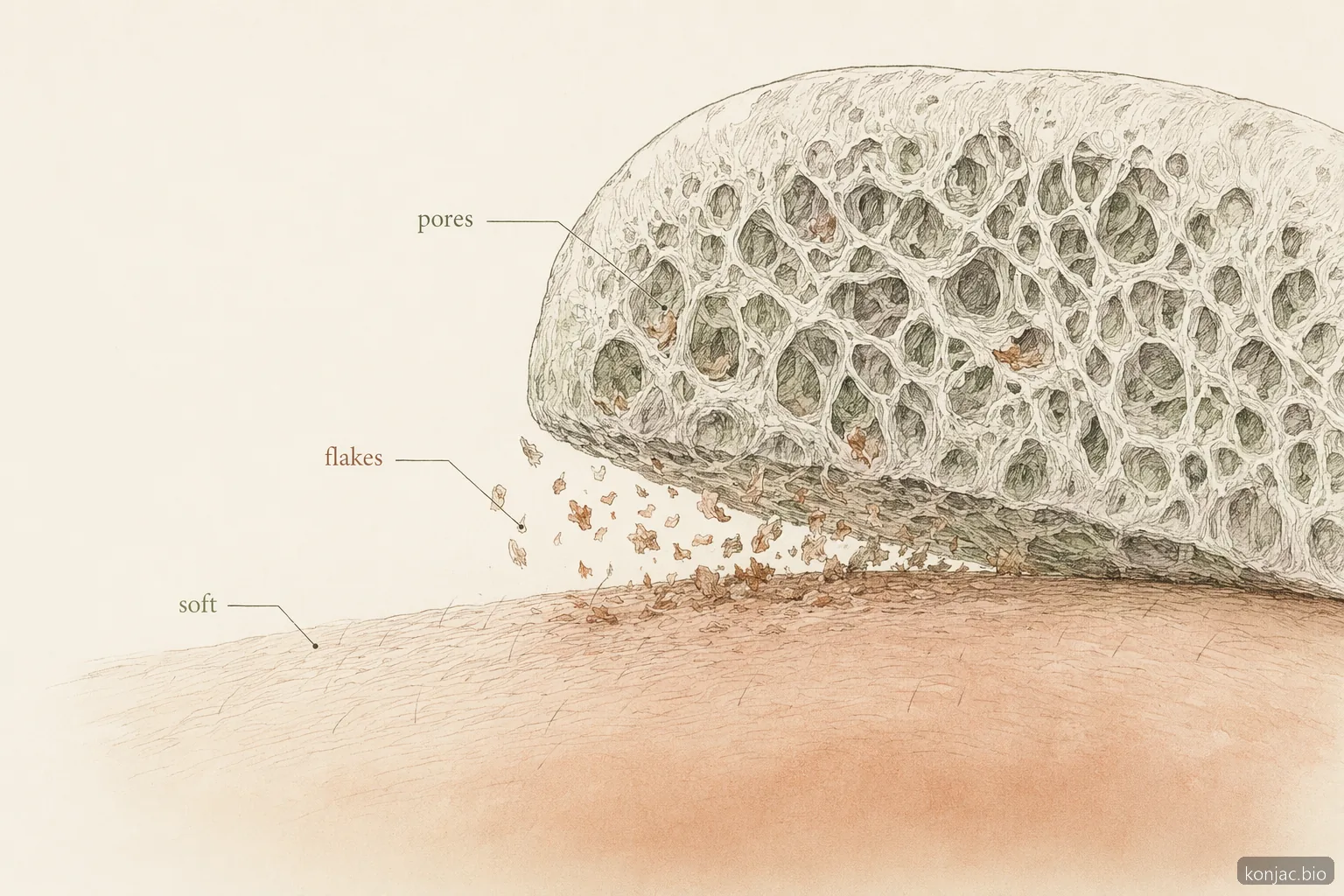
A konjac sponge exfoliates by using hydrated plant fibers to loosen surface flakes while you cleanse. The sponge is made from the konjac plant, Amorphophallus konjac, whose main storage polysaccharide is glucomannan.
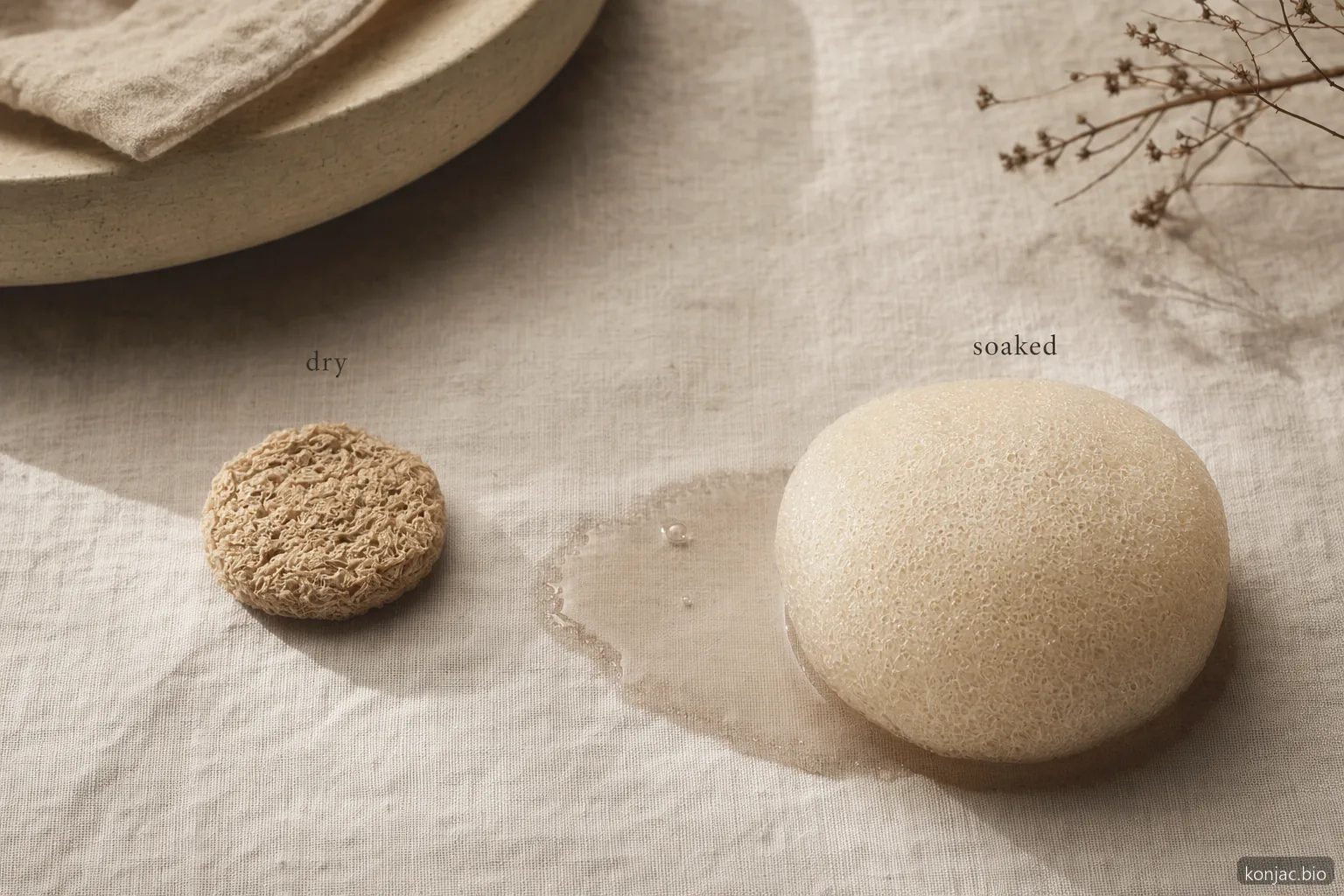
When dry, the sponge feels hard and brittle. After 5 to 10 minutes in warm water, the network swells into a soft, bouncy texture that can glide over the face with less scratch than salt, sugar, nutshell powder, or stiff brush bristles.
That matters because facial skin does not need aggressive friction to feel clean. The American Academy of Dermatology recommends gentle washing with a non-abrasive cleanser and avoiding harsh scrubbing during gentle cleansing.
A konjac sponge is best understood as mild physical exfoliation. It does not dissolve the bonds between dead cells like glycolic acid or salicylic acid. Instead, it helps lift loose material already ready to shed, especially around the nose, chin, jawline, and areas where sunscreen or cleanser residue can collect.
Can a konjac sponge exfoliate sensitive skin?
A konjac sponge can exfoliate many sensitive skin types when it is fully soaked, used lightly, and limited to short contact. The safest pressure is the amount needed to move the sponge across the skin, not the amount needed to polish a surface.
Use 30 to 60 seconds for the whole face. Focus on smooth circular motions, then rinse the face and sponge thoroughly. If skin feels tight, hot, or stinging afterward, reduce frequency or pause use.
Skip the sponge on broken skin, fresh sunburn, active razor irritation, or immediately after strong at-home acids. Cleansing practices can affect skin surface comfort and pH, and detergent exposure has been studied for its effect on skin pH.
For a broader overview of sponge types, textures, and material choices, see Konjac Sponge: The Natural Skincare Tool. For step timing and storage habits, pair this guide with how to use a konjac sponge.
A simple konjac sponge exfoliate routine
A reliable konjac sponge exfoliate routine is short, wet, and low-pressure. The goal is a clean, smooth feel, not redness or squeaky tightness.
- Soak: Place the dry sponge in warm water for 5 to 10 minutes until fully soft.
- Squeeze: Press out extra water with your palm. Do not twist hard, because twisting can tear the fiber network.
- Cleanse: Use the sponge alone or with a small amount of mild cleanser.
- Move lightly: Glide in small circles for 30 to 60 seconds across the face.
- Rinse: Rinse the face, then rinse the sponge until water runs clear.
- Dry: Press out water and hang it in an airy spot, not sealed inside a wet shower caddy.
Use this routine at night if you wear mineral sunscreen, water-resistant sunscreen, or heavier makeup. Morning use can work for oily skin, but many people prefer plain water or cleanser alone in the morning.
For brands, spas, and product developers, konjac.bio sources konjac materials at wholesale and can support custom sponge concepts through wholesale inquiry. The same sourcing standards matter whether the finished product is a simple facial sponge, a charcoal sponge, or a private-label cleansing accessory.
How often should you replace a konjac sponge?
Replace a konjac sponge every 4 to 8 weeks, or sooner if it smells, cracks, discolors, or stays slimy after rinsing. A sponge is a wet-use tool, so drying between uses is part of normal hygiene.
Frequency depends on how often the sponge touches skin, cleanser, hard water minerals, and shower humidity. A sponge used daily in a steamy bathroom usually wears out faster than one used 2 times weekly and dried near airflow.
| Use pattern | Typical replacement window | Watch for |
|---|---|---|
| Daily face use | 4 to 6 weeks | Loss of bounce, fraying, odor |
| 2 to 4 times weekly | 6 to 8 weeks | Hard spots, discoloration |
| Body use | 3 to 6 weeks | Faster fiber breakdown |
Do not share a facial sponge. Rinse it after every use, press out water gently, and hang it where air can reach all sides. If it falls on the shower floor or sits damp in a sealed container, replace it rather than trying to rescue it.
Konjac sponge vs scrub, washcloth, and silicone brush
A konjac sponge sits between a soft washcloth and a powered cleansing brush. It gives more texture than fingertips, but usually less abrasion than gritty scrubs or stiff bristles.
| Tool | Exfoliation feel | Best fit | Main caution |
|---|---|---|---|
| Konjac sponge | Soft, springy, mild | Gentle buffing during cleansing | Must dry between uses |
| Washcloth | Variable, depends on fabric | Makeup removal and body cleansing | Can feel rough if pressed hard |
| Gritty scrub | Coarse or polishing | Occasional body use | Easy to over-scrub facial skin |
| Silicone brush | Flexible bristles | Reusable cleansing tool | Pressure and vibration can be too much for some users |
Konjac also avoids plastic microbead scrub particles. The FDA explains that rinse-off cosmetics containing plastic microbeads were restricted under the microbeads law in the United States.
If you are comparing benefits by skin goal, see konjac sponge benefits. If the goal is daily polish without a scrubby feeling, a soaked konjac sponge is usually the gentlest physical option in the comparison.
Frequently asked questions
01 Does a konjac sponge exfoliate better than a scrub?
02 Can I use a konjac sponge every day?
03 Should I use cleanser with a konjac sponge?
04 Is a konjac sponge good for acne-prone skin?
05 How do I know if I am over-exfoliating with a konjac sponge?
06 Can I use a konjac sponge on my body?
- Glucomannan · PubChem, National Library of Medicine · 2024
- Face Washing 101 · American Academy of Dermatology Association · 2024
- The effect of detergents on skin pH and its consequences · PubMed · 2003
- Microbead-Free Waters Act: FAQs · U.S. Food and Drug Administration · 2023
- Cosmetics Labeling Guide · U.S. Food and Drug Administration · 2022