What are konjac sponges made of?
Konjac sponges are made of konjac glucomannan fiber, water, and sometimes small amounts of clay, charcoal, or plant powder for color and positioning.
The base material comes from Amorphophallus konjac, a starchy corm crop also used to make konjac flour, shirataki, and dietary glucomannan. Glucomannan is a high-molecular-weight polysaccharide identified in the PubChem entry for glucomannan, and EFSA describes konjac mannan as a soluble fiber from konjac tuber in its EFSA opinion.
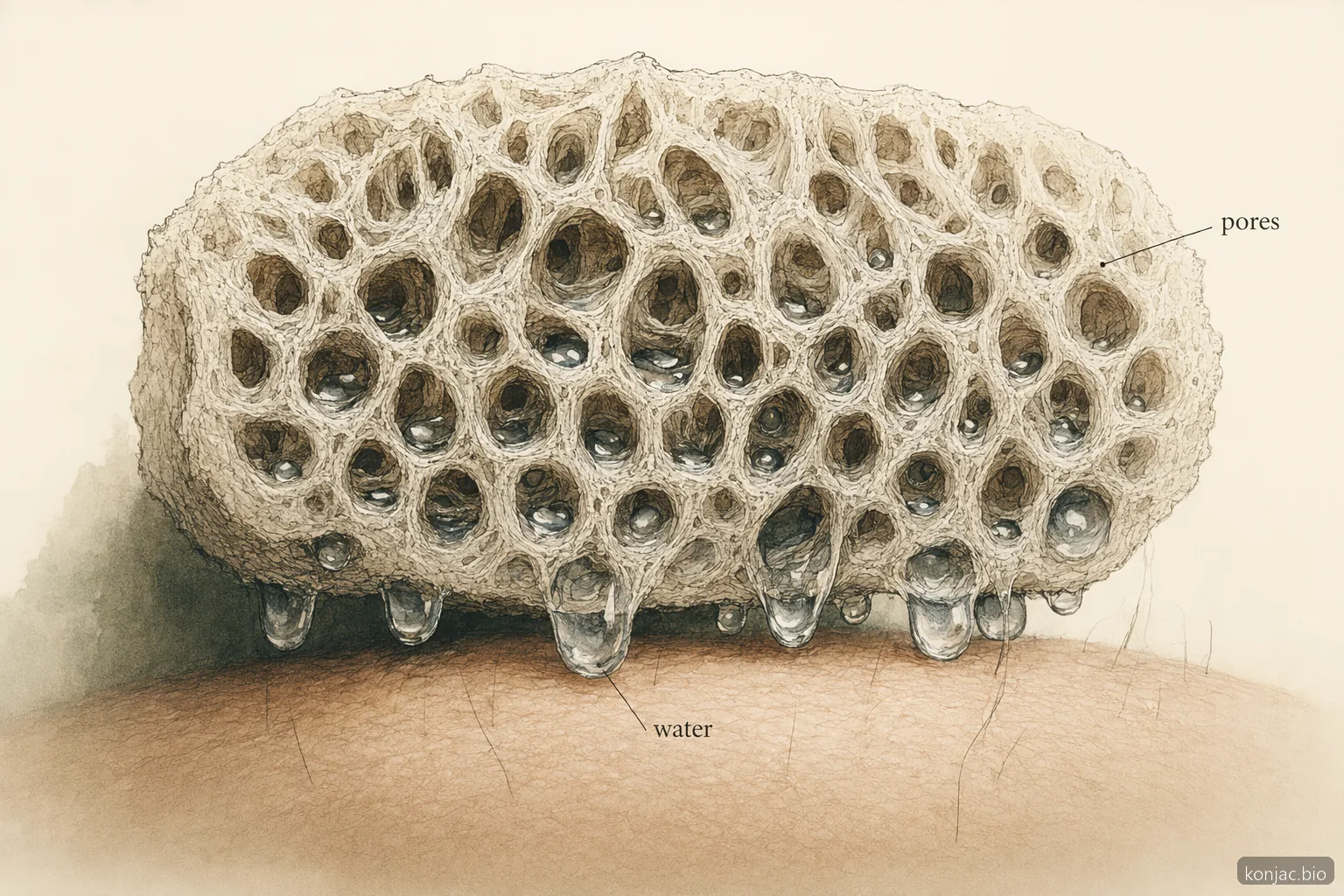
A typical sponge starts as konjac powder mixed with water into a gel. The gel is molded, set, frozen or aerated to create pores, then dried into a hard, lightweight puck. When soaked for 1 to 2 minutes, it rehydrates into a springy cleansing sponge.
Most facial konjac sponges are palm-sized, usually 6 to 8 cm wide. Body sponges are larger and may include a hanging string so they can dry between uses.
How do konjac sponges work on skin?
A konjac sponge works by swelling with water into a cushioned, porous surface that lifts sunscreen residue, oil, cleanser, and loose flakes with light massage.
The action is physical, not chemical. A konjac sponge does not work like glycolic acid, salicylic acid, or enzyme exfoliants. Its texture creates low-friction contact when fully wet, which is why it should never be rubbed on skin while dry.
Dermatology guidance generally favors gentle cleansing over harsh scrubbing. The American Academy of Dermatology advises washing the face gently and avoiding abrasive scrubbing in its face washing guidance. A soaked konjac sponge fits that approach when pressure is light and the sponge is kept clean.
Skin surface pH is naturally acidic, commonly near the mid-4 to 6 range depending on body site, age, and measurement method, as reviewed in a PubMed article on skin pH. A plain konjac sponge mainly changes the cleansing method, not the cleanser formula, so the cleanser you pair with it still matters.
Konjac sponge vs washcloth vs scrub
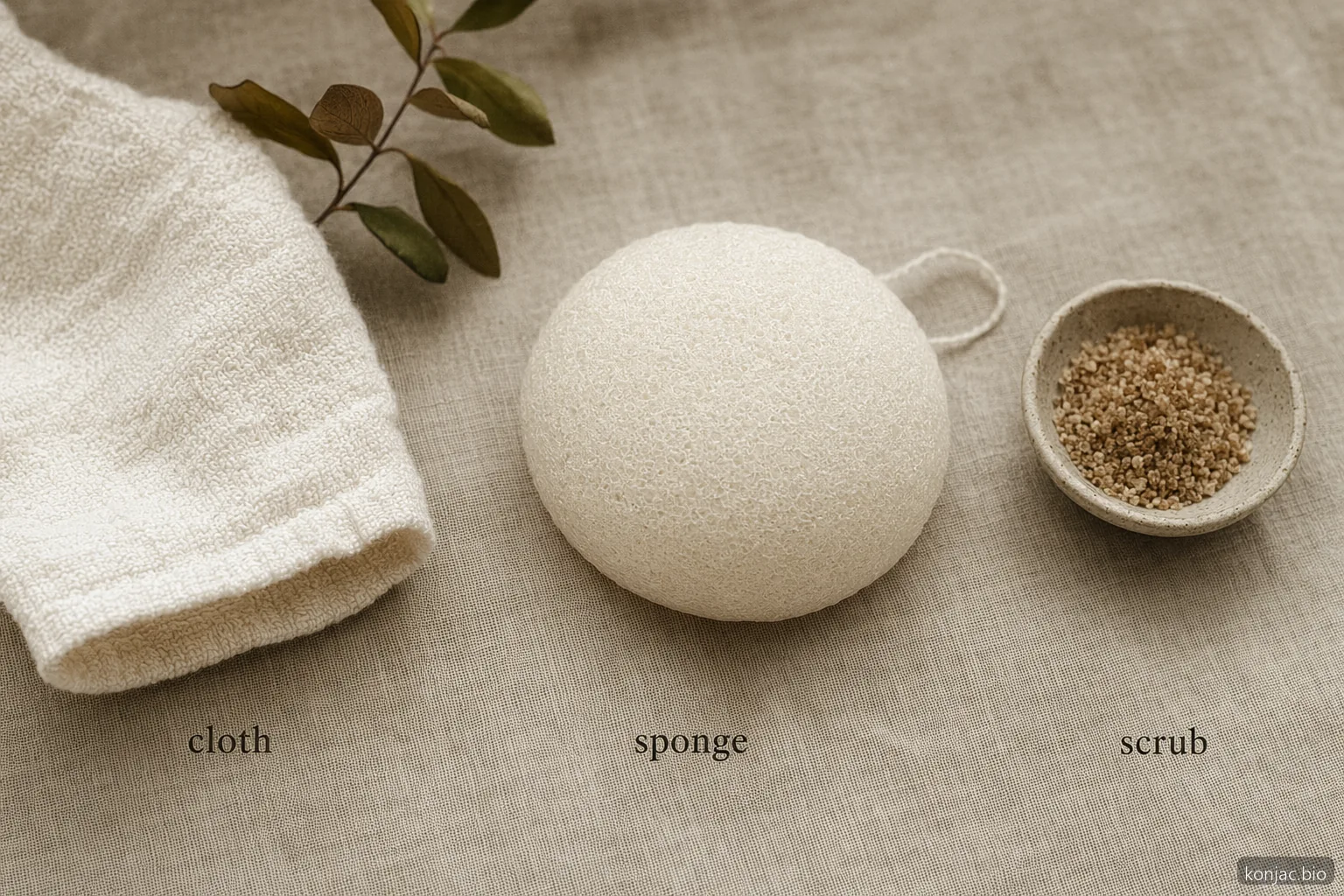
A konjac sponge sits between a soft washcloth and a granular scrub: softer than most cloth textures, but more textured than fingertips alone.
The main difference is the hydrated pore structure. A wet konjac sponge compresses easily, which helps reduce the temptation to use heavy pressure. A cotton washcloth can be gentle, but it also varies widely by weave, age, detergent residue, and how firmly it is used.
| Tool | Texture | Best fit | Main caution |
|---|---|---|---|
| Konjac sponge | Soft, porous, springy when wet | Light daily or occasional cleansing | Must dry fully between uses |
| Washcloth | Depends on fabric and weave | Removing cleanser, masks, or makeup residue | Can feel rough with pressure |
| Granular scrub | Particles or beads in a cream or gel | Occasional texture polishing | Easy to overuse on sensitive skin |
| Fingertips | No tool texture | Most minimal cleansing routine | Less grip on flaky residue |
For a deeper category overview, see the parent guide: Konjac Sponge. For technique details, the sibling guide how to use a konjac sponge covers soaking, pressure, and drying steps.
Safe use and hygiene rules for konjac sponges
Safe konjac sponge use depends on water, pressure, drying, and replacement timing. The sponge should be soaked until completely soft before touching skin, then used with light circular movements for about 30 to 60 seconds.
- Soak first: hold under warm water until the hard sponge becomes fully pliable.
- Use light pressure: glide, do not grind or scrub.
- Rinse thoroughly: flush out cleanser and skin residue after every use.
- Squeeze gently: press water out between palms instead of twisting hard.
- Hang dry: store in open air, not in a sealed shower corner.
- Replace often: use 4 to 6 weeks as a practical hygiene window.
Moist materials can support visible mold when they stay damp, and CDC guidance notes that mold grows where moisture remains, including on many household surfaces in its mold basics. If a sponge develops odor, dark spots, sliminess, or a torn surface, discard it rather than trying to refresh it.
People with easily reactive skin should start 2 to 3 times per week instead of twice daily. If stinging, redness, or friction marks appear, stop using the sponge and simplify cleansing with fingertips.
What are konjac sponges best used for?
Konjac sponges are best used for gentle face cleansing, light surface exfoliation, and helping distribute a mild cleanser without strong rubbing.
They are most useful for people who want a simple tool rather than a leave-on exfoliating acid or a gritty scrub. A plain white sponge is the most neutral choice. Colored versions may include clay, charcoal, green tea powder, or other additions, but the main feel still comes from the hydrated konjac fiber network.
Use one sponge for one person. Sharing facial tools can transfer oil, residue, and microbes between users. Keep a separate sponge for the body if you want to use konjac beyond the face.
A konjac sponge is not a shortcut for sunscreen removal after heavy water-resistant SPF or long-wear makeup. In those cases, use an appropriate first cleanser, then use the sponge lightly if your skin tolerates the extra contact.
B2B aside: konjac.bio sources konjac sponge materials and finished sponge formats at wholesale for skincare, spa, and private label teams. For specifications and pricing, contact konjac.bio wholesale.
For benefits, material options, and category context, visit Konjac Sponge or compare use cases in sponge benefits.
Frequently asked questions
01 Are konjac sponges good for sensitive skin?
02 How often should you use a konjac sponge?
03 How long does a konjac sponge last?
04 Do konjac sponges remove makeup?
05 Is a konjac sponge the same as eating glucomannan?
06 Can you use a konjac sponge without cleanser?
- Amorphophallus konjac taxonomy · NCBI · 2024
- Scientific Opinion on the substantiation of health claims related to konjac mannan · EFSA Journal · 2010
- Glucomannan compound summary · PubChem, NIH · 2024
- The pH of the skin surface and its impact on the barrier function · PubMed · 2006
- Face washing 101 · American Academy of Dermatology · 2024
- About mold · CDC · 2024