What are konjac shuang ingredients?
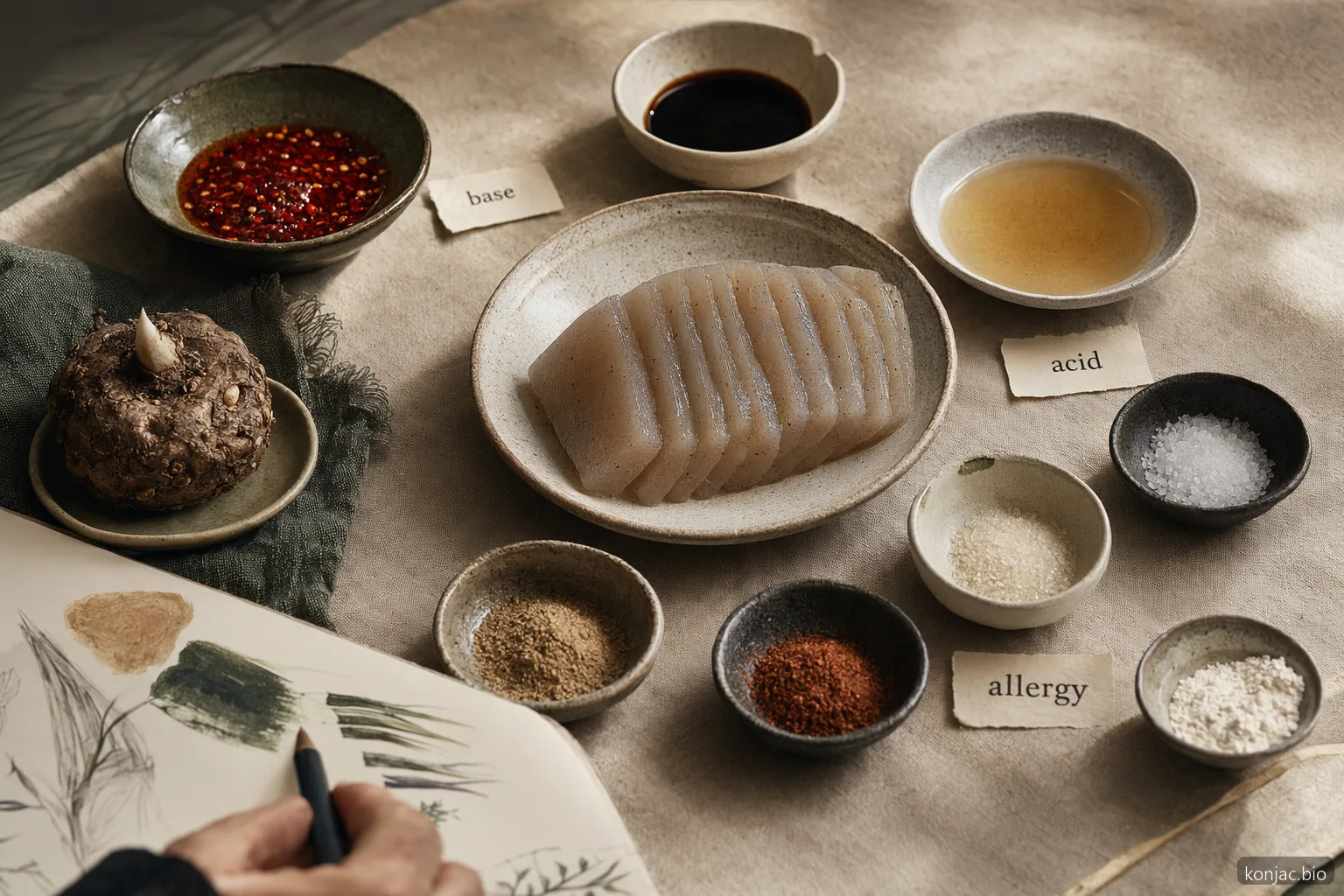
Konjac shuang ingredients are usually a konjac gel base plus a spicy, savory seasoning system. The base comes from Amorphophallus konjac, whose glucomannan fraction is used as konjac gum E425(i) or konjac glucomannan E425(ii) in food applications reviewed by EFSA E425.
In retail-style spicy konjac snacks, the ingredient statement commonly starts with konjac gel, konjac flour, or konjac powder and water. The seasoning side often includes chili oil, chili flakes, soy sauce, vinegar, salt, sugar, garlic, Sichuan pepper, other spices, and flavor enhancers such as monosodium glutamate.
For U.S. food labeling, ingredients must be declared by common or usual name in descending order of predominance by weight, under 21 CFR 101. This means a wholesale buyer should not only ask what is present, but also where each input sits in the formula by weight.
A practical buyer check is to separate the label into three blocks:
- Konjac matrix: konjac flour, konjac glucomannan, water, calcium hydroxide, sodium carbonate, or other gel-setting inputs if used.
- Flavor system: chili oil, soy sauce, vinegar, sugar, salt, spices, garlic, onion, sesame, and flavor enhancers.
- Process controls: acidity regulators, preservatives where permitted, heat process, water activity target, and pack integrity.
How do konjac shuang ingredients work in the snack?
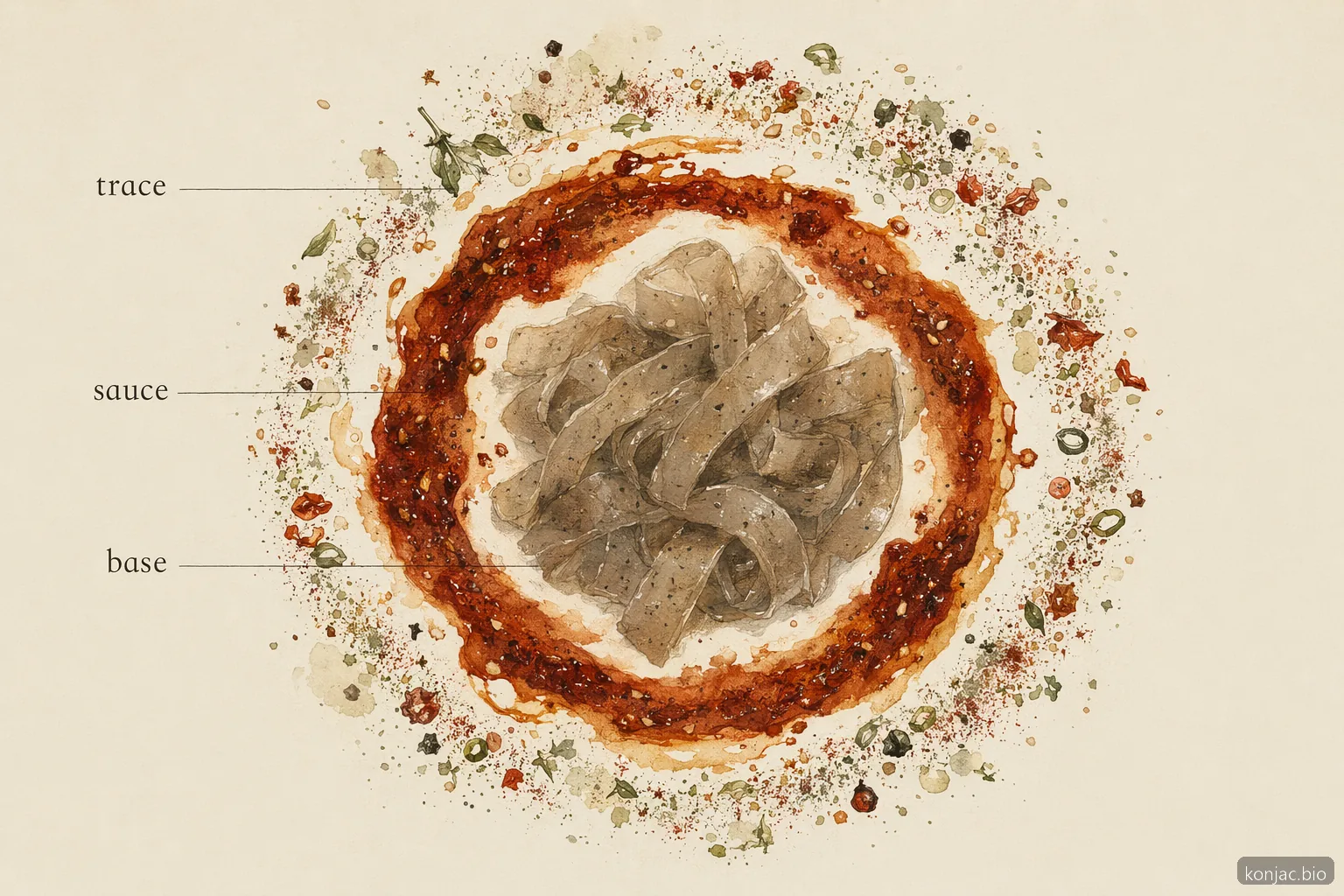
Konjac shuang ingredients work by combining a chewy konjac gel network with oil-based chili flavor, water-soluble seasonings, and process controls. Konjac glucomannan is valued in foods because it hydrates strongly and can function as a thickener, stabilizer, or gelling agent, as reviewed in the EFSA review.
The konjac matrix provides the bite. A firmer strip-style snack usually needs tighter control of flour grade, hydration temperature, gel-setting conditions, cut size, and sterilization or pasteurization process. Small changes in hydration ratio can shift texture from elastic to brittle or watery.
The seasoning system provides the flavor profile. Chili oil carries fat-soluble chili aroma and color, while vinegar, salt, sugar, soy sauce, and spices build the sour, salty, sweet, and umami profile. If monosodium glutamate is used, the U.S. FDA states that MSG added to food is generally recognized as safe, with labeling expectations described in its MSG Q&A.
The process-control system protects consistency. Acidity regulators, packaging, heat process, oxygen control, and storage conditions must be validated for the exact pack size and formula. A 20 g single-serve sachet and a 200 g pouch can behave differently because heat penetration, oil distribution, and headspace are not identical.
Typical konjac shuang ingredients table for label review
A label review is easier when each ingredient is tied to its technical purpose, allergen risk, and purchasing specification. The table below is a practical screening tool for product developers, import teams, and private-label buyers.
| Ingredient group | Common examples | Function | B2B review point |
|---|---|---|---|
| Konjac base | Konjac flour, konjac glucomannan, water | Chewy gel structure | Confirm viscosity grade, hydration ratio, gel strength, and source lot documents. |
| Gel-setting inputs | Calcium hydroxide, sodium carbonate, potassium carbonate | Texture formation and pH control | Check permitted use and residual pH target in the sale market. |
| Oil and chili | Chili oil, chili flakes, spice extracts | Heat, color, aroma | Define Scoville range, color target, and oil separation tolerance. |
| Savory seasonings | Soy sauce, salt, sugar, yeast extract, MSG | Saltiness, sweetness, umami | Check sodium target and MSG declaration where used. |
| Acid system | Vinegar, citric acid, lactic acid | Sourness and pH adjustment | Specify finished pH, sensory target, and formula compatibility. |
| Allergen inputs | Soy, wheat, sesame | Flavor or oil notes | U.S. major allergen disclosure requirements include sesame, soy, and wheat under FDA allergens. |
| Preservation inputs | Potassium sorbate, sodium benzoate, or no preservative | Formula stability where permitted | Confirm additive legality, dosage, pH fit, and label language in each market. |
Brands building from raw materials should review konjac flour wholesale specifications before choosing a finished snack texture. Brands comparing konjac snacks with noodle formats can also review konjac noodles wholesale requirements because hydration, cut size, and packaging targets differ.
Are konjac shuang ingredients safe and compliant?
Konjac shuang ingredients are manageable for food brands when the format, additive use, label claims, allergen controls, and physical texture are designed for the target market. EFSA re-evaluated konjac gum E425(i) and konjac glucomannan E425(ii) as food additives in 2017 and reviewed use levels, exposure, and technical data in its food additive opinion.
Physical format matters. The FDA has warned consumers not to eat mini-cup gel candy products containing konjac because of choking hazards, which is a different risk profile from sliced, strip-style, or noodle-style konjac foods that are chewed as savory snacks, as described in the FDA warning.
Claims also matter. If a brand wants to mention glucomannan benefits, the language must be conservative and market-specific. EFSA’s 2010 weight-management opinion assessed the wording, “glucomannan in the context of an energy restricted diet contributes to weight loss,” in its EFSA claim opinion.
Spicy konjac snacks are usually positioned as convenience snacks, not supplement products. That means the highest compliance priorities are ordinary food controls: legal ingredients, accurate ingredient order, allergen declaration, nutrition facts, net weight, lot coding, storage conditions, and import documentation.
Wholesale specification checklist for spicy konjac snacks
A wholesale konjac shuang project should start with a written product specification rather than a photo or flavor description. For broader supply-chain planning, review Konjac Wholesale & Manufacturing to align raw material sourcing, processing options, and supplier qualification.
Use this checklist before requesting samples or locking a purchase order:
- Konjac input: define konjac flour grade, gel format, origin, viscosity target, and lot traceability.
- Texture target: set strip width, strip length, bite firmness, breakage limit, and drained weight.
- Flavor brief: define chili heat, vinegar level, sweetness, salt target, garlic note, and regional spice profile.
- Allergen plan: confirm whether soy, wheat, sesame, peanut, or tree nut materials are present in ingredients or the facility.
- Additive map: list acidity regulators, preservatives, color inputs, flavor enhancers, and permitted levels by market.
- Packaging: choose sachet, cup, pouch, or bulk bag, then set oxygen target, seal strength, and leakage tolerance.
- Validation: request finished pH, microbiology plan, heat process data, shelf-life protocol, and retention sample policy.
- Commercial terms: define MOQ, lead time, private-label artwork, carton configuration, pallet plan, and incoterms.
B2B note: konjac.bio sources konjac flour, konjac gel formats, and finished konjac snack inputs at wholesale volumes. For specifications, pricing, and samples, contact our team at /contact/.
The best supplier conversations are specific. A request for “spicy konjac snack” invites inconsistent samples, while a request for “80 g sachet, strip cut, sesame-free, soy-based mala profile, pH target 4.2 to 4.6, 12-month ambient shelf life” gives procurement, R&D, and quality teams the same target.
Frequently asked questions
01 What are the main konjac shuang ingredients?
02 Is konjac shuang the same as shirataki?
03 Do konjac shuang ingredients contain allergens?
04 Is MSG a common ingredient in konjac shuang?
05 Can brands make health claims about konjac shuang ingredients?
06 What should a wholesale buyer request from a konjac shuang supplier?
- Re-evaluation of konjac gum (E 425 i) and konjac glucomannan (E 425 ii) as food additives · European Food Safety Authority · 2017
- Scientific Opinion on the substantiation of health claims related to konjac mannan (glucomannan) · European Food Safety Authority · 2010
- Questions and Answers on Monosodium Glutamate (MSG) · U.S. Food and Drug Administration · 2023
- FDA Warns Consumers Not to Eat Mini-Cup Gel Candy Products Containing Konjac · U.S. Food and Drug Administration · 2001
- 21 CFR Part 101 Food Labeling · Electronic Code of Federal Regulations · 2024
- Food Allergies · U.S. Food and Drug Administration · 2024