Why are shirataki a low carb alternative to noodles?
Shirataki noodles are a low carb alternative to noodles because they replace wheat starch with konjac glucomannan gel, water, and a firming alkaline ingredient.
Cooked spaghetti contains about 31 g carbohydrate per 100 g in USDA FoodData Central, while plain shirataki is commonly sold with very low digestible carbohydrate because its structure is mostly water plus soluble fiber USDA pasta. That difference is the main reason shirataki appears in keto, low carb, and reduced-calorie meal plans.
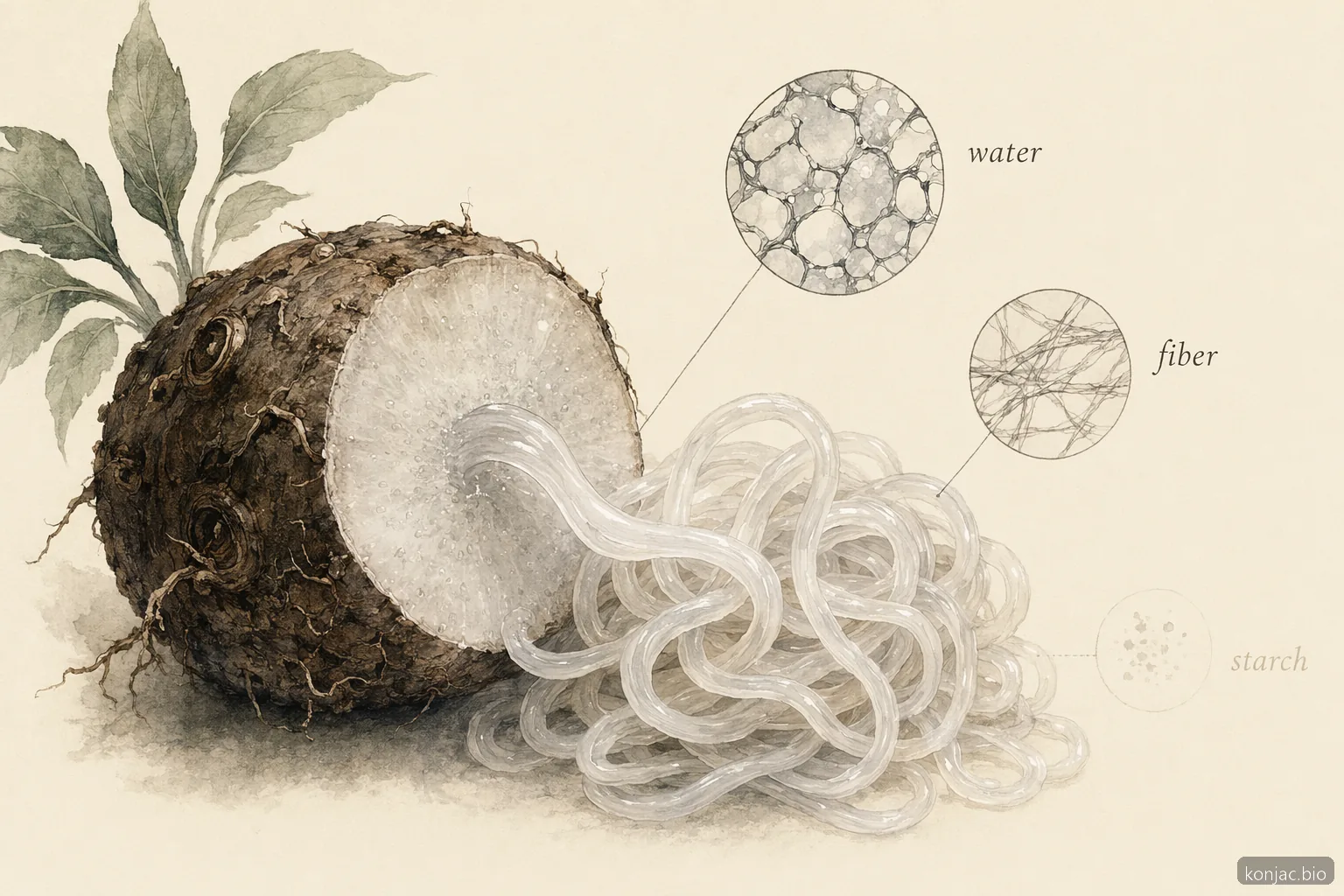
The core ingredient is glucomannan, a soluble fiber from the corm of Amorphophallus konjac. Reviews indexed by PubMed describe glucomannan as a highly water-binding polysaccharide used in foods for texture, viscosity, and satiety-focused formulations glucomannan review.
Shirataki does not behave like wheat pasta in every way. It has a springy bite, absorbs sauce on its surface rather than inside a starchy core, and contributes little protein. A balanced bowl usually needs eggs, tofu, chicken, seafood, tempeh, or legumes for structure and fullness.
How does shirataki compare as a low carb alternative to noodles?
Shirataki compares well as a low carb alternative to noodles when the goal is the largest carbohydrate reduction with a noodle-like shape.
Vegetable spirals, spaghetti squash, kelp noodles, and legume pastas each solve a different problem. Some add vegetables, some add protein, and some keep a more familiar chew. Shirataki is the strongest option when net carbohydrate reduction is the main requirement.
| Option | Main ingredient | Best use | Tradeoff |
|---|---|---|---|
| Shirataki | Konjac glucomannan gel | Ramen, stir-fries, pad Thai-style bowls | Needs rinsing and dry-pan cooking |
| Zucchini noodles | Fresh zucchini | Quick sautés and raw bowls | Watery texture after salting or heating |
| Spaghetti squash | Winter squash flesh | Baked casseroles and marinara bowls | Sweeter, vegetable-forward flavor |
| Kelp noodles | Seaweed-derived gel | Cold salads and crunchy bowls | Less pasta-like unless softened |
| Legume pasta | Lentil, chickpea, or soybean flour | Higher-protein pasta plates | Usually higher carbohydrate than shirataki |
For wheat pasta replacement, shirataki is closest in visual format but not in flavor. For vegetable-forward meals, zucchini noodles or spaghetti squash may feel more natural. For protein, legume pasta often contributes more grams per serving, but it does not match shirataki for very low carbohydrate positioning.
What makes konjac noodles so low in carbs?
Konjac noodles are so low in carbs because hydrated glucomannan forms a gel matrix that is mostly water rather than digestible starch.
Traditional shirataki production starts with refined konjac flour. The flour is dispersed in water, allowed to hydrate, then set into strands with an alkaline coagulant such as calcium hydroxide. The result is a translucent noodle that keeps its shape after packing in water.
Glucomannan is valuable because it binds water strongly. EFSA has evaluated konjac mannan, also called glucomannan, for authorized nutrition and health claims in the European Union, including the claim that “glucomannan contributes to the maintenance of normal blood cholesterol levels” under stated intake conditions EFSA opinion.
That fiber structure also explains the cooking behavior. Shirataki does not swell like durum wheat pasta because it is already hydrated. Boiling mainly removes packing aroma and warms the noodle, while dry-pan heating drives off surface water so sauce can cling better.
For a full ingredient, format, and storage overview, see Shirataki Noodles: The Complete Guide to Konjac Pasta. For label-level detail, the companion shirataki noodles nutrition guide covers calories, fiber, and net carb interpretation.
How to cook shirataki so it tastes closer to pasta
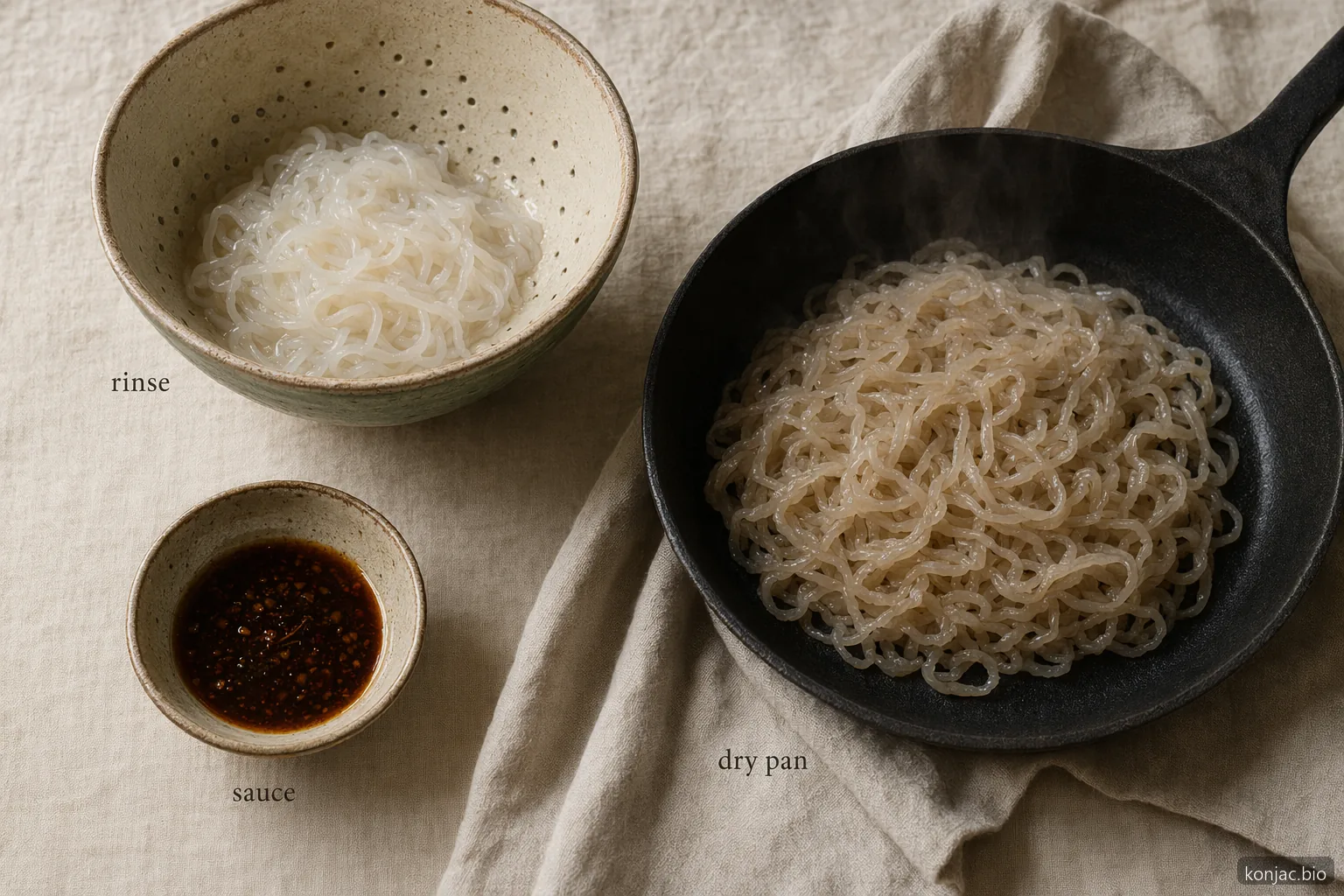
Good shirataki texture comes from removing excess water before adding sauce. The method is simple, but skipping it leaves noodles slippery and bland.
- Drain: Pour off the packing liquid completely.
- Rinse: Rinse under cool water for 30 to 60 seconds.
- Boil: Simmer for 2 to 3 minutes to reduce aroma.
- Dry-pan: Heat in a dry skillet for 3 to 5 minutes until squeaky and less wet.
- Sauce hard: Add a concentrated sauce, fat, aromatics, and salt at the end.
The best sauces are assertive. Think sesame oil, soy sauce, chili crisp, garlic, ginger, peanut sauce, miso broth, tomato paste, pesto, curry paste, or a reduced cream sauce. Thin watery sauces slide off, especially if the noodles were not dry-panned.
Protein helps shirataki feel like a complete meal. A practical bowl can use 200 g shirataki, 100 to 150 g protein, 1 to 2 cups vegetables, and 2 to 4 tablespoons of concentrated sauce. That structure keeps the noodle role familiar while preventing the meal from being only fiber and water.
If texture is the challenge, see the step-by-step how to cook shirataki noodles guide for pan timing, sauce styles, and common mistakes.
Best uses for a low carb alternative to noodles
The best uses for a low carb alternative to noodles are dishes where sauce, broth, or stir-fry aromatics carry most of the flavor. Shirataki performs especially well when the recipe already includes strong seasoning and a separate protein.
Use shirataki in ramen-style bowls with broth, egg, mushrooms, and greens. It also works in pad Thai-inspired plates with tamarind, lime, peanuts, and shrimp or tofu. For Italian-style meals, pair shirataki with thick marinara, meat sauce, pesto, or Alfredo-style sauces rather than a loose tomato juice base.
Shirataki is less effective in dishes that depend on starch release. Cacio e pepe, glossy carbonara, and classic pasta water emulsions rely on wheat pasta starch. Shirataki can still be used, but the sauce needs a different thickener or a more concentrated base.
Food brands using konjac at scale should specify mesh size, viscosity, whiteness, odor, microbiology, and documentation before sampling. konjac.bio sources konjac ingredients at wholesale for product teams, with specifications and pricing available through contact.
Frequently asked questions
01 Is shirataki the lowest carb alternative to noodles?
02 Are shirataki noodles keto-friendly?
03 Do shirataki noodles have health benefits?
04 Why do shirataki noodles smell when opened?
05 Can I eat shirataki noodles every day?
06 What sauce works best with shirataki noodles?
- FoodData Central: Spaghetti, cooked, enriched, without added salt · USDA FoodData Central · 2019
- Scientific Opinion on the substantiation of health claims related to konjac mannan (glucomannan) · European Food Safety Authority · 2010
- Glucomannan and obesity: a critical review · PubMed · 2005
- FDA Warns Consumers Not To Eat Mini-Cup Jelly Products That Contain Konjac · U.S. Food and Drug Administration · 2001