What are low carb noodles?
Low carb noodles are pasta substitutes with fewer digestible carbohydrates than wheat pasta, usually by using fiber, vegetables, eggs, legumes, or protein isolates.
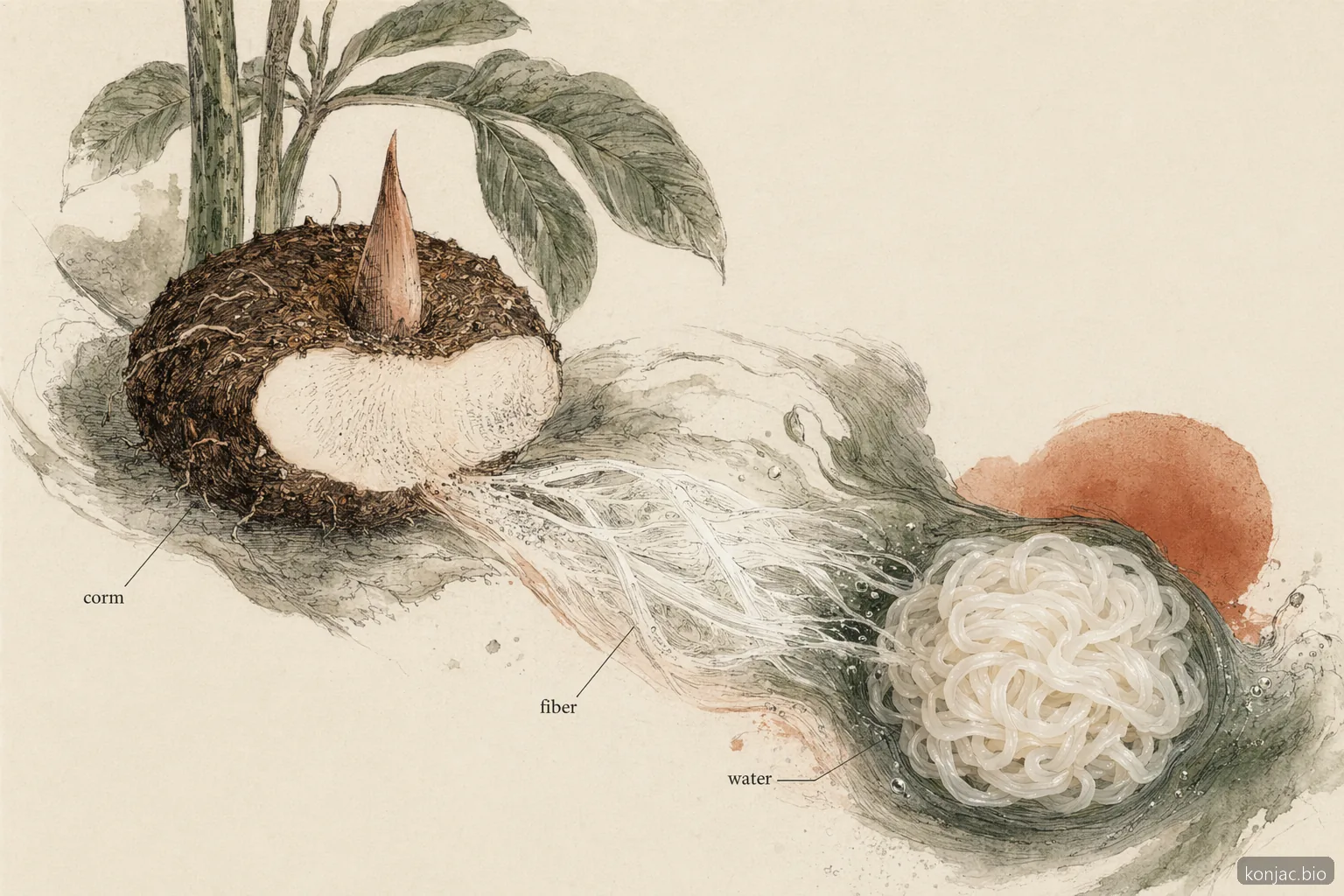
The category includes shirataki noodles, zucchini noodles, spaghetti squash, hearts of palm noodles, egg-based noodles, and high-protein pasta. The lowest-carb products are usually konjac-based shirataki because they replace wheat flour with water and glucomannan, the soluble fiber extracted from the corm of Amorphophallus konjac.
On United States labels, total carbohydrate includes starch, sugar, sugar alcohols, and dietary fiber. The FDA sets the Daily Value for dietary fiber at 28 g for a 2,000-calorie diet, and labels list fiber inside total carbohydrate rather than outside it [FDA label](https://www.fda.gov/food/new-nutrition-facts-label/daily-value-new-nutrition-and-supplement-facts-labels).
| Noodle type | Main ingredient | Typical role |
|---|---|---|
| Shirataki | Konjac glucomannan | Lowest-carb pasta swap |
| Zucchini noodles | Fresh zucchini | Quick vegetable base |
| Spaghetti squash | Cooked squash strands | Whole-food pasta bowl |
| Egg noodles | Egg and protein blends | Higher-protein option |
| Legume pasta | Lentil, chickpea, or pea flour | More protein, more carbs |
For a full primer on konjac pasta, see Shirataki Noodles: The Complete Guide to Konjac Pasta.
How do low carb noodles compare with regular pasta?
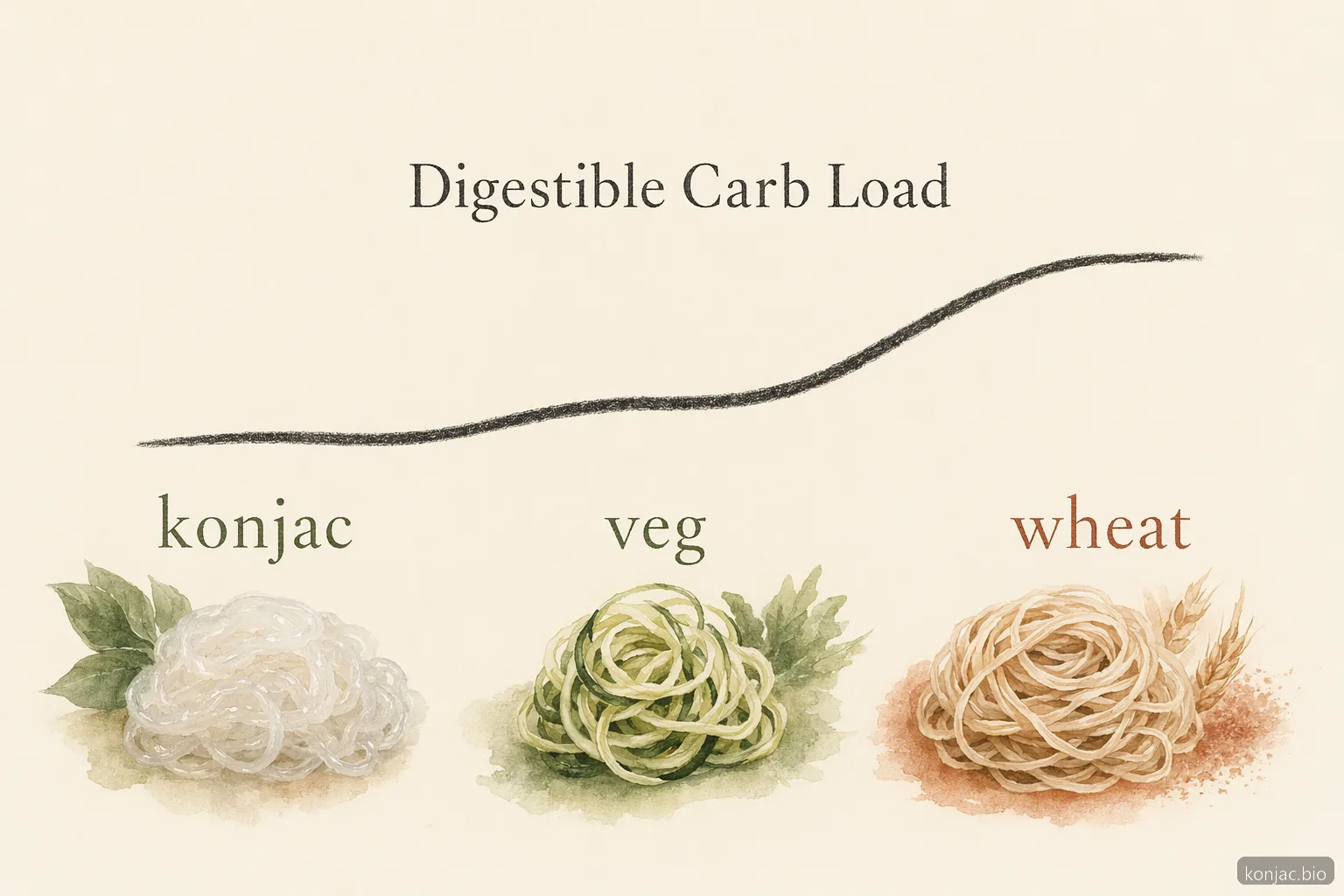
Low carb noodles contain less digestible carbohydrate than regular pasta because they use fiber or vegetables instead of wheat starch.
Cooked enriched spaghetti contains about 43 g carbohydrate per 140 g cup, depending on cooking time and moisture, in USDA FoodData Central [USDA pasta](https://fdc.nal.usda.gov/fdc-app.html#/food-details/169755/nutrients). That carb load mostly comes from wheat starch. Shirataki noodles work differently: the gel structure is mostly water held by glucomannan, so the calorie and net-carb contribution is much lower.
| Option | Carb profile | Texture | Best use |
|---|---|---|---|
| Regular wheat pasta | Highest starch | Firm, elastic | Classic pasta dishes |
| Shirataki noodles | Lowest net carbs | Springy, slippery | Ramen, stir-fry, saucy bowls |
| Zucchini noodles | Low carb, more water | Soft, fresh | Light bowls, quick sautés |
| Spaghetti squash | Moderate vegetable carbs | Strand-like, tender | Bakes, marinara bowls |
| Protein pasta | Varies by formula | Closest to pasta | Higher-protein meals |
The tradeoff is texture. Wheat pasta has gluten and starch, which create chew and sauce grip. Konjac noodles have bounce and a neutral taste, but they do not absorb sauce like semolina spaghetti.
For keto-specific meal planning, pair this guide with shirataki noodles on keto, especially if you track net carbs daily.
Why do shirataki low carb noodles have so few carbs?
Shirataki low carb noodles have so few carbs because their structure is a water-rich konjac gel rather than a wheat-flour dough.
The key ingredient is glucomannan, a soluble fiber from Amorphophallus konjac. EFSA describes glucomannan as konjac mannan and evaluated it for several health claims, including the approved wording: “Glucomannan in the context of an energy restricted diet contributes to weight loss” [EFSA opinion](https://www.efsa.europa.eu/en/efsajournal/pub/1798).
A typical shirataki process has four steps:
- Mill the corm: konjac corms are dried and ground into konjac flour.
- Hydrate the fiber: konjac flour is mixed with water so glucomannan swells.
- Set the gel: an alkaline coagulant, often calcium hydroxide, helps form a stable noodle.
- Shape and pack: the gel is extruded, heated, cooled, and packed in water.
That gel system explains both the nutrition and the cooking behavior. Shirataki noodles are already fully formed, so boiling does not cook starch the way it does with wheat pasta. Heating mainly removes packing liquid, firms the surface, and prepares the noodles to take on sauce.
Glucomannan has also been studied for lipid markers. A meta-analysis published in The American Journal of Clinical Nutrition reported significant changes in total cholesterol, LDL cholesterol, triglycerides, body weight, and fasting blood glucose across selected trials [PubMed review](https://pubmed.ncbi.nlm.nih.gov/18842808/). Food choices should still be matched to the whole diet, not a single ingredient.
Choosing the right low-carb noodle for each dish
The best low-carb noodle depends on the sauce, cooking method, and texture you want on the plate.
Shirataki works best when the sauce is bold, salty, spicy, acidic, or creamy. Good matches include miso broth, sesame garlic sauce, Thai-style peanut sauce, spicy tomato sauce, and mushroom cream sauce. The neutral flavor is useful because the noodle takes its identity from the dish.
Use this practical matching grid:
| Dish style | Best noodle | Why it works |
|---|---|---|
| Ramen or broth bowl | Shirataki | Holds shape in hot liquid |
| Pad Thai-style stir-fry | Shirataki or zucchini | Fast cooking, sauce-forward |
| Bolognese bowl | Shirataki or spaghetti squash | Works with heavy sauce |
| Cold sesame noodles | Shirataki | Good chilled bite |
| Mac-style bake | Protein pasta | Better sauce cling and chew |
For shirataki, texture improves with a simple routine: rinse for 30 seconds, boil for 2 minutes, drain well, then dry-pan for 2 to 4 minutes until surface moisture drops. Add sauce only after the noodles stop steaming heavily.
Konjac.bio sources konjac ingredients at wholesale for food manufacturers developing noodles, gels, blends, and private-label pasta alternatives. For specifications, documentation, and volume pricing, contact our team through wholesale konjac sourcing.
For cooking ideas, see shirataki noodle recipes. For the broader ingredient and product guide, visit the shirataki noodles pillar.
Are low carb noodles safe to eat regularly?
Low carb noodles are generally suitable for regular meals when eaten in normal portions, chewed well, and used as part of a varied diet.
Fiber-rich foods can cause gas, bloating, or stool changes when intake rises quickly. NIH MedlinePlus advises increasing fiber gradually and drinking enough fluid to help fiber move comfortably through the digestive tract [NIH fiber](https://medlineplus.gov/dietaryfiber.html).
Shirataki noodles are different from konjac mini-cup jelly candies. The FDA has warned that konjac mini-cup gel products can pose a choking risk because the gel may not dissolve easily in the mouth [FDA konjac](https://www.fda.gov/food/food-additives-petitions/cpg-sec-555425-food-containing-konjac-gum-and-presented-mini-cup-gel-products). That warning is about small gel candies, not properly prepared noodles, but it is still sensible to chew konjac foods carefully.
For adults, a practical serving is 100 to 200 g drained shirataki noodles in a meal. If you are new to konjac, start with a smaller serving and assess comfort. Pairing noodles with protein, vegetables, and fat usually creates a more satisfying meal than eating plain noodles alone.
People with swallowing difficulty, a history of digestive narrowing, or strict medical nutrition needs should ask a qualified clinician before adding large servings of gel-forming fiber. For most home cooks, the main safety steps are simple: rinse, heat, chew, hydrate, and keep portions reasonable.
Frequently asked questions
01 What are the lowest carb noodles?
02 Are low carb noodles the same as keto noodles?
03 Do shirataki noodles taste like regular pasta?
04 Can low carb noodles support weight management?
05 How do I remove the smell from shirataki noodles?
06 Are vegetable noodles better than shirataki noodles?
- Scientific Opinion on the substantiation of health claims related to konjac mannan (glucomannan) · European Food Safety Authority · 2010
- Daily Value on the Nutrition and Supplement Facts Labels · U.S. Food and Drug Administration · 2024
- Food Containing Konjac Gum and Presented in Mini-Cup Gel Products · U.S. Food and Drug Administration · 2023
- Pasta, cooked, enriched, without added salt · USDA FoodData Central · 2019
- The effect of glucomannan on plasma lipid and glucose concentrations, body weight, and blood pressure · PubMed · 2008
- Dietary Fiber · NIH MedlinePlus · 2024