What is miracle noodles rice?
Miracle noodles rice is a rice-shaped form of shirataki made mainly from water and konjac glucomannan fiber. It is not grain rice, cauliflower rice, or pasta, even though it is used in many of the same bowls, stir-fries, and meal-prep recipes.
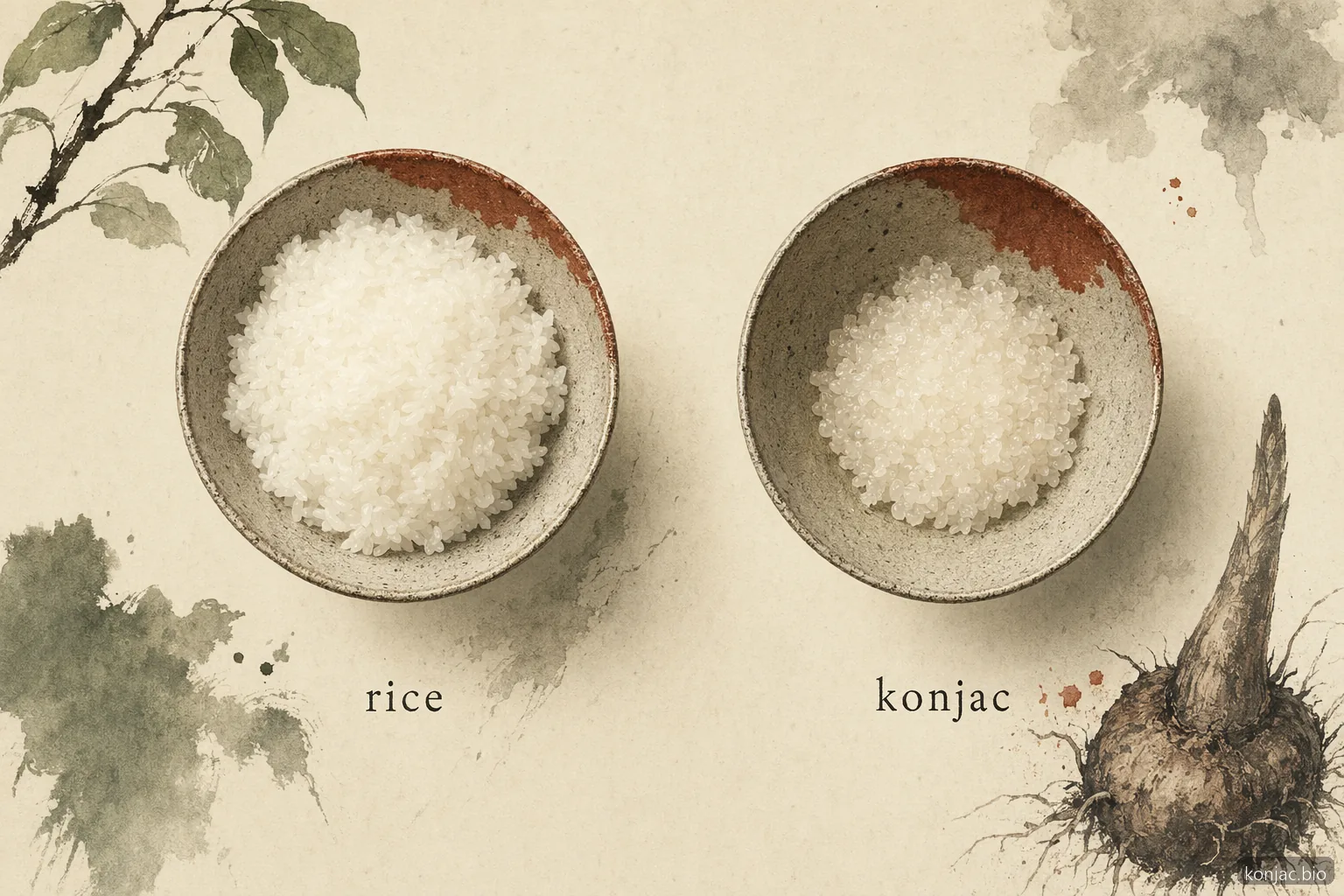
The base ingredient comes from Amorphophallus konjac, a plant whose corm contains konjac glucomannan, a water-holding soluble fiber described in food hydrocolloid literature as a high-viscosity polysaccharide [konjac review](https://www.sciencedirect.com/science/article/pii/S0144861710000135). In retail packs, the rice-shaped pieces are usually stored in water and need rinsing before cooking.
The main appeal is substitution. A 100 g serving of cooked white rice commonly contributes about 130 calories in food composition databases, while drained shirataki-style konjac rice is typically listed around 5 to 20 calories per serving depending on water content and formula [USDA data](https://fdc.nal.usda.gov/). The exact number depends on the label, because some products include oat fiber, soy fiber, or seasoning.
Texture matters more than appearance. Konjac rice does not become fluffy like jasmine or short-grain rice. It is springy, slippery before drying, and neutral in flavor, which makes it better for strongly seasoned meals than plain rice plates.
How is miracle noodles rice made from konjac?
Miracle noodles rice is made by hydrating konjac flour, setting it into a gel, cutting or extruding it into rice-like pieces, and packing it in water. The same basic technology is used for shirataki noodles, with shape and cut size creating the rice format.
A typical process has 5 steps:
- Konjac flour is dispersed into water to hydrate glucomannan.
- The mixture thickens as the fiber binds water.
- A food-grade alkaline coagulant, often calcium hydroxide, helps set the gel.
- The gel is formed into rice grains, pearls, or small pieces.
- The finished product is heat processed and packed in water or brine.
The water-rich structure explains why the product can be low in calories. The gel network holds water, while glucomannan supplies fiber rather than starch. EFSA evaluated konjac mannan, also called glucomannan, for several health claims and approved the wording: “Glucomannan in the context of an energy restricted diet contributes to weight loss” [EFSA opinion](https://www.efsa.europa.eu/en/efsajournal/pub/1798). That claim is tied to specified daily intake conditions, not to a single bowl of konjac rice.
Some packs smell slightly oceanic or alkaline when opened. That odor comes from the packing liquid and processing environment, not from grain fermentation. Rinsing and dry-pan cooking reduce it quickly.
How do calories and carbs compare with white rice?
Konjac rice is much lower in calories and digestible carbohydrate than cooked white rice because it is mostly water and glucomannan fiber, not starch. White rice is a cereal grain built around starch, while shirataki-style rice is a hydrated gel.
| Food, 100 g | Typical calories | Main carbohydrate source | Best use |
|---|---|---|---|
| Cooked white rice | About 130 kcal | Starch | Plain bowls, sushi-style meals, curries |
| Konjac rice | Often 5 to 20 kcal | Glucomannan fiber | Low-calorie bowls, fried rice, saucy stir-fries |
| Cauliflower rice | About 25 kcal | Vegetable fiber and natural sugars | Vegetable-heavy bowls, skillets |
For blood-sugar-conscious or calorie-conscious meals, the difference is practical. Replacing a cup of cooked white rice with drained konjac rice can remove most of the starch from the plate. The tradeoff is that konjac rice does not provide the same energy, softness, or grain aroma.
Label reading is essential. Some products marketed as konjac rice include tapioca starch, oat fiber, or seasoning packets, which can change net carbohydrate, sodium, and allergen information. If your goal is very low carbohydrate intake, look for short ingredient lists: water, konjac flour or konjac powder, and calcium hydroxide.
For a broader nutrition comparison across noodle shapes, see [shirataki calories](/shirataki-noodles-calories/). The same label logic applies to angel hair, fettuccine, spaghetti, and rice-shaped konjac products.
Best uses, flavor pairings, and texture expectations
Konjac rice performs best when it is used as a carrier for bold sauces, aromatics, and proteins. It has very little flavor by itself, so recipes need seasoning from soy sauce, tamari, chili crisp, curry paste, garlic, ginger, sesame oil, tomato sauce, or broth reductions.
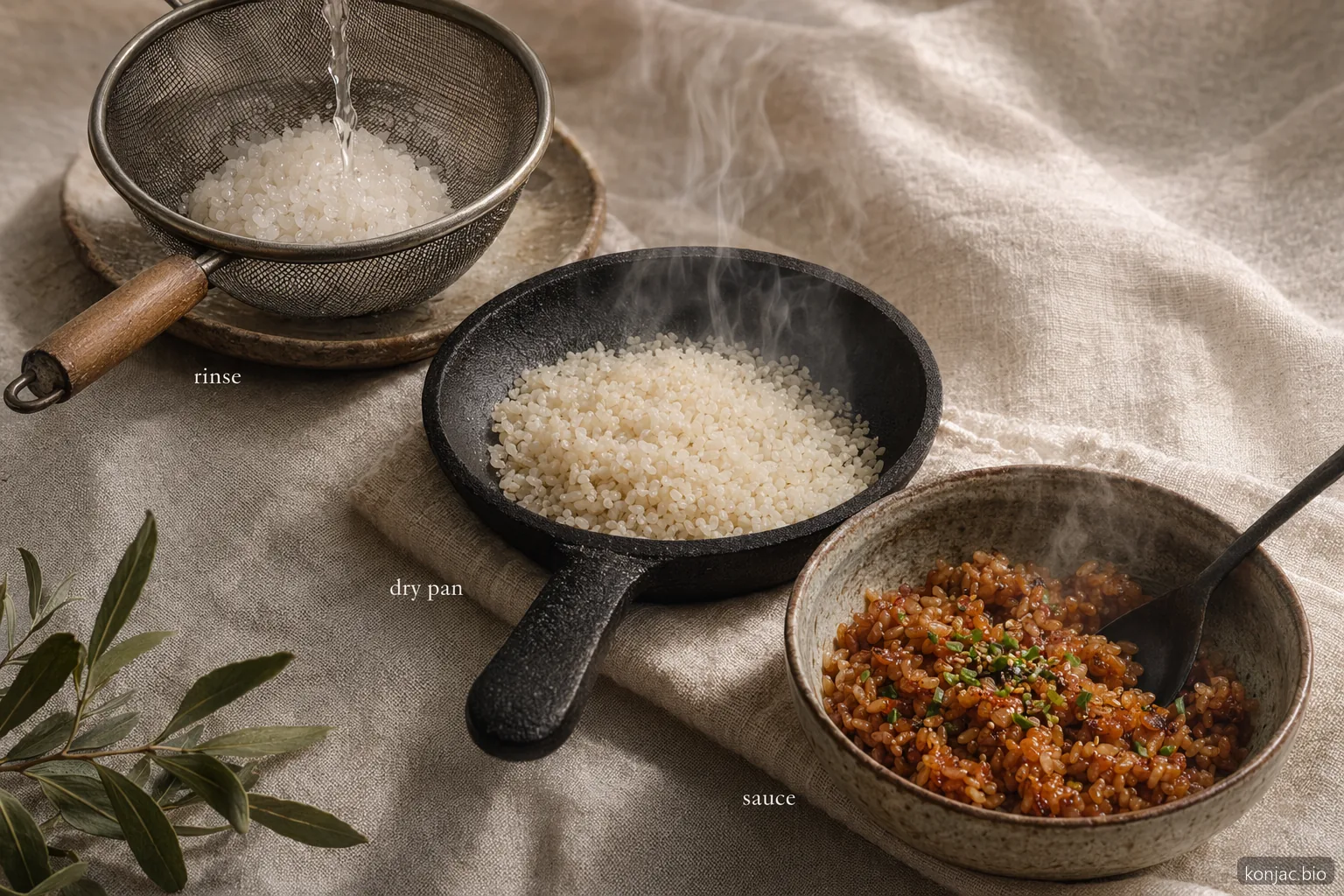
The best cooking pattern is simple: rinse, boil briefly, drain hard, then dry-pan until the surface moisture is gone. Drying is the step many people skip, and it is the reason some bowls taste watery. A hot pan for 3 to 5 minutes gives the rice-shaped pieces a cleaner bite and helps sauces cling.
Good recipe formats include:
- Fried rice: egg, scallion, garlic, peas, carrots, and sesame oil.
- Burrito bowls: taco seasoning, lime, beans, avocado, and salsa.
- Curry bowls: Thai curry, Japanese curry, or coconut curry with vegetables.
- Poke-style bowls: cucumber, edamame, seaweed, avocado, and tamari dressing.
- Meal prep: seasoned ground turkey, tofu, chicken, or mushrooms with vegetables.
Expect chew, not fluff. If you want a closer rice sensation, blend konjac rice with cauliflower rice, cooked quinoa, or a small portion of jasmine rice. A 50:50 mix gives more volume and fewer calories than an all-rice bowl, while improving texture compared with plain konjac rice.
For step-by-step cooking detail across shapes, use our [cooking shirataki](/how-to-cook-shirataki-noodles/) guide. Rice-shaped pieces need the same drying logic as noodles, but they usually dry faster because the pieces are small.
Safety, labels, and wholesale sourcing notes
Konjac rice is widely used as a food product, but safety depends on format, serving size, hydration, and labeling. The FDA’s konjac mini-cup gel candy advisory concerns small gel candies that can pose a choking risk, which is different from loose rice-shaped shirataki used in cooked meals [FDA advisory](https://www.fda.gov/food/food-additives-petitions/konjac-mini-cup-gel-candies).
Glucomannan expands with water, so consumers should follow package directions, drink fluids normally with high-fiber foods, and avoid swallowing dry konjac powder or capsules without water. A PubMed-indexed systematic review found mixed weight-management results for glucomannan supplements, which is why food claims should stay measured and specific [PubMed review](https://pubmed.ncbi.nlm.nih.gov/23198963/).
For retail buyers, the most useful label checks are:
- Ingredient list: shorter lists are easier to position for clean-label products.
- Net weight versus drained weight: water-packed foods can look heavier than usable yield.
- Sodium: plain konjac rice is usually low, but flavored versions can be higher.
- Allergens: blended products may include soy, oat, wheat, or sesame.
- Storage: shelf-stable packs and refrigerated packs need different logistics.
B2B aside: konjac.bio sources konjac rice and shirataki formats at wholesale for product developers, retailers, and foodservice teams. For specifications, pack sizes, and pricing, contact us at [/contact/](/contact/).
Frequently asked questions
01 Is miracle noodles rice the same as shirataki rice?
02 Does miracle noodles rice taste like real rice?
03 How many calories are in miracle noodles rice?
04 How do you remove the smell from konjac rice?
05 Can miracle noodles rice support weight-management meals?
06 What is the best way to use miracle noodles rice in meal prep?
- Scientific Opinion on the substantiation of health claims related to konjac mannan, glucomannan · EFSA Journal · 2010
- Effect of glucomannan on body weight in overweight or obese children and adults: a systematic review · PubMed · 2012
- Konjac glucomannan: a review of structure, physicochemical properties, and applications · Carbohydrate Polymers · 2010
- Konjac Mini-Cup Gel Candies · U.S. Food and Drug Administration · 2024
- FoodData Central · U.S. Department of Agriculture · 2024