What are shirataki miracle noodles?
Shirataki miracle noodles are translucent Japanese-style noodles made from water, konjac flour, and a food-grade setting agent such as calcium hydroxide.
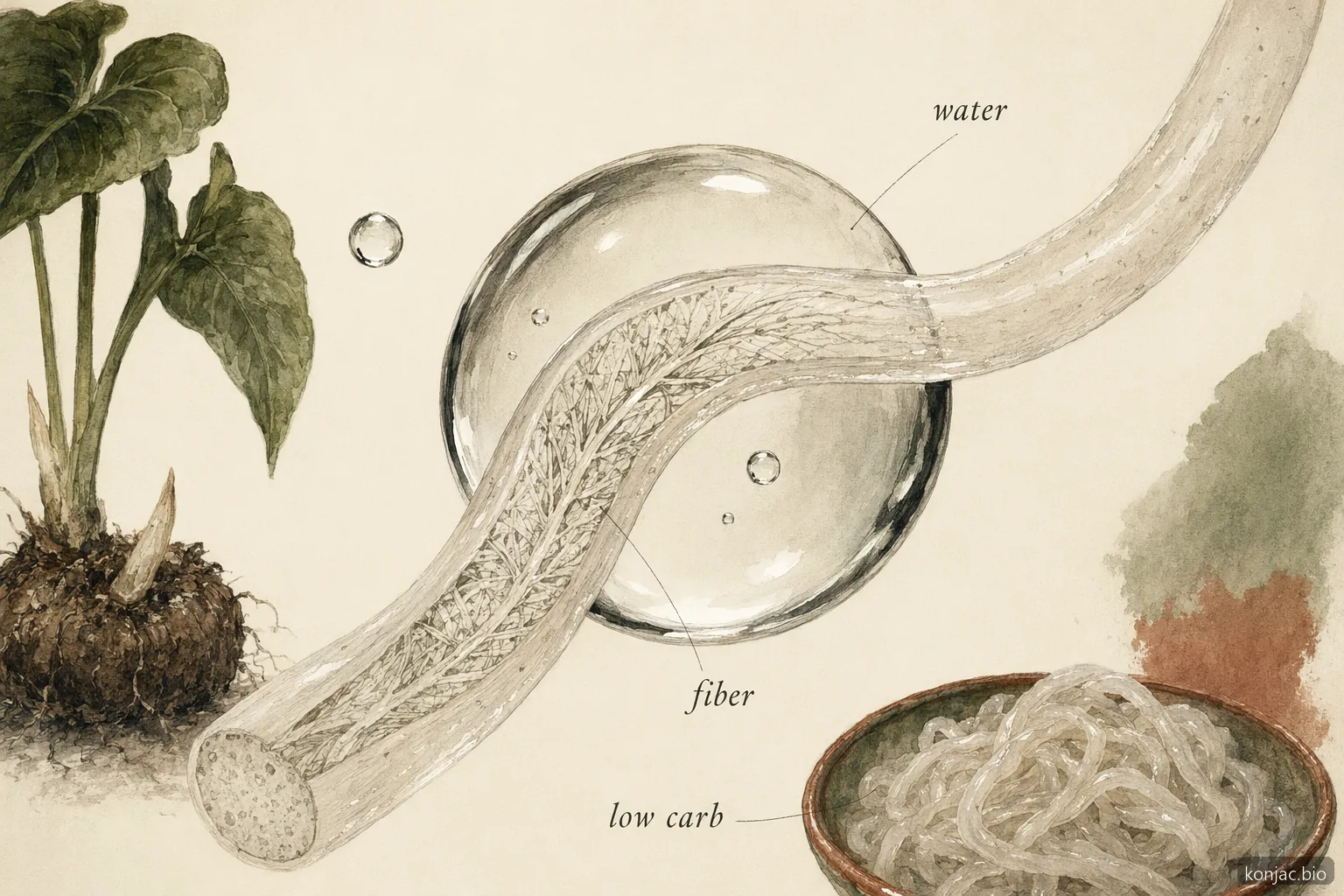
The key ingredient is glucomannan, a viscous soluble fiber from the corm of Amorphophallus konjac. Reviews describe konjac glucomannan as a high-molecular-weight polysaccharide with strong water-binding capacity, which explains the noodle’s springy texture and low energy density KGM review.
The word shirataki means white waterfall in Japanese, a reference to the noodle’s pale, slippery appearance. The phrase miracle noodles is a generic consumer nickname for the same konjac noodle category, usually emphasizing low calories, low net carbohydrates, and gluten-free use.
| Feature | Typical detail |
|---|---|
| Main ingredient | Water plus konjac glucomannan |
| Texture | Springy, slippery, chewy |
| Flavor | Neutral after rinsing and heating |
| Common formats | Spaghetti, fettuccine, rice, angel hair, knots |
| Diet fit | Gluten-free, plant-based, low calorie |
How are shirataki miracle noodles made?
Shirataki miracle noodles are made by hydrating konjac flour in water, forming a gel, shaping it into noodles, and setting the structure with an alkaline calcium salt.
A typical process starts with purified water and finely milled konjac flour. Hydration allows glucomannan to swell, then calcium hydroxide raises pH and helps form a stable gel network. The mixture is extruded through noodle dies, cut, heat-set, rinsed, and packed in water.
- Hydrate: konjac flour is dispersed in water to thicken.
- Set: calcium hydroxide or a similar food-grade alkali forms a stable gel.
- Shape: the gel is extruded into noodle, rice, or knot formats.
- Heat and rinse: the noodles are stabilized and washed.
- Pack: finished noodles are sealed in water-filled pouches.
Konjac flour is valued because glucomannan can hold many times its weight in water. That hydration behavior is why a small amount of dry konjac material can create a large pouch of ready-to-use noodles.
What do shirataki miracle noodles taste like?
Shirataki miracle noodles taste mostly neutral after proper rinsing, with a firm, elastic bite rather than the soft starch texture of wheat pasta.
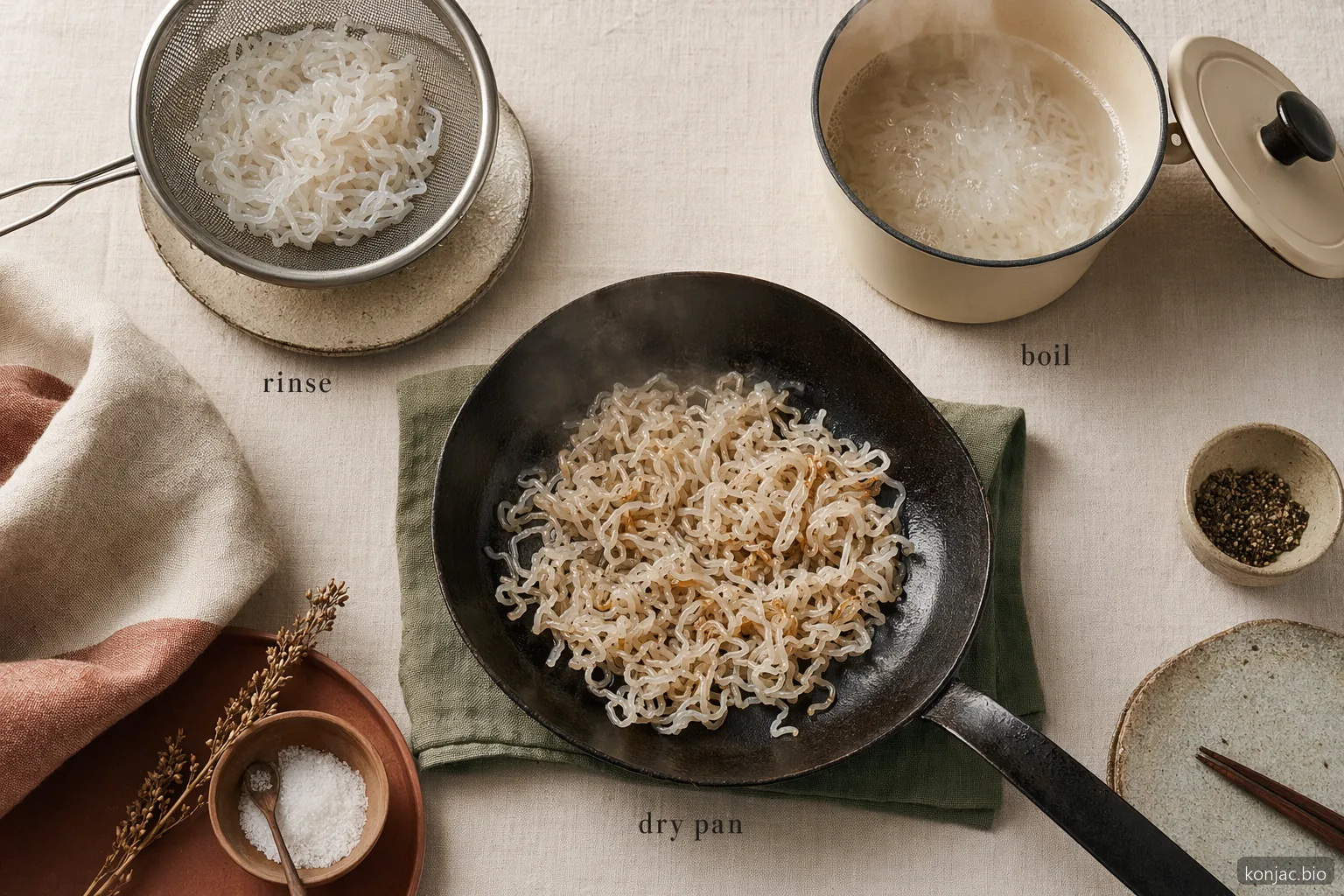
Freshly opened pouches can have a mild alkaline or ocean-like aroma from the packing liquid. That smell is normal for water-packed konjac noodles and usually disappears after rinsing, boiling, and dry-pan heating.
The best cooking method is simple and repeatable:
- Drain: pour off the packing liquid.
- Rinse: wash under running water for 30 to 60 seconds.
- Boil: simmer for 2 to 3 minutes.
- Dry-pan: heat in a nonstick pan for 2 to 4 minutes until excess moisture evaporates.
- Sauce: add a bold sauce, broth, stir-fry base, or curry.
For more technique detail, including pan timing and sauce pairings, use the sibling guide to how to cook shirataki noodles. Dry-pan heating is the step most home cooks skip, but it is the step that improves sauce cling and reduces slipperiness.
Nutrition: calories, carbohydrates, and glucomannan fiber
Shirataki noodles are usually very low in calories because the finished product is mostly water and soluble fiber rather than starch.
Exact nutrition varies by formula and drained weight, but plain konjac noodles often list 5 to 20 calories per serving. They typically contain little to no fat, low protein, and very low digestible carbohydrate compared with wheat pasta or rice noodles. USDA data for shirataki noodles shows a water-rich food with low energy per 100 grams USDA data.
| Food, cooked or ready-to-eat | Typical calorie pattern | Main structure |
|---|---|---|
| Shirataki noodles | Very low | Water plus glucomannan gel |
| Wheat pasta | Higher | Wheat starch and gluten protein |
| Rice noodles | Higher | Rice starch |
| Zucchini noodles | Low | Fresh vegetable tissue |
Glucomannan is categorized as a non-digestible carbohydrate fiber. The FDA defines dietary fiber to include certain non-digestible carbohydrates that are intrinsic in plants or isolated carbohydrates with beneficial physiological effects FDA fiber.
For more label-focused comparison, including net carbohydrate interpretation and portion size, see the sibling guide to shirataki noodles nutrition.
Are shirataki miracle noodles safe to eat?
Shirataki miracle noodles are safe for most adults when eaten as a normal food portion and chewed well with adequate fluids.
The main practical issue is texture. Konjac gels are slippery and resilient, so noodles should be chewed thoroughly, especially by children, older adults, or anyone with swallowing difficulty. The FDA has warned about choking risk from konjac mini-cup jelly products, which are a different format from noodles but share the firm gel property FDA konjac.
Large increases in fiber can also cause temporary digestive discomfort in some people. Start with a moderate serving, drink water, and pair noodles with protein, vegetables, and sauce rather than eating a very large bowl by itself.
For health claims, wording matters. EFSA’s approved weight-management claim states: “Glucomannan in the context of an energy restricted diet contributes to weight loss” EFSA opinion. The stated condition of use is 3 grams of glucomannan per day in three 1 gram doses, taken with 1 to 2 glasses of water before meals in the context of an energy-restricted diet.
Choosing shirataki formats for meals and product development
The best shirataki format depends on sauce thickness, cooking method, and the eating experience you want.
Thin angel hair works well in broths, spicy noodle bowls, and cold sesame-style dishes. Spaghetti and fettuccine formats hold thicker sauces better after dry-pan heating. Shirataki rice is useful for fried rice-style dishes, grain bowls, and lower calorie sides.
| Format | Best use | Texture goal |
|---|---|---|
| Angel hair | Soup, ramen-style bowls, chilled salads | Light and slippery |
| Spaghetti | Tomato sauce, pesto, stir-fry | Balanced chew |
| Fettuccine | Creamy sauces, curry, peanut sauce | Wide bite |
| Rice | Fried rice, bowls, stuffed vegetables | Small grains |
| Knots | Hot pot, skewers, soups | Firm chew |
For manufacturers, key specifications include konjac flour viscosity, particle size, microbiological controls, pouch fill weight, drained weight, pH, and texture stability after retort or pasteurization. Foodservice buyers should also test how the noodle performs after holding in broth for 20 to 40 minutes.
Konjac.bio sources konjac ingredients for wholesale buyers, including manufacturers and foodservice developers building shirataki, jelly, beverage, and fiber applications. For specifications, samples, and pricing, contact our team through wholesale konjac sourcing.
Frequently asked questions
01 Are shirataki miracle noodles the same as shirataki noodles?
02 Why do shirataki noodles smell when opened?
03 Do shirataki miracle noodles have carbohydrates?
04 Can you eat shirataki noodles every day?
05 What sauce works best with shirataki miracle noodles?
- Scientific Opinion on the substantiation of health claims related to konjac mannan and reduction of body weight · European Food Safety Authority · 2010
- A review of konjac glucomannan structure and functional properties · National Library of Medicine · 2018
- Questions and Answers on Dietary Fiber · U.S. Food and Drug Administration · 2024
- FDA warns consumers about potential choking risk of konjac jelly cups · U.S. Food and Drug Administration · 2002
- FoodData Central · U.S. Department of Agriculture · 2024