What are shirataki pasta noodles?
Shirataki pasta noodles are konjac-based noodles made to work in pasta-style meals with sauces, vegetables, and proteins. Their core ingredient is glucomannan, a water-soluble polysaccharide from the corm of Amorphophallus konjac, described in the European Food Safety Authority review of konjac mannan [EFSA opinion](https://www.efsa.europa.eu/en/efsajournal/pub/1798).
The word shirataki means white waterfall in Japanese, a reference to the noodles' pale, translucent look. In Western grocery categories, the same food may appear as shirataki, konjac noodles, konjac pasta, or miracle noodles.
Most plain versions are neutral rather than wheat-like. They do not brown, stretch like semolina spaghetti, or absorb sauce like dried pasta. Their value is practical: they add noodle shape and volume while keeping the plate light.
Common ingredient panels are short: water, konjac flour, and a firming alkaline ingredient such as calcium hydroxide. Some pasta-style versions add oat fiber, soy, chickpea flour, or seasoning, so the nutrition panel matters more than the front label.
How do shirataki pasta noodles compare with wheat pasta?
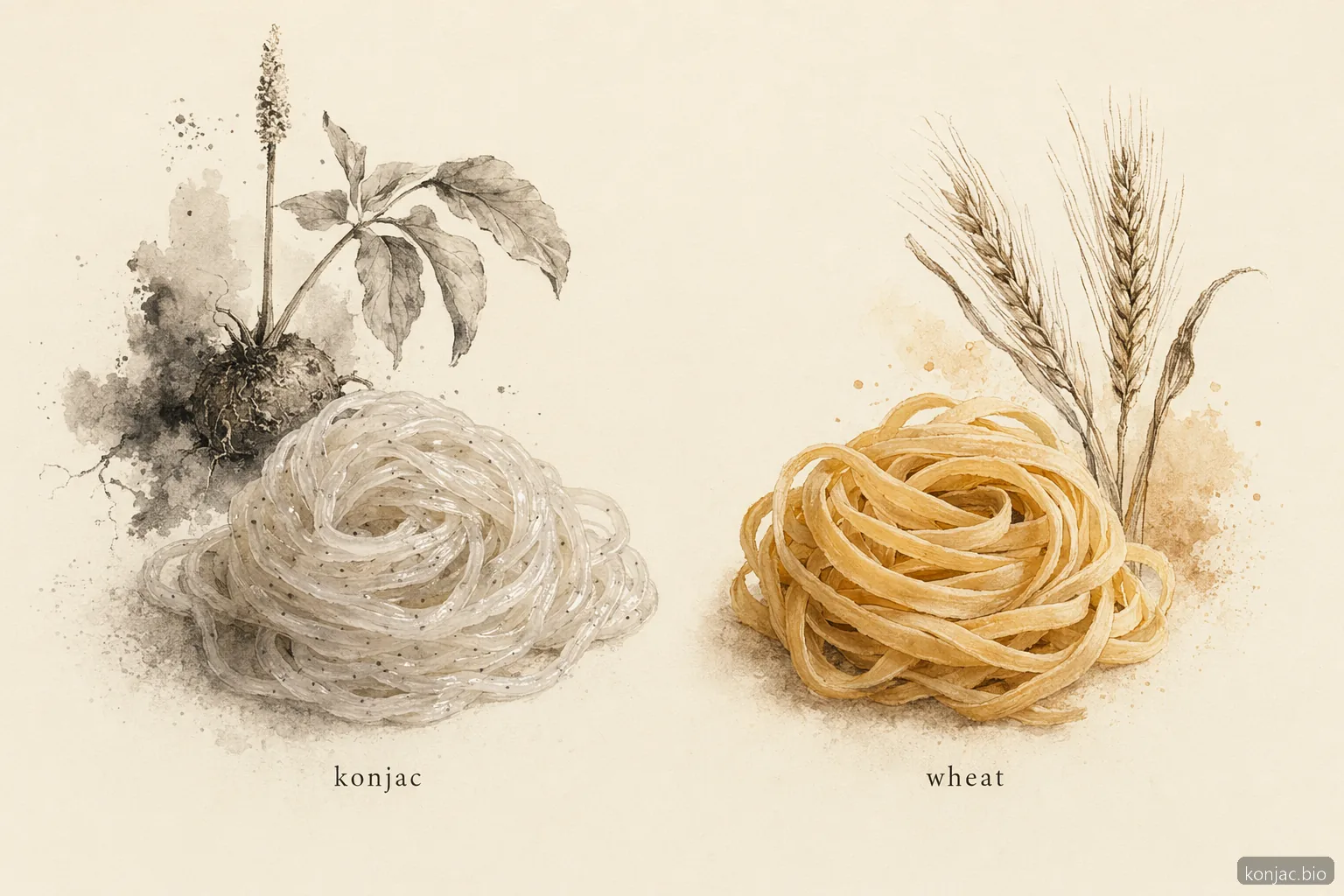
Shirataki pasta noodles are much lower in calories and digestible carbohydrates than wheat pasta, but wheat pasta provides more protein, starch-based chew, and familiar flavor. Cooked enriched spaghetti has 157 calories, 5.8 g protein, and 30.6 g carbohydrate per 100 g in USDA FoodData Central [USDA pasta](https://fdc.nal.usda.gov/fdc-app.html#/food-details/169736/nutrients).
Plain shirataki usually tastes best when the sauce supplies fat, acid, salt, and aroma. Wheat pasta contributes its own cereal flavor and releases starch into sauces, which helps emulsify dishes like cacio e pepe or aglio e olio.
| Feature | Shirataki pasta noodles | Wheat pasta |
|---|---|---|
| Main structure | Konjac gel network | Wheat starch and gluten |
| Best role | Low-calorie noodle base | Classic pasta texture and flavor |
| Sauce behavior | Coats on the outside | Absorbs and releases starch |
| Cooking time | Usually 3-8 minutes total prep | Often 8-12 minutes boiling |
| Satiety profile | Volume plus soluble fiber | Starch, protein, and portion size |
For a full category overview, see Shirataki Noodles: The Complete Guide to Konjac Pasta. For label-focused comparisons, see shirataki noodles nutrition.
How should you cook shirataki pasta noodles for best texture?
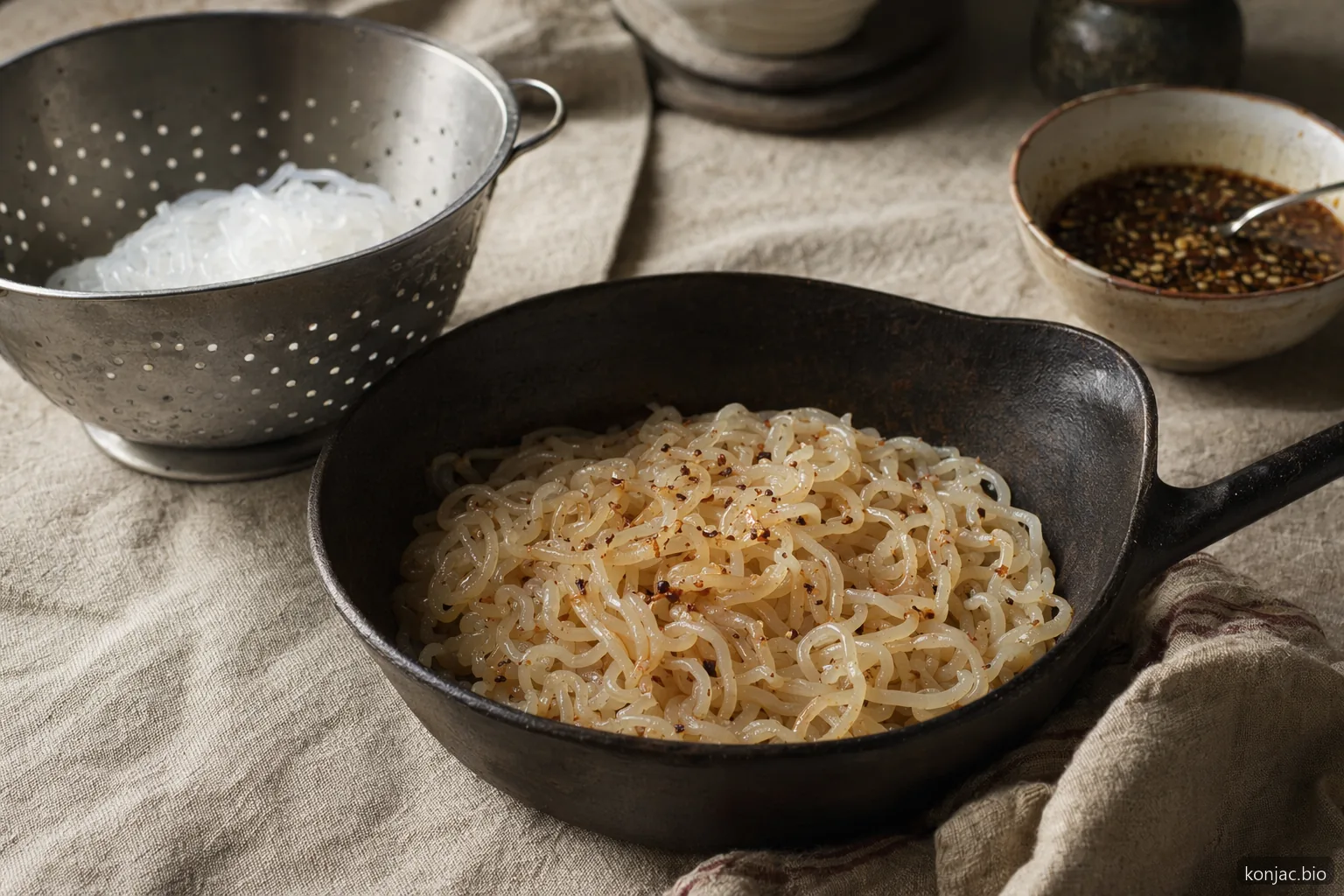
Cook shirataki pasta noodles by rinsing, heating, dry-pan cooking, then adding sauce. This four-step method reduces packing aroma, improves bite, and helps sauce cling to the noodle surface.
- Drain: Pour off the package liquid completely.
- Rinse: Rinse under cold running water for 30-60 seconds.
- Heat: Boil or microwave the noodles for 2-3 minutes, then drain again.
- Dry-pan: Cook in a bare skillet for 2-4 minutes until steam drops.
- Sauce: Add sauce only after the noodles feel hot and less wet.
The dry-pan step is the difference between watery and restaurant-style shirataki. Because the noodle already contains high moisture, adding sauce too early dilutes tomato, cream, pesto, or broth.
For Italian-style plates, use thicker sauces that cling well: meat sauce, mushroom cream, spicy tomato, or olive oil with garlic and anchovy. For Asian-style bowls, use sesame paste, miso, soy sauce, chili crisp, or peanut sauce with crunchy vegetables.
Cut long noodles before cooking if you want easier twirling. Konjac gel is slippery, so shorter strands often work better in meal prep bowls, kids' lunches, and high-volume vegetable dishes.
Nutrition, labels, and realistic benefits
Shirataki pasta noodles fit best as a low-calorie pasta swap, not as a complete meal by themselves. A balanced bowl still needs protein, vegetables, and a sauce that supplies flavor without turning the dish into a sodium-heavy meal.
Glucomannan has formal health-claim language in the European Union. EFSA's approved wording is: "Glucomannan in the context of an energy restricted diet contributes to weight loss" [EFSA opinion](https://www.efsa.europa.eu/en/efsajournal/pub/1798). EFSA also evaluated the claim that glucomannan contributes to maintenance of normal blood cholesterol concentrations [EFSA claims](https://www.efsa.europa.eu/en/efsajournal/pub/1798).
The conditions of use matter. EFSA's weight-management opinion refers to 3 g of glucomannan daily, taken as three 1 g doses with 1-2 glasses of water before meals, in the context of an energy-restricted diet [EFSA dosage](https://www.efsa.europa.eu/en/efsajournal/pub/1798). A single bowl of shirataki may not provide that amount, depending on the brand and serving size.
Read the nutrition panel for five items:
- Serving size: Some pouches contain two servings, not one.
- Fiber: Plain konjac products vary by formulation.
- Sodium: Sauced or seasoned versions can rise quickly.
- Added starches: Rice flour, tapioca, or chickpea can change calories.
- Allergens: Tofu-style versions may contain soy.
Food format also matters. The FDA has flagged konjac-containing mini-cup gel candies as a choking concern because of their size, firmness, and shape [FDA jelly](https://www.fda.gov/food/information-selected-food-safety-incidents/mini-cup-gel-candy). That safety concern is about mini-cup gel candy, not standard shirataki pasta noodles.
How do you buy shirataki pasta noodles for home, retail, or foodservice?
Buy shirataki pasta noodles by matching the format to the dish, then checking texture, label, and supply requirements. Home cooks usually need convenient pouches, while restaurants and manufacturers need consistent strand size, neutral aroma, and documented quality controls.
For home use, choose spaghetti shapes for tomato sauce, fettuccine shapes for cream sauces, and rice-style konjac for bowls or stir-fries. If a product smells strong after opening, rinse longer and use the dry-pan method before adding sauce.
| Buyer | Best check | Why it matters |
|---|---|---|
| Home cook | Serving size and added ingredients | Calories and texture vary by formula |
| Meal prepper | Shape and reheating behavior | Shorter noodles hold up better in bowls |
| Restaurant | Case pack, shelf life, and cut length | Consistency controls plating and waste |
| Manufacturer | COA, microbiology, pH, and allergen statement | Specifications support repeatable production |
For formulators and distributors, konjac.bio sources konjac flour and shirataki inputs at wholesale scale. Contact the team at /contact/ for specifications, pack formats, and pricing.
When comparing suppliers, ask for ingredient statement, country of origin, certificate of analysis, microbial limits, heavy metal limits, shelf-life data, and packaging options. For operational cooking guidance, see how to cook shirataki noodles.
Frequently asked questions
01 Are shirataki pasta noodles the same as konjac noodles?
02 Do shirataki pasta noodles taste like regular pasta?
03 Are shirataki pasta noodles good for weight management?
04 Why do shirataki pasta noodles smell when opened?
05 Can you use shirataki pasta noodles in meal prep?
- Scientific Opinion on the substantiation of health claims related to konjac mannan (glucomannan) · European Food Safety Authority · 2010
- Spaghetti, cooked, enriched, without added salt · USDA FoodData Central · 2019
- Mini-Cup Gel Candy · U.S. Food and Drug Administration · 2024