What are very low calorie noodles?
Very low calorie noodles are pasta-style noodles designed to provide volume with few calories, and shirataki noodles are the best-known example.
Classic shirataki noodles are made from water, konjac flour, and calcium hydroxide or another food-grade firming agent. Konjac flour comes from the corm of Amorphophallus konjac, a plant used in East Asian foods for centuries. Its main functional fiber is glucomannan, a water-soluble polysaccharide described in clinical nutrition literature as konjac-derived fiber [PubMed](https://pubmed.ncbi.nlm.nih.gov/25128527/).
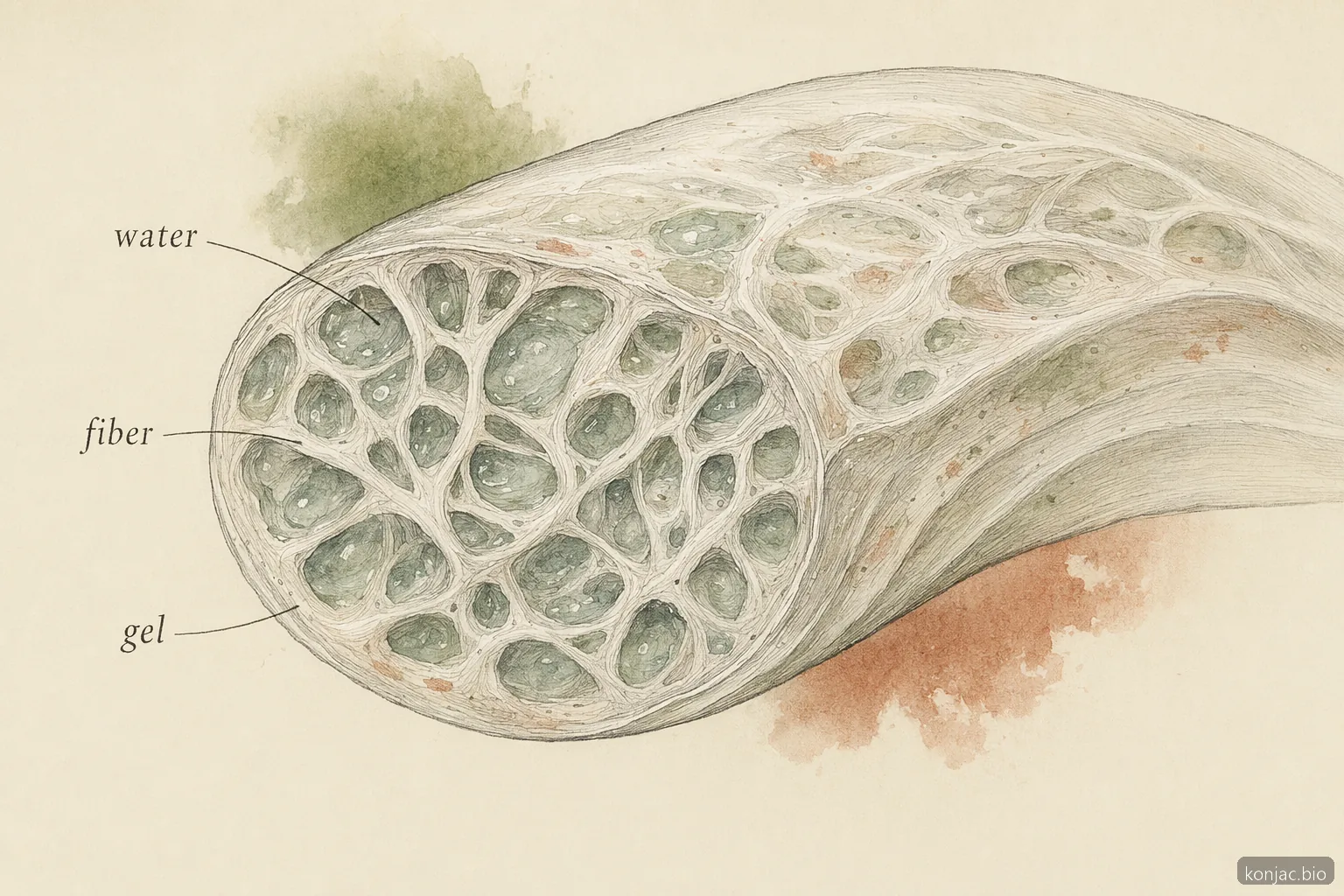
The reason these noodles feel filling is physical, not magical: the gel network holds a large amount of water. A typical pack is mostly water, so the calories are far below wheat pasta, rice noodles, or egg noodles. USDA FoodData Central lists cooked spaghetti as a calorie-dense grain food compared with water-rich alternatives [USDA data](https://fdc.nal.usda.gov/).
Common formats include spaghetti, angel hair, fettuccine, rice-shaped pieces, and konjac-oat blends. The lowest-calorie versions are usually plain konjac shirataki, while blends with tofu, oat fiber, tapioca, or starch may have a softer bite and more calories.
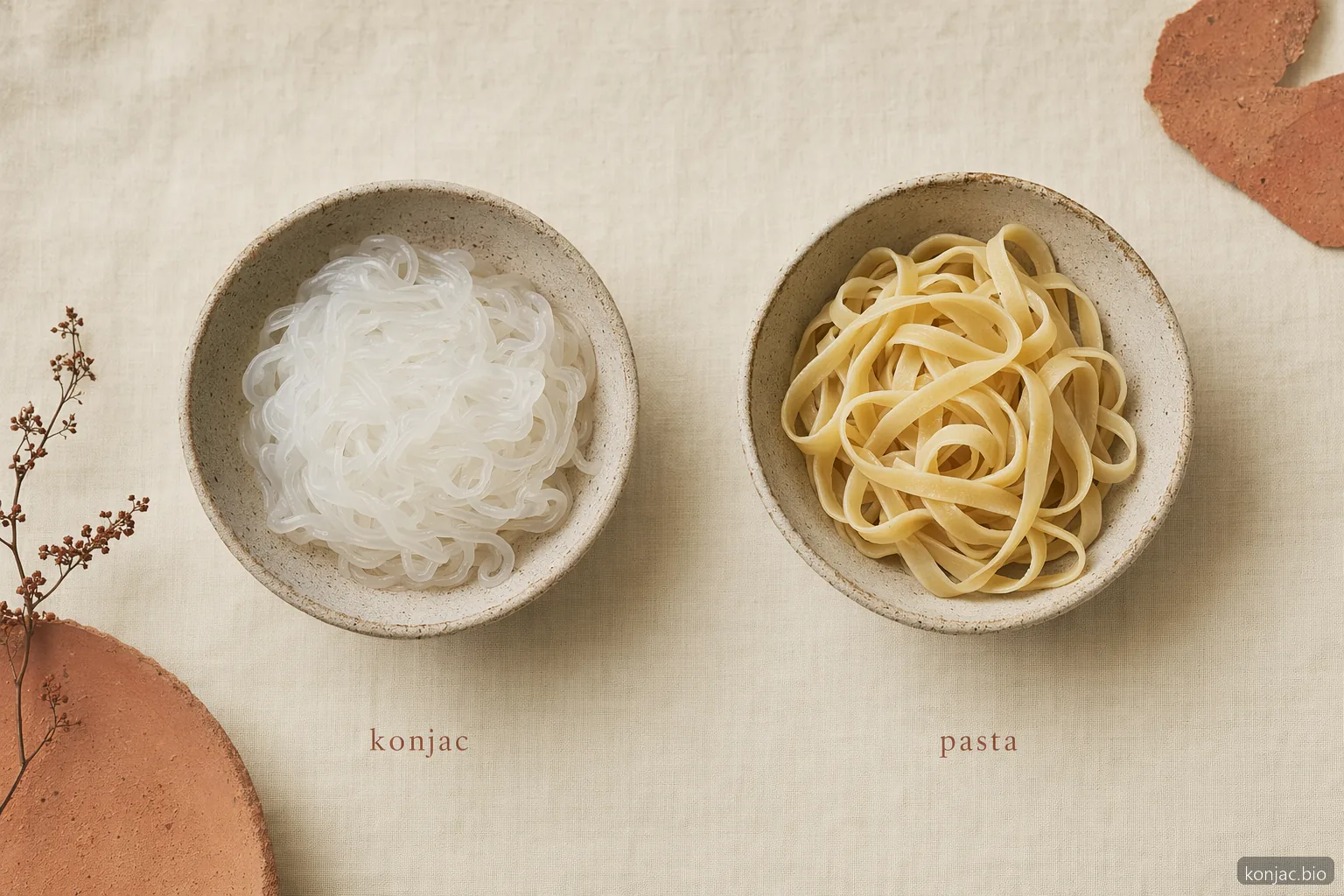
How many calories are in very low calorie noodles?
Very low calorie noodles made from plain shirataki commonly sit around 5 to 20 calories per serving, depending on drained weight and added ingredients.
The most reliable number is always the nutrition label because serving sizes vary. One brand may call 85 g a serving, while another uses 100 g or half a pouch. The practical comparison is calories per 100 g drained weight, not calories per package.
| Noodle type | Typical calorie pattern | Main calorie source | Best use |
|---|---|---|---|
| Plain shirataki | Lowest, often single digits to low double digits per serving | Trace fiber and additives | Soups, stir-fries, saucy bowls |
| Tofu or blended shirataki | Higher than plain shirataki | Soy, oat fiber, or starch | People wanting a softer bite |
| Zucchini noodles | Low, but not shelf-stable | Vegetable carbohydrates | Fresh bowls and quick sautés |
| Cooked wheat pasta | Much higher per 100 g | Wheat starch and protein | Traditional pasta dishes |
Calories are only one label line. Also check total carbohydrates, dietary fiber, sodium, and whether the package uses starches such as tapioca or potato. Added starch improves texture but moves the product away from the very low calorie category.
For a fuller nutrition breakdown, compare this page with the dedicated cluster on shirataki noodles nutrition.
Why are very low calorie noodles so low in calories?
Very low calorie noodles are so low in calories because konjac glucomannan forms a water-rich gel that contributes bulk without much digestible starch.
Glucomannan is a soluble fiber that absorbs water and thickens into a gel. Unlike wheat noodles, shirataki noodles are not built from flour starch. That difference explains why plain shirataki has a translucent look, springy bite, and very low available carbohydrate level.
EFSA evaluated glucomannan and authorized the claim: “Glucomannan in the context of an energy-restricted diet contributes to weight loss” [EFSA claim](https://www.efsa.europa.eu/en/efsajournal/pub/1798). EFSA’s condition of use refers to 3 g daily, taken as three 1 g doses with 1 to 2 glasses of water before meals, within an energy-restricted diet.
That EFSA claim applies to glucomannan intake under specified conditions, not to unlimited bowls of noodles. A serving of shirataki may contain less glucomannan than a supplement dose, and sauces can add significant calories. A 15-calorie noodle base can become a 600-calorie meal if paired with heavy cream sauce, oil, cheese, or sugary dressing.
Very low calorie noodles vs regular pasta: practical tradeoffs
Very low calorie noodles reduce calorie load, but they do not behave exactly like wheat pasta. Wheat pasta has starch, gluten structure, and a familiar al dente chew. Shirataki has a slippery, bouncy texture because it is a hydrated konjac gel.
The tradeoff is simple: shirataki wins on calorie reduction, while wheat pasta wins on classic texture and sauce absorption. A useful middle path is to mix half a serving of cooked pasta with a full serving of shirataki. That keeps the pasta flavor while cutting total calories and increasing plate volume.
| Factor | Plain shirataki | Regular wheat pasta |
|---|---|---|
| Calories | Very low | Moderate to high |
| Carbohydrates | Very low available carbs | Mostly starch |
| Texture | Springy and slippery | Firm and chewy |
| Sauce cling | Needs dry-pan heating | Naturally absorbs sauce |
| Cooking | Rinse, heat, sauce | Boil in salted water |
Shirataki is strongest in high-flavor dishes: ramen-style broth, garlic chili stir-fry, sesame ginger bowls, pad Thai-inspired sauces, and tomato sauces with lean protein. It is weaker in plain buttered noodle dishes because the noodle itself has little grain flavor.
Texture expectations matter. If someone expects handmade egg noodles, shirataki may disappoint. If someone wants a large, warm, sauce-friendly bowl with minimal calories, shirataki is one of the most practical options.
How should you choose and prepare shirataki for better meals?
You should choose shirataki by label simplicity, drained weight, sodium, and texture format, then prepare it by rinsing, drying, and finishing in sauce.
Start with the label. A short ingredient list such as water, konjac flour, and calcium hydroxide usually signals a plain shirataki product. Added tofu, oat fiber, or starch can improve bite, but it also changes calories, allergens, and carbohydrates.
- Drain completely: discard the packing liquid.
- Rinse for 30 to 60 seconds: this removes the typical alkaline aroma.
- Boil or blanch for 1 to 2 minutes: optional, but useful for sensitive palates.
- Dry-pan heat for 3 to 5 minutes: evaporate surface water so sauce clings.
- Finish in sauce: simmer briefly with bold flavors, protein, and vegetables.
Safety context matters for konjac as a category. FDA Import Alert 33-15 focuses on mini-cup gel candies containing konjac because their gel structure can create a choking hazard, especially in small cup form [FDA alert](https://www.accessdata.fda.gov/cms_ia/importalert_110.html). Shirataki noodles are a different food format, but they should still be chewed well and served thoughtfully to children or anyone who needs softer textures.
For step-by-step cooking detail, see the sibling guide on how to cook shirataki noodles.
B2B aside: konjac.bio sources konjac ingredients and shirataki-style inputs at wholesale scale for food brands, importers, and product developers. For specifications and pricing, contact the team at /contact/.
Frequently asked questions
01 Are very low calorie noodles the same as shirataki noodles?
02 Do very low calorie noodles have carbohydrates?
03 Why do shirataki noodles smell when opened?
04 Can very low calorie noodles help with weight management?
05 Are very low calorie noodles filling?
06 What is the best way to use shirataki instead of pasta?
- Scientific Opinion on the substantiation of health claims related to konjac mannan · EFSA Journal · 2010
- Glucomannan and obesity: a critical review · PubMed · 2014
- Import Alert 33-15 · U.S. Food and Drug Administration · 2024
- FoodData Central · U.S. Department of Agriculture · 2024