What are the benefits of konjac jelly?
The benefits of konjac jelly are mainly portion-controlled sweetness, soluble fiber, and a chewy gel texture that can make a small serving feel more satisfying.
Konjac jelly is built around glucomannan, the water-binding polysaccharide from the corm of Amorphophallus konjac. Glucomannan is commonly described as a soluble dietary fiber and has been evaluated in human nutrition studies for satiety, body weight, and blood lipid markers [PubMed review](https://pubmed.ncbi.nlm.nih.gov/24533610/).
The practical benefit depends on the recipe. A pouch with modest sugar, clear serving size, and enough konjac fiber is different from a candy-style gel with high added sugar and little fiber. The most useful products make the fiber amount visible on the Nutrition Facts panel or local equivalent.
For a broader product overview, see the parent guide to konjac jelly. For label-specific formulation details, a related guide on konjac jelly ingredients can help separate fiber, sweeteners, acids, flavors, and gelling aids.
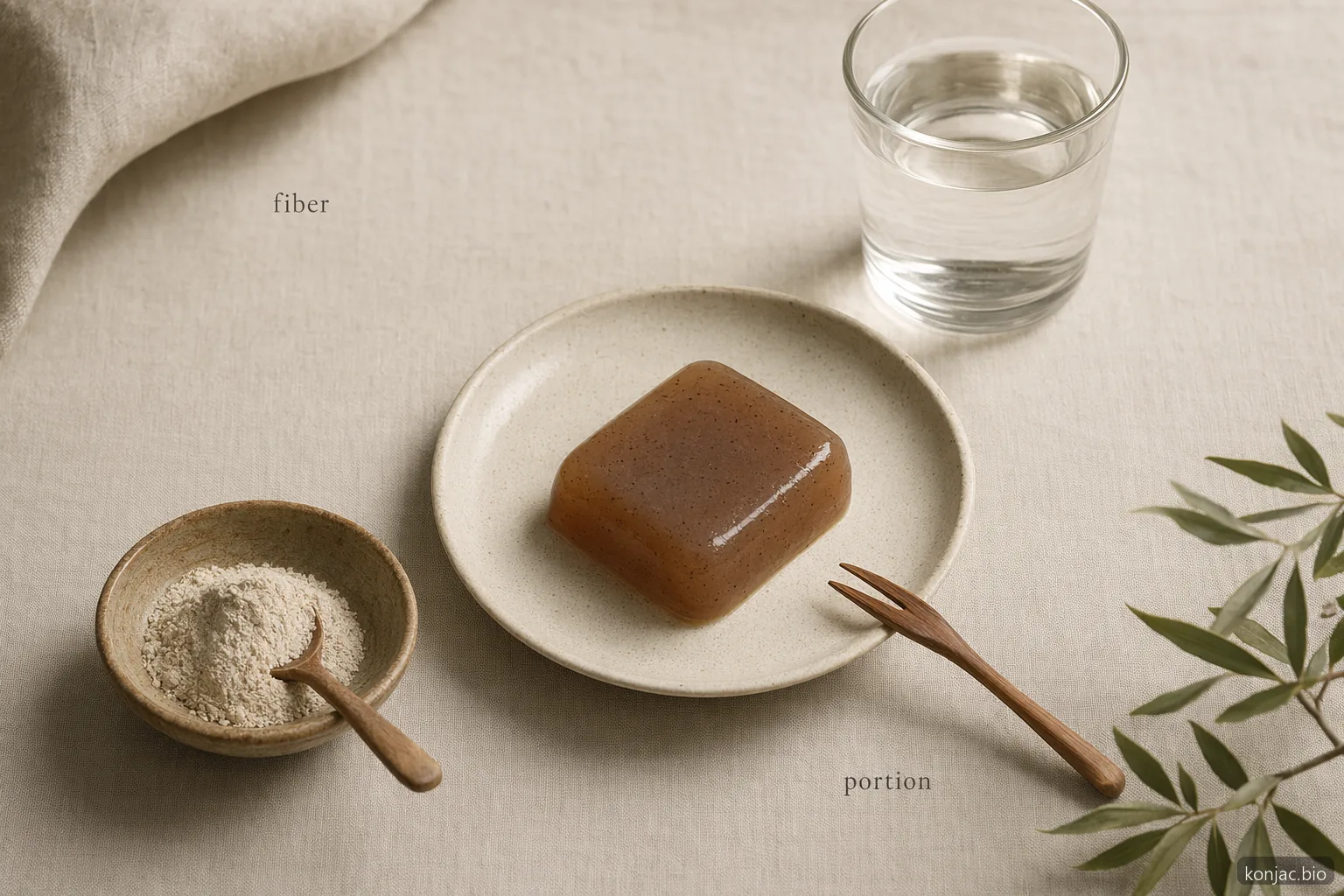
How do the benefits of konjac jelly come from glucomannan?
The benefits of konjac jelly come from glucomannan because this soluble fiber hydrates, thickens, and helps create the elastic gel structure consumers recognize.
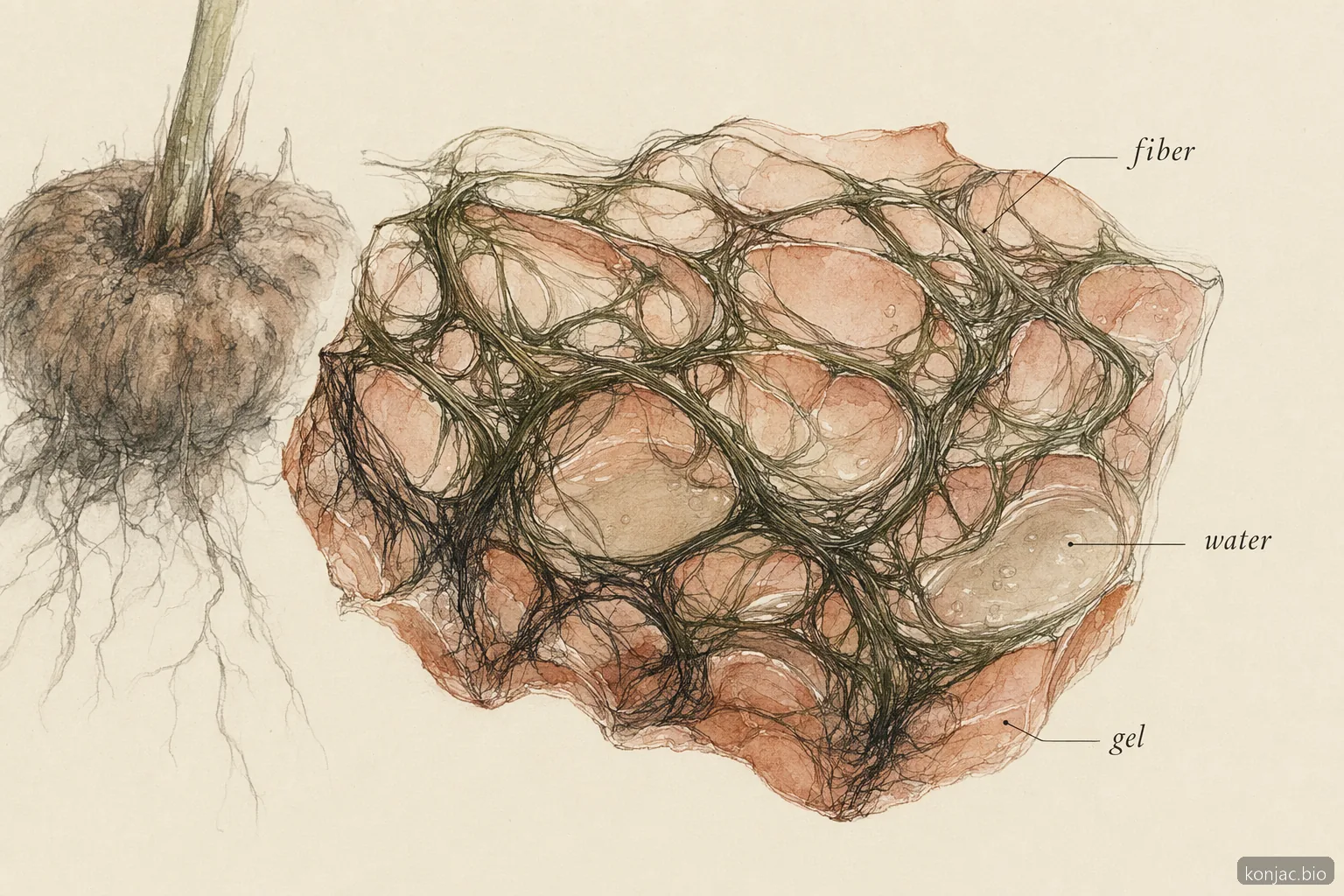
Glucomannan can absorb substantial water and form viscous systems, which is why it is used in jelly desserts, shirataki noodles, bakery systems, and texture-modified foods. In jelly, the goal is not only thickness. The gel must be spoonable or squeezable, stable during shelf life, and pleasant to chew.
EFSA evaluated glucomannan and authorized one specific claim: "Glucomannan in the context of an energy restricted diet contributes to weight loss" [EFSA claim](https://www.efsa.europa.eu/en/efsajournal/pub/1798). EFSA tied that claim to 3 g of glucomannan per day, taken in three 1 g doses with 1 to 2 glasses of water before meals, within an energy-restricted diet.
That EFSA language matters because a single konjac jelly cup or pouch may not provide that amount. Brands should avoid broad promises and focus on measurable facts: grams of fiber, grams of sugar, serving weight, calories per serving, and clear consumption directions.
Which benefits of konjac jelly matter most for everyday snacking?
The benefits of konjac jelly that matter most for snacking are portion control, texture satisfaction, low calorie potential, and a cleaner alternative to sugar-heavy desserts when the formula supports it.
Konjac jelly works best when it is positioned as a structured snack, not as a nutrition shortcut. The pouch or cup format gives consumers a defined serving, which can reduce the ambiguity of eating from a large dessert container.
| Benefit | What to check | Why it matters |
|---|---|---|
| Soluble fiber | Dietary fiber grams | Shows whether konjac is present at a meaningful level. |
| Lower sugar | Added sugar grams | Separates everyday snacks from candy-style gels. |
| Portion control | Net weight per cup or pouch | Makes calories and sweetness easier to track. |
| Texture satisfaction | Konjac, carrageenan, agar, or pectin on label | Explains chew, firmness, and gel stability. |
The best everyday formulas balance sweetness, acidity, fruit flavor, and chew. A very firm gel may feel satisfying to some consumers, while a softer pouch may be easier to consume slowly and mindfully.
Safety, choking risk, and label-reading basics
Konjac jelly has a specific safety history because firm mini-cup gel candies have been associated with choking risks, especially when the gel is swallowed whole.
The FDA has warned consumers about mini-cup gel candy that may become lodged in the throat because of shape, firmness, and slipperiness [FDA warning](https://www.fda.gov/food/alerts-advisories-safety-information/fda-warns-consumers-about-danger-choking-mini-cup-gel-candy). This safety issue is about physical form, not only the ingredient name.
Consumers should chew konjac jelly thoroughly, follow package directions, and avoid squeezing an entire firm gel directly into the mouth. Parents and caregivers should check age guidance, serving design, and warnings before offering jelly products to young children or older adults with swallowing difficulty.
Labels also matter for nutrition. Check calories, total carbohydrate, dietary fiber, added sugars, sugar alcohols, caffeine if present, and serving size. Some products are dessert gels with konjac for texture, while others are fiber-forward snacks with a more deliberate nutrition target.
For a deeper safety-focused walkthrough, see konjac jelly safety. Clear warnings, softer textures, and smaller bite guidance can make the product experience safer without removing the signature konjac chew.
Formulation choices that improve konjac jelly benefits
Better konjac jelly benefits come from formulation discipline: enough glucomannan to matter, controlled sweetness, stable acidity, and a texture that encourages chewing rather than swallowing whole.
Product teams usually adjust four levers. First, the hydrocolloid system sets firmness and elasticity. Second, the sweetener system controls calories, aftertaste, and digestive tolerance. Third, acid and flavor systems create fruit brightness. Fourth, packaging controls portion size and eating behavior.
- Fiber target: state the dietary fiber grams per serving clearly.
- Sugar target: keep added sugars aligned with the product promise.
- Texture target: design for chewability, not excessive firmness.
- Usage target: add simple instructions such as chew thoroughly and consume slowly.
For B2B teams, konjac.bio sources konjac ingredients at wholesale scale and can support specification discussions through contact. Strong sourcing helps teams control viscosity, odor, whiteness, microbiological limits, and batch-to-batch performance.
The strongest products do not rely on a single claim. They combine a recognizable sensory experience with transparent nutrition facts, responsible serving design, and documentation that retail buyers can review quickly.
Frequently asked questions
01 Is konjac jelly good for weight management?
02 Does konjac jelly contain sugar?
03 Is konjac jelly safe to eat?
04 Is konjac jelly the same as shirataki noodles?
05 How much fiber should konjac jelly have?
- Scientific Opinion on the substantiation of health claims related to konjac mannan (glucomannan) and reduction of body weight · EFSA Journal · 2010
- FDA Warns Consumers About the Danger of Choking on Mini-Cup Gel Candy · U.S. Food and Drug Administration · 2002
- Dietary Supplements for Weight Loss: Fact Sheet for Health Professionals · NIH Office of Dietary Supplements · 2022
- The efficacy of glucomannan supplementation in overweight and obesity: a systematic review and meta-analysis of randomized clinical trials · PubMed · 2014