how to take glucomannan for weight loss?
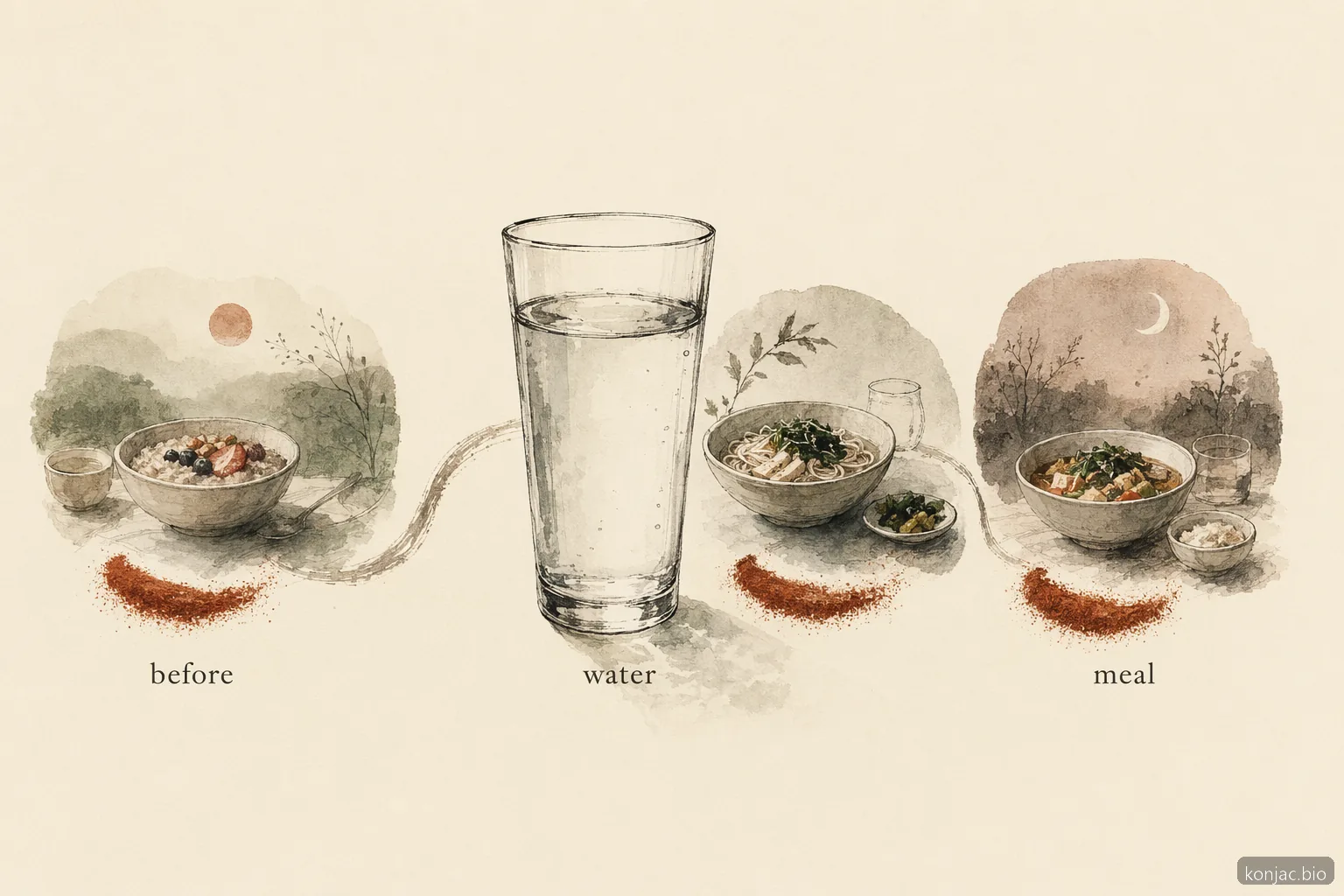
To take glucomannan for weight loss, take 1 gram before breakfast, lunch, and dinner with 1 to 2 glasses of water while following an energy-restricted diet.
Glucomannan is a water-soluble fiber from Amorphophallus konjac, the same plant used to make konjac flour, shirataki noodles, and konjac rice. The European Food Safety Authority states the claim this way: “Glucomannan in the context of an energy restricted diet contributes to weight loss,” with the condition of 3 grams daily in three 1-gram doses before meals [EFSA opinion](https://www.efsa.europa.eu/en/efsajournal/pub/1798).
- Breakfast: 1 gram glucomannan, 15 to 30 minutes before eating.
- Lunch: 1 gram glucomannan, 15 to 30 minutes before eating.
- Dinner: 1 gram glucomannan, 15 to 30 minutes before eating.
- Water: 250 to 500 ml with each dose, unless your clinician advises otherwise.
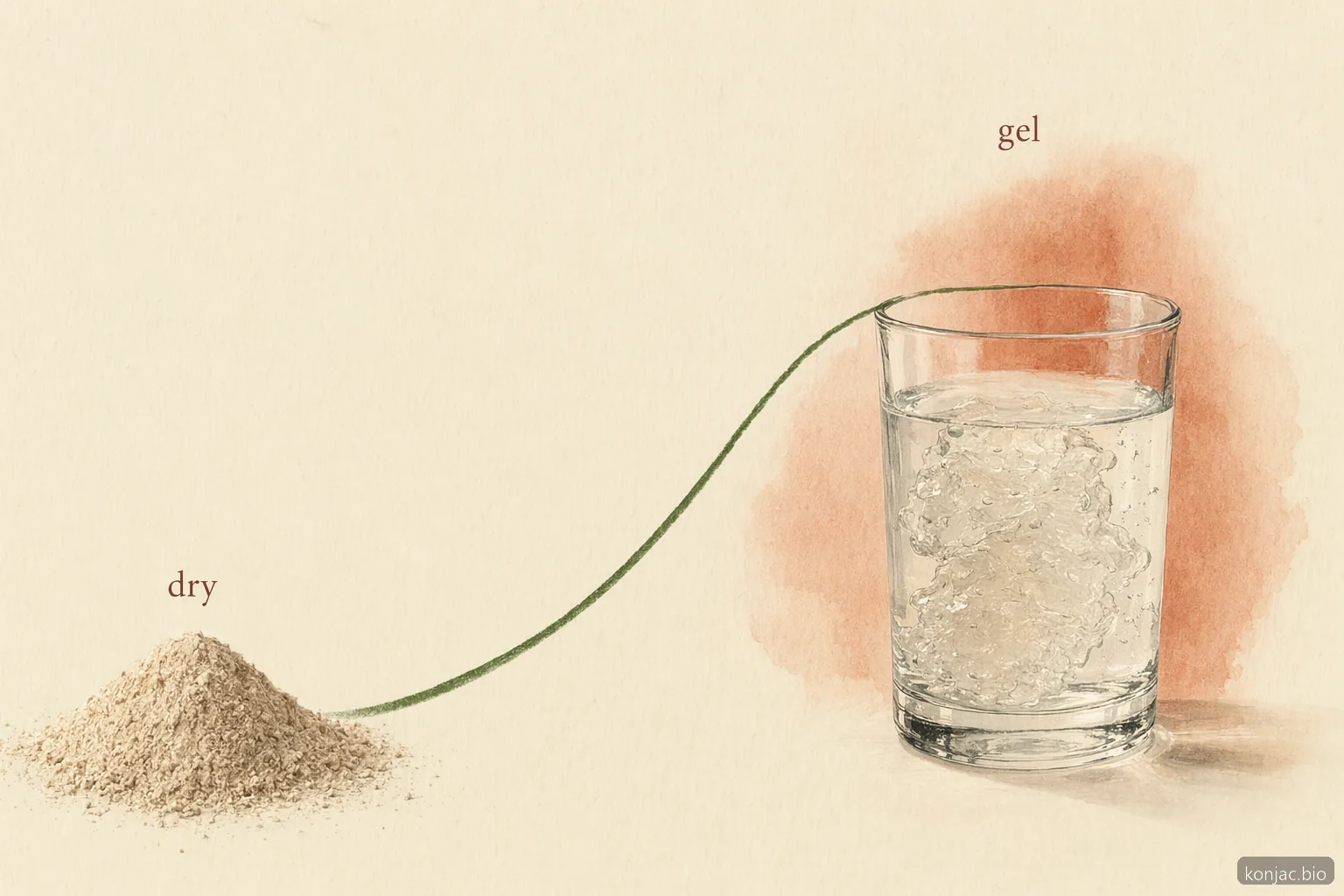
The practical goal is fullness support before the meal starts. Glucomannan absorbs water and forms a viscous gel, which is why timing and water intake matter more than simply adding it somewhere in the day [NIH fiber](https://ods.od.nih.gov/factsheets/Fiber-HealthProfessional/).
What dose works for how to take glucomannan for weight loss?
The studied weight-management dose is 3 grams daily, split into three 1-gram servings before meals.
Do not start with a high dose if you are new to soluble fiber. A gradual start can reduce bloating, gas, and sudden fullness while your routine settles.
| Week | Daily amount | How to use it |
|---|---|---|
| Days 1 to 3 | 1 gram daily | Before the largest meal with water |
| Days 4 to 7 | 2 grams daily | Before two meals with water |
| Week 2 onward | 3 grams daily | Before three meals with water |
Capsules, powder, and granules can all deliver the same active fiber if the label confirms grams of glucomannan, not just total capsule weight. For example, two 500 mg capsules equal 1 gram if each capsule contains 500 mg of glucomannan.
Powder mixes faster in a shaker bottle, but it thickens quickly. Drink it promptly after mixing, then follow with extra water. Capsules are simpler for travel, but they still need a full glass of water because dry glucomannan expands after contact with liquid.
Timing, meals, and low-carb routines
Glucomannan works best as a pre-meal habit, not as a late-night add-on. The target window is usually 15 to 30 minutes before a meal, paired with enough water and a meal plan that creates an energy deficit.
For low-carb eating, the easiest pairing is lean protein, non-starchy vegetables, and a measured fat source. A practical plate might be eggs with spinach at breakfast, chicken salad at lunch, and salmon with broccoli at dinner.
People using keto or lower-carb meal plans often choose shirataki noodles or konjac rice because they provide volume with very low digestible carbohydrate. For broader context on low-carb use, see Konjac for Keto and Weight Loss, plus related guides on shirataki noodles for keto and konjac rice calories.
A simple day can look like this:
- 7:30 a.m.: 1 gram glucomannan with 300 ml water.
- 8:00 a.m.: Protein-rich breakfast.
- 12:00 p.m.: 1 gram glucomannan with 300 ml water.
- 12:30 p.m.: Lunch with vegetables and protein.
- 6:00 p.m.: 1 gram glucomannan with 300 ml water.
- 6:30 p.m.: Dinner within your calorie target.
For brands developing capsules, powders, shirataki noodles, or konjac rice, konjac.bio sources konjac ingredients at wholesale volumes. Request specifications and pricing through /contact/.
What safety rules matter with glucomannan?
The main safety rule is to take glucomannan only with plenty of water and never swallow dry powder.
Because glucomannan expands rapidly in liquid, inadequate water can create a choking risk. The U.S. Food and Drug Administration has flagged konjac-containing mini-cup jelly products as a choking concern because of their shape, firmness, and ability to remain intact in the mouth [FDA guidance](https://www.fda.gov/regulatory-information/search-fda-guidance-documents/cpg-sec-515350-jelly-cups-containing-konjac).
Weight-management supplements are different from mini-cup jelly, but the water rule still applies. Use a full glass of water with capsules, and mix powder into enough liquid so it can be swallowed easily before it becomes too thick.
- Do not take glucomannan right before lying down.
- Do not use dry spoonfuls of powder.
- Do not give capsules or thick gels to young children.
- Ask a clinician first if you have swallowing difficulty.
- Ask a clinician first if you are pregnant, nursing, or managing a complex medical plan.
Some people notice gas, bloating, or stool changes when fiber intake rises quickly. Starting at 1 gram daily for several days, then increasing toward 3 grams daily, is a practical way to test tolerance.
What the evidence says and what to expect
Glucomannan is best viewed as a structured fullness tool, not a standalone fat-loss shortcut. The strongest practical claim is tied to a specific pattern: 3 grams daily, split before meals, in the context of an energy-restricted diet [EFSA opinion](https://www.efsa.europa.eu/en/efsajournal/pub/1798).
Clinical evidence is mixed. A 2008 systematic review found glucomannan was associated with lower body weight in short-term trials, along with changes in some cholesterol and blood glucose markers [PubMed review](https://pubmed.ncbi.nlm.nih.gov/18842808/). A later randomized clinical trial in overweight and obese adults found no significant body-weight change from 3.99 grams daily without an energy-restricted diet [PubMed trial](https://pubmed.ncbi.nlm.nih.gov/22922637/).
The practical takeaway is consistent: glucomannan is most useful when it helps you eat fewer calories without feeling deprived. If your meals, snacks, and drinks still exceed your energy needs, fiber alone is unlikely to move body weight meaningfully.
Track three numbers for 14 days: grams used, water intake, and average daily calories. If hunger improves and your calorie target is easier to follow, glucomannan is doing its job. If bloating, discomfort, or poor adherence appear, reduce the dose or stop and reassess with a qualified professional.
Frequently asked questions
01 How long before meals should I take glucomannan?
02 Can I take all 3 grams of glucomannan at once?
03 Is glucomannan better as capsules or powder?
04 Can I take glucomannan on keto?
05 What should I do if glucomannan causes bloating?
- Scientific Opinion on the substantiation of health claims related to konjac mannan · European Food Safety Authority · 2010
- Effect of glucomannan on plasma lipid and glucose concentrations, body weight, and blood pressure · PubMed · 2008
- Safety and efficacy of glucomannan for weight loss in overweight and moderately obese adults · PubMed · 2013
- Dietary Fiber Fact Sheet for Health Professionals · National Institutes of Health · 2022
- CPG Sec. 515.350 Jelly Cups Containing Konjac · U.S. Food and Drug Administration · 2020