What is a konjac noodle?
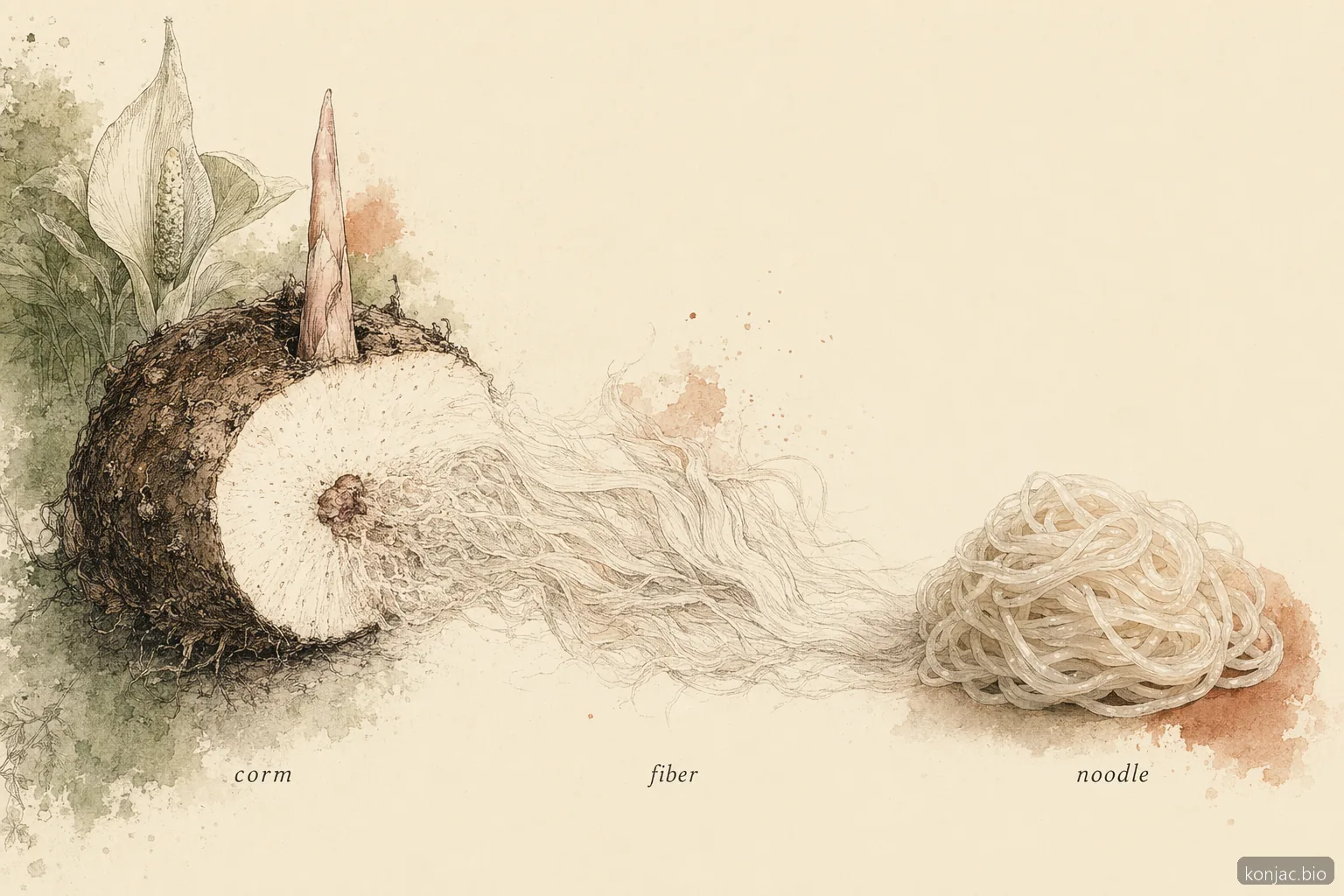
A konjac noodle is a translucent noodle made from water and glucomannan-rich flour from the Amorphophallus konjac corm. Glucomannan is a water-soluble polysaccharide that forms a firm gel when hydrated and set, which gives shirataki noodles their slippery, elastic bite [PubMed review](https://pubmed.ncbi.nlm.nih.gov/18842808/).
The most common names are shirataki noodles, konjac noodles, konnyaku noodles, and lowercase miracle noodles. Traditional Japanese shirataki are usually thin and white, while modern formats include fettuccine-style ribbons, rice shapes, angel-hair strands, and mixed products that combine konjac with oat fiber, soy fiber, or vegetable powders.
The main reason people buy konjac noodles is simple: they add noodle-like volume with very few calories compared with wheat pasta or rice noodles. They are not a protein-rich food, and they are not a complete meal by themselves. They work best as a base for protein, vegetables, fat, broth, and seasoning.
For a broader ingredient background, see our parent guide to konjac. For raw material details, compare konjac noodles with konjac powder and purified glucomannan.
How is a konjac noodle made?
A konjac noodle is made by hydrating konjac flour, shaping the gel, and setting it in alkaline water before packaging. The process turns dry konjac powder into a stable, high-moisture noodle that holds its shape in soups and stir-fries.
A typical production flow has 5 steps:
- Hydration: konjac flour is dispersed in water so glucomannan can swell.
- Gel formation: an alkaline setting agent, often calcium hydroxide, helps create a heat-stable gel.
- Extrusion: the gel is pushed through dies to form strands, ribbons, or rice shapes.
- Setting and rinsing: noodles are held in hot alkaline water, then rinsed to reduce surface alkalinity.
- Packing: noodles are sealed in water-filled pouches, cups, or trays for shelf-stable or chilled distribution.
The corm source matters because konjac flour quality depends on particle size, glucomannan purity, viscosity, odor, and microbial controls. A cleaner powder usually gives a smoother noodle, less breakage, and a milder aroma after rinsing.
B2B aside: konjac.bio sources konjac ingredients and finished konjac formats at wholesale scale for food brands, importers, and manufacturers. For specifications, pack sizes, and pricing, contact the team at /contact/.
Is a konjac noodle good for weight management?
A konjac noodle may support weight management when it replaces higher-calorie noodles within an energy-controlled meal. The benefit comes from substitution and satiety, not from the noodle acting alone.
The European Food Safety Authority approved this specific wording for glucomannan: “Glucomannan in the context of an energy restricted diet contributes to weight loss” [EFSA opinion](https://www.efsa.europa.eu/en/efsajournal/pub/1798). EFSA also specified conditions of use, including 3 g glucomannan daily in 3 doses of 1 g each, taken with 1 to 2 glasses of water before meals as part of an energy-restricted diet.
Konjac noodles usually contain less glucomannan per serving than capsules or concentrated powders, because the finished noodle is mostly water. That makes label reading essential. A pouch may look large, but the actual fiber grams depend on the flour percentage, noodle weight, and added fibers.
A practical plate is more reliable than a health claim. Pair konjac noodles with 20 to 30 g protein, 1 to 2 cups vegetables, and a flavorful sauce or broth. This creates a meal with structure, not just a low-calorie noodle substitute.
Konjac noodle nutrition, texture, and best uses
Konjac noodle nutrition is unusual because the product is usually more than 90% water, with small amounts of glucomannan fiber and mineral salts. Public databases and commercial labels show that values vary by product, so the package label is the best source for calories, fiber, sodium, and serving size [FoodData Central](https://fdc.nal.usda.gov/).
The texture is bouncy, slippery, and resistant to overcooking. Konjac noodles do not absorb sauce like wheat pasta because they have very little starch. They carry flavor on the surface, so strong broths, sesame dressings, chili oil, curry sauces, and soy-based glazes work better than thin, delicate sauces.
| Use case | Works well | Why |
|---|---|---|
| Ramen and soup | Yes | Broth coats the noodle and masks mild alkaline notes. |
| Stir-fry | Yes | Dry-pan cooking removes water and improves sauce cling. |
| Cold salad | Yes | Elastic texture pairs with vinegar, sesame, herbs, and crunch. |
| Classic Italian pasta | Mixed | Low starch means less sauce binding than durum wheat pasta. |
| Baked casseroles | Mixed | High moisture can loosen creamy sauces unless drained well. |
Choose shapes by dish. Thin shirataki strands fit ramen, pho-style bowls, and spicy soups. Fettuccine shapes work better with thick sauces. Rice-shaped konjac is useful in fried rice-style dishes when mixed with egg, vegetables, and aromatics.
Cooking, storage, and safety checklist for konjac noodles
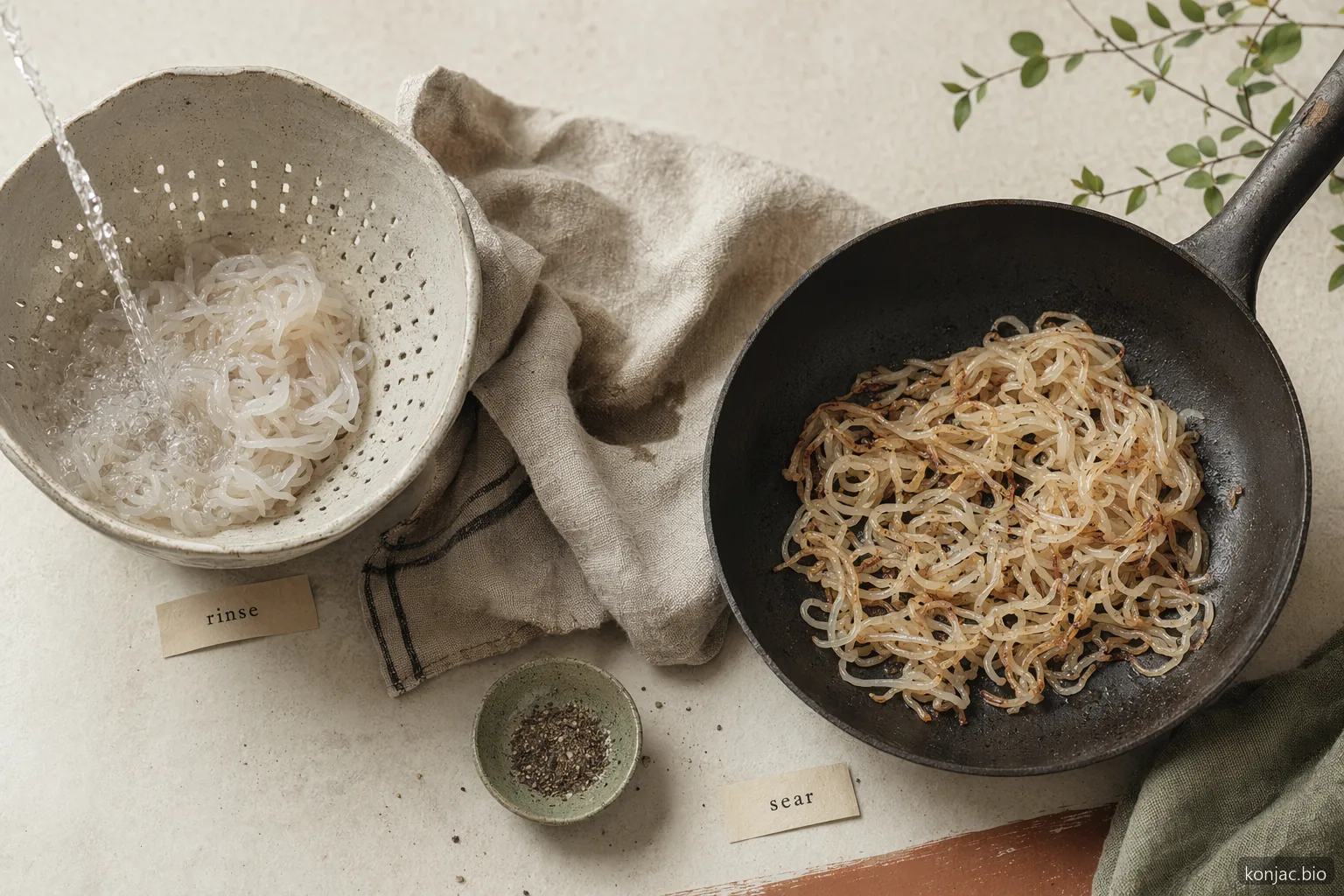
Konjac noodles taste best when excess package water is removed before sauce is added. The pouch liquid can smell slightly alkaline or ocean-like, but that aroma usually drops after rinsing, boiling, and dry heating.
Use this 4-step method:
- Drain: pour off the packing liquid completely.
- Rinse: rinse under cold water for 30 to 60 seconds.
- Boil: simmer for 2 to 3 minutes, then drain again.
- Dry-pan: heat in a nonstick pan for 3 to 5 minutes until squeaky and less wet.
After dry-pan cooking, add sauce, broth, or stir-fry ingredients. Salt, acid, fat, and aromatics make the largest flavor difference. Try soy sauce and ginger, miso and sesame, tomato and garlic, or curry paste and coconut milk.
For storage, follow the package date and refrigeration instructions. Once opened, keep unused noodles covered in fresh water in the refrigerator and use them promptly. Do not freeze standard konjac noodles unless the package allows it, because freezing can create a spongy texture.
Safety is mostly about swallowing and product form. The FDA warned consumers about konjac-containing mini-cup gel candies because they could pose a choking risk [FDA warning](https://www.fda.gov/food/alerts-advisories-safety-information/fda-warns-consumers-not-eat-mini-cup-gel-candy-products). Konjac noodles are a different format, but they should still be chewed thoroughly, cut for young children, and avoided by anyone who has difficulty swallowing chewy gel foods.
Frequently asked questions
01 Are konjac noodles the same as shirataki noodles?
02 Do konjac noodles have carbs?
03 Can konjac noodles help with weight management?
04 Why do konjac noodles smell fishy or alkaline?
05 Are konjac noodles safe for children?
- Scientific Opinion on the substantiation of health claims related to glucomannan and reduction of body weight · European Food Safety Authority · 2010
- Glucomannan and obesity: a critical review · PubMed · 2008
- FoodData Central · U.S. Department of Agriculture · 2024
- FDA warns consumers not to eat mini-cup gel candy products · U.S. Food and Drug Administration · 2002