What is konjac candy?
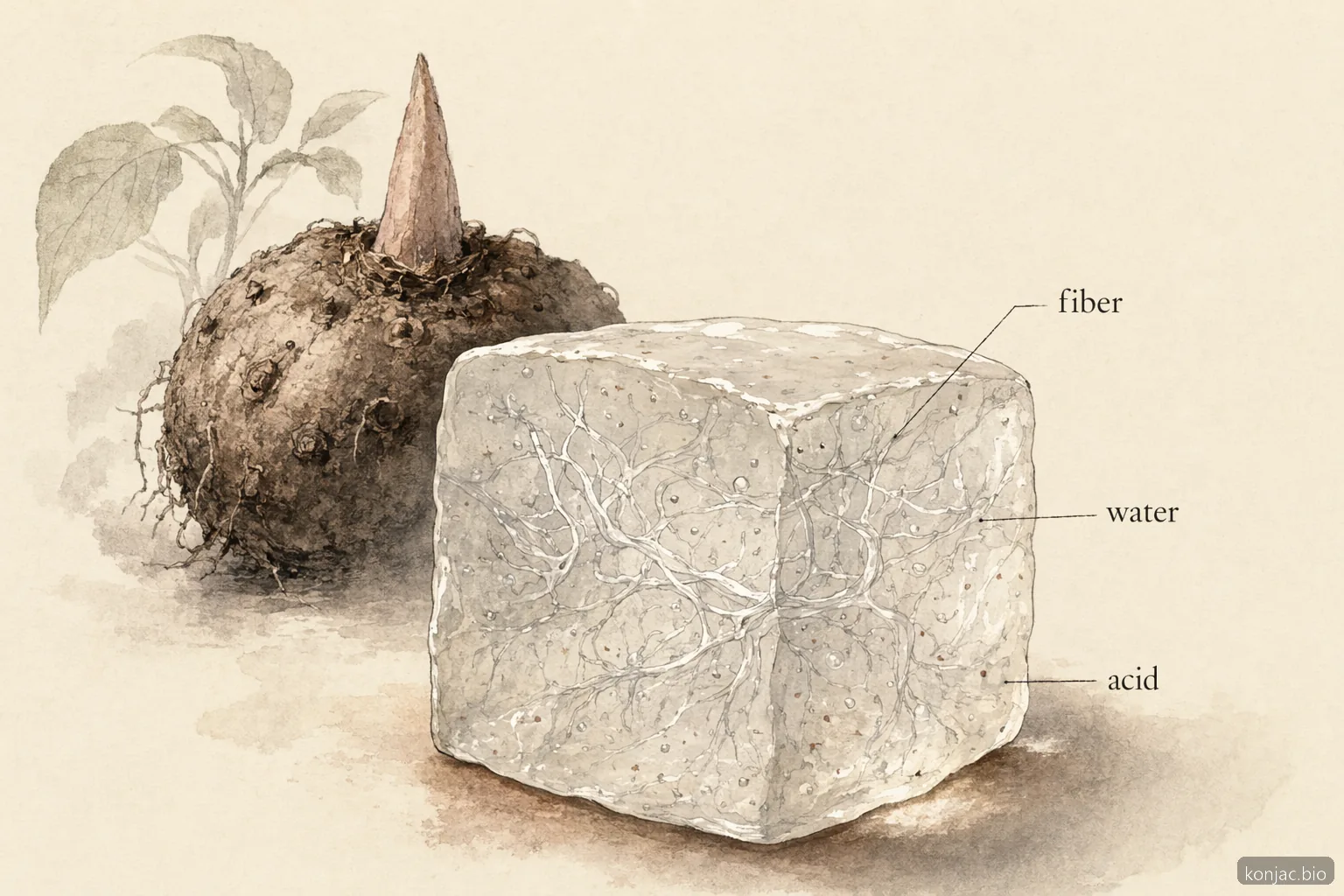
Konjac candy is a sweet snack that uses konjac glucomannan to build a chewy, elastic, or gelled texture. Glucomannan is a water-soluble polysaccharide from the corm of Amorphophallus konjac, a plant listed in the NCBI taxonomy database.
The ingredient behaves differently from gelatin, pectin, or starch because it hydrates strongly and can form firm gels when paired with alkaline salts, carrageenan, xanthan gum, or other hydrocolloids. That makes it useful for jelly cups, gummy pieces, fruit gels, and reduced-sugar sweets where formulators want bite without relying only on sugar solids.
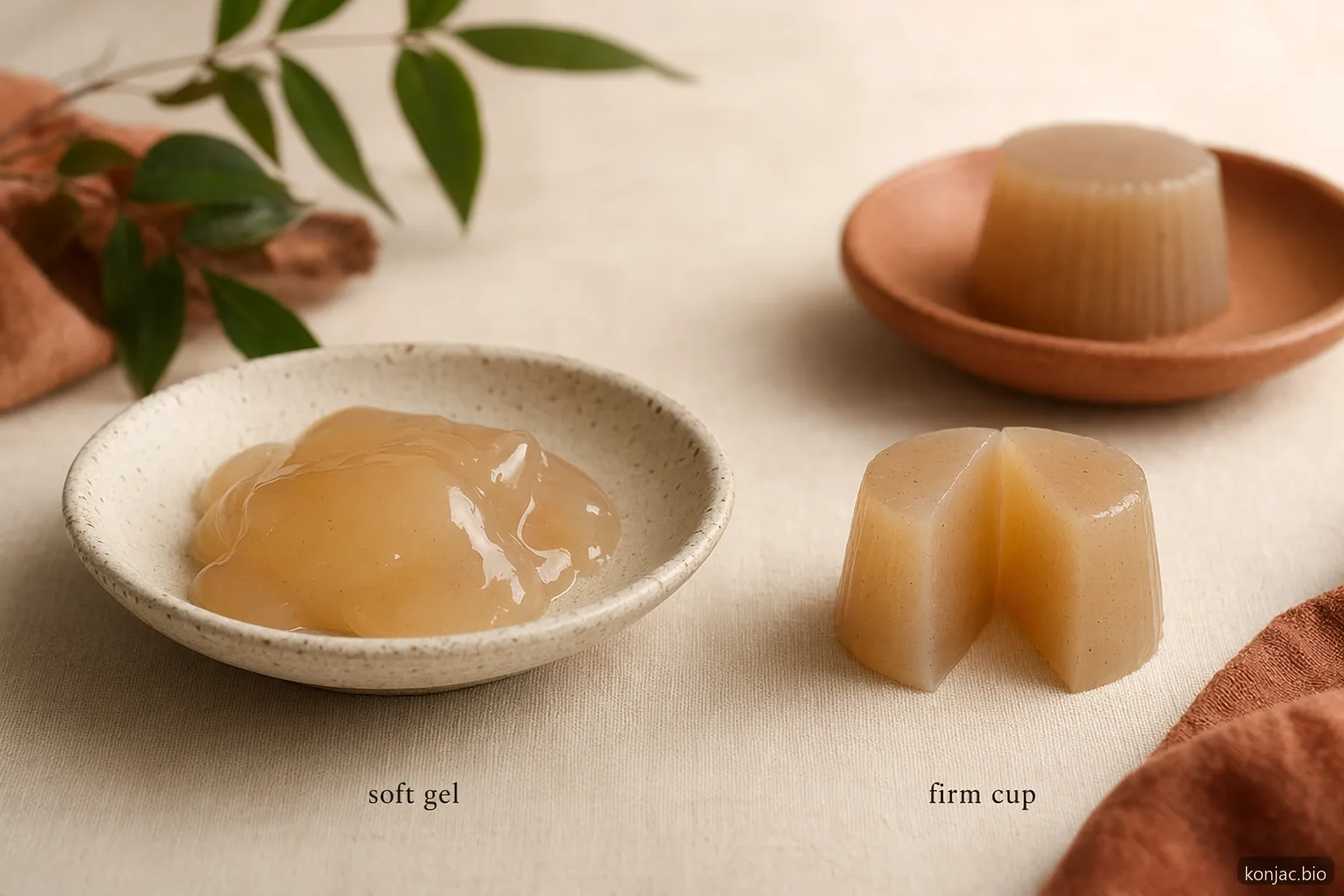
For shoppers, konjac candy usually means one of four formats:
- Jelly cups: small gel portions packed in plastic cups or pouches.
- Gummies: chewable pieces with fruit flavor, acid, and sweetener.
- Snack gels: spoonable or squeeze-pack gels with juice or flavor systems.
- Fiber sweets: candies marketed around soluble fiber content, where label claims need evidence.
Konjac candy sits inside the broader konjac snacks category with konjac chips, popping boba, jellies, and noodles. The same source ingredient can create very different textures depending on hydration, pH, heat, calcium, potassium, and gum blends.
How is konjac candy made?
Konjac candy is made by hydrating konjac glucomannan in water, blending it with sweeteners, acids, flavors, colors, and gelling aids, then heating, filling, and cooling it into the final shape. The process is simple in concept, but viscosity control and hydration timing decide whether the texture feels smooth, rubbery, brittle, or grainy.
A typical production flow looks like this:
- Dry blending: konjac powder is mixed with sugar, erythritol, allulose, or other dry carriers to reduce clumping.
- Hydration: the blend is dispersed into water under shear until the gum thickens evenly.
- Formula adjustment: acidulants, flavors, juice, colors, and secondary gums are added.
- Heat step: the mass is heated for microbial control and full gum activation.
- Filling: the hot gel is deposited into molds, sachets, cups, or strips.
- Setting: the product cools into a chewable or spoonable matrix.
Konjac’s main functional component, glucomannan, has been studied as a soluble dietary fiber in human nutrition and food formulation. A PubMed review describes glucomannan as a highly viscous soluble fiber, which explains why small percentages can strongly change mouthfeel.
Common formula ranges vary by target texture. A soft fruit gel may use less konjac and more water, while a gummy-style piece may need higher solids, stronger acid balance, and a supporting gum system. Product teams should validate texture after 24 hours and after shelf-life storage because hydrocolloid networks can tighten over time.
Is konjac candy safe to eat?
Konjac candy can be safe when it is properly formulated, clearly labeled, portioned responsibly, and matched to the right consumer group. The main safety issue is not konjac itself in every format, but firm gel candies that can be swallowed whole and resist breaking down quickly.
The U.S. Food and Drug Administration has an import alert for certain jelly mini-cup candies containing konjac because of choking-risk concerns, with detention without physical examination listed in the FDA alert. This matters for brands because a cute, small, slippery cup format can create a very different risk profile than a spoonable gel pouch or cut gummy piece.
Risk is shaped by product design:
| Design factor | Why it matters |
|---|---|
| Piece size | Whole-swallow pieces increase airway risk, especially for children. |
| Gel firmness | Very elastic gels may not fragment easily during chewing. |
| Package format | Mini-cups can encourage suction and rapid intake. |
| Labeling | Age guidance and chewing instructions help set safe use expectations. |
| Water activity and pH | These affect shelf stability and microbial controls. |
For adults, the practical advice is simple: chew konjac candy thoroughly, avoid giving firm jelly cups to young children, and follow package guidance. For brands, safety review should include texture testing, portion geometry, warning statements, and jurisdiction-specific rules before launch.
Konjac candy ingredients and label claims
Konjac candy ingredient lists usually combine konjac glucomannan with water, sweetener, acidity regulators, fruit flavor, color, and one or more texture partners. The cleanest label is not always the safest or most stable label, because a single-gum system can be difficult to control across storage temperatures.
Common ingredient choices include:
- Konjac glucomannan: the primary thickener, gelling agent, or fiber source.
- Sweeteners: sugar, glucose syrup, erythritol, allulose, stevia, sucralose, or blends.
- Acids: citric acid or malic acid for brightness and pH control.
- Secondary gums: carrageenan, gellan gum, xanthan gum, agar, or pectin.
- Fruit systems: juice concentrate, natural flavor, puree, or botanical extracts.
- Minerals: calcium or potassium salts for gel strength in some systems.
Health claims require extra caution. The European Food Safety Authority published the approved weight-management wording for glucomannan: “Glucomannan in the context of an energy restricted diet contributes to weight loss,” with conditions described in the EFSA opinion. That wording does not automatically fit a candy unless the product, serving size, daily intake instructions, and local rules match the authorized conditions.
In the United States, nutrition and fiber labeling should follow FDA definitions and substantiation expectations. The FDA’s nutrition labeling framework for dietary fiber is outlined in its fiber guidance, including the need to identify fibers with beneficial physiological effects when making fiber declarations.
How should brands choose konjac candy formats?
Brands should choose a konjac candy format by balancing texture, consumer age, serving style, regulatory risk, and manufacturing equipment. A high-fiber gummy, a spoonable fruit gel, and a mini-cup jelly may use similar ingredients, but they do not carry the same safety, label, or processing profile.
The format decision is easiest when mapped against use case:
| Format | Best fit | Key watchout |
|---|---|---|
| Soft gummies | Adult snacking, low-sugar sweets, functional confectionery | Texture drift during shelf life |
| Squeeze gels | Portable snacks, fruit gel packs, controlled portions | pH, fill temperature, package seal quality |
| Spoonable cups | Dessert-style snacks and refrigerated concepts | Microbial control and cold-chain planning |
| Mini-cup jellies | High caution category | Choking-risk scrutiny and import restrictions |
| Popping inclusions | Desserts, beverages, frozen toppings | Shell strength and suspension stability |
Konjac candy can also pair with related snack concepts. Beverage brands may use konjac-adjacent gel systems near konjac popping boba, while savory snack teams may compare hydrocolloid texture work with konjac chips for portfolio planning.
For product teams, konjac.bio sources konjac gum, jelly blends, and snack inputs at wholesale volumes. Share your target texture, format, and launch market through contact to request specifications and wholesale pricing.
Frequently asked questions
01 Is konjac candy the same as jelly candy?
02 Why are some konjac jelly cups considered risky?
03 Does konjac candy support weight management?
04 Is konjac candy vegan?
05 What does konjac candy taste like?
06 Can brands make low-sugar konjac candy?
- Scientific Opinion on the substantiation of health claims related to konjac mannan glucomannan · European Food Safety Authority · 2010
- Import Alert 33-15: Detention Without Physical Examination of Jelly Mini-Cup Candy Containing Konjac · U.S. Food and Drug Administration · 2024
- Questions and Answers on Dietary Fiber · U.S. Food and Drug Administration · 2024
- Glucomannan and obesity: a critical review · PubMed · 2015
- Amorphophallus konjac taxonomy browser · National Center for Biotechnology Information · 2024