What is konjac crystal boba?
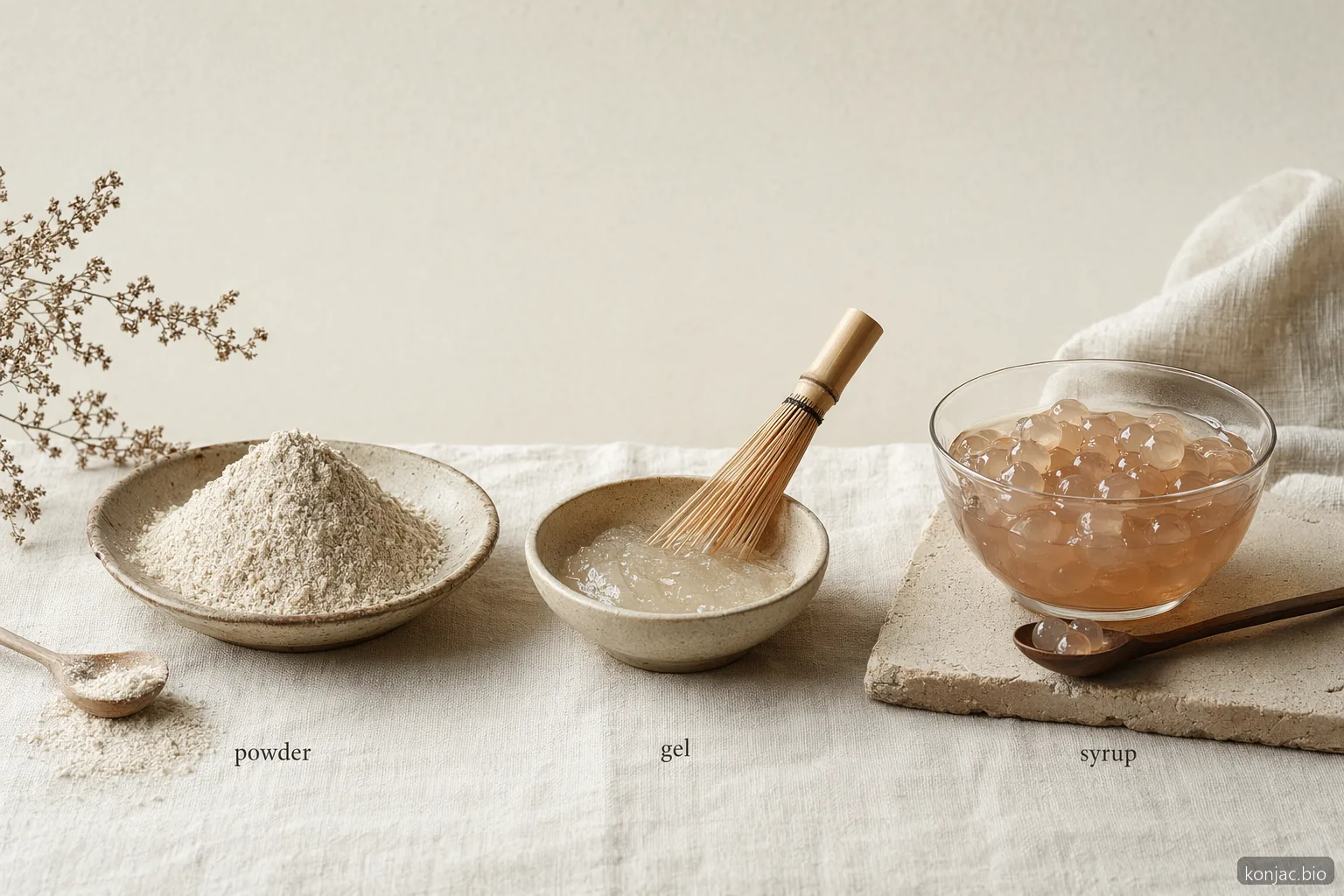
Konjac crystal boba is a clear, chewy beverage topping made with konjac glucomannan and other gel-forming ingredients instead of tapioca starch.
The konjac ingredient comes from the corm of Amorphophallus konjac, a plant used to produce glucomannan, a highly water-binding polysaccharide described in a PubMed review. In boba applications, that water-binding behavior helps create a smooth, elastic bite without the opaque look of cooked tapioca pearls.
Crystal boba is usually packed in syrup or flavored liquid, so cafés and foodservice teams can drain, portion, and serve it with minimal prep. That makes it practical for high-volume bubble tea counters, grab-and-go desserts, and fruit cup lines where cooked tapioca would require timed batching.
It sits within the broader konjac snacks category because it is a sweet, textural add-in rather than a staple noodle or flour. Adjacent formats include konjac jelly and konjac candy, which use similar gel texture logic in different serving formats.
How is konjac crystal boba made?
Konjac crystal boba is made by hydrating konjac glucomannan, combining it with sweeteners, acids, flavors, and other hydrocolloids, then forming it into small gel pearls.
A typical formula may include water, sugar or syrup, konjac powder, gellan gum, carrageenan, agar, calcium salts, citric acid, fruit flavor, and color. The exact blend determines whether the pearl is soft, springy, firm, or juicy.
A practical production flow usually has 6 steps:
- Hydration: Konjac powder is dispersed into water under shear to avoid clumps.
- Sweetening: Syrup, sugar, or alternative sweeteners set the flavor base.
- Gel balancing: Gums and mineral salts adjust chew, clarity, and heat stability.
- Forming: The mixture is portioned into pearl shapes by molding, dripping, or cutting.
- Holding liquid: Pearls are packed in syrup to maintain moisture and flavor.
- Quality checks: Teams review size, pH, texture, fill weight, and package integrity.
Food safety systems should follow documented hazard analysis, sanitation, and process controls. The Codex General Principles of Food Hygiene define HACCP-based controls for food operations through Codex hygiene.
Konjac crystal boba vs tapioca pearls
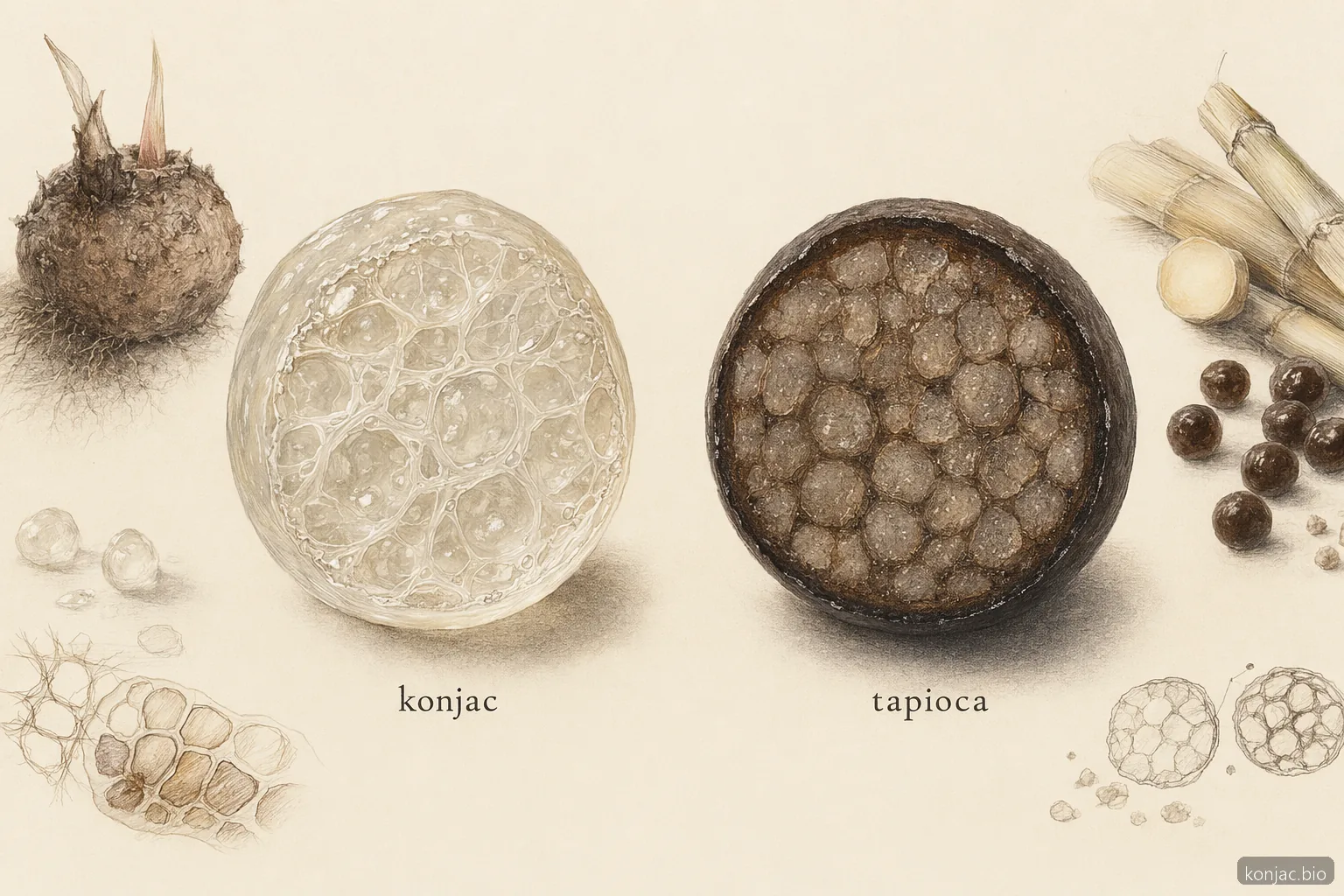
Konjac crystal boba and tapioca pearls both add chew to bubble tea, but they behave differently in production, service, and sensory design. Tapioca pearls are starch-based, cooked before service, and usually dark or opaque. Konjac crystal boba is hydrocolloid-based, translucent, and commonly supplied ready to serve.
| Factor | Konjac crystal boba | Tapioca pearls |
|---|---|---|
| Main texture source | Konjac glucomannan plus gels | Tapioca starch |
| Appearance | Clear or lightly tinted | Opaque, often black or brown |
| Preparation | Usually ready to drain and serve | Usually cooked, rinsed, and held |
| Bite | Light, elastic, jelly-like | Dense, starchy, chewy |
| Menu fit | Fruit tea, yogurt, desserts, clear cups | Milk tea, brown sugar drinks, classic boba |
The clearest commercial advantage is consistency. Cooked tapioca can harden, swell, or become mushy when held too long, while syrup-packed crystal boba is designed for portion control and repeatable texture across shifts.
The sensory advantage is visual. Clear pearls show well in transparent fruit teas, sparkling drinks, shaved ice, and layered parfaits where operators want color contrast without a heavy starch look.
Does konjac crystal boba have fiber or health benefits?
Konjac crystal boba can contain soluble fiber from glucomannan, but most finished boba should be positioned as a sweet topping unless the formula provides a meaningful fiber amount per serving.
Glucomannan is widely studied because it absorbs water and increases viscosity. A critical review describes practical food and nutrition uses for konjac glucomannan in the PubMed review.
Fiber claims depend on serving size, regional rules, and lab-verified nutrition data. In the United States, the Daily Value for dietary fiber is 28 grams for adults and children 4 years and older, based on a 2,000 calorie diet, per the Daily Value table.
For weight-management language in the European Union, EFSA evaluated glucomannan and weight reduction. The approved claim wording is: “glucomannan in the context of an energy restricted diet contributes to weight loss,” with conditions described in the EFSA opinion. A sweetened boba topping does not automatically qualify for that positioning.
For consumer-facing menus, the safest language is descriptive: translucent, chewy, plant-based, tapioca-free, or made with konjac. Any calorie, sugar, fiber, vegan, gluten-free, or weight-management claim should be verified against the exact recipe and market rules.
Is konjac crystal boba safe for beverage and dessert menus?
Konjac crystal boba can be safe for beverage and dessert menus when the product is correctly sized, properly labeled, quality-controlled, and used in an appropriate serving format.
The key safety topic is choking risk, especially for firm gels, large pieces, children’s products, and mini-cup packaging. The FDA has an import alert for mini-cup gel candies containing konjac because of choking hazard concerns, listed in the FDA alert.
Beverage boba is not the same format as mini-cup gel candy, but product designers should still control size, firmness, slipperiness, and serving instructions. A small pearl in a drink with a wide straw creates a different exposure than a firm gel plug in a sealed mini cup.
Useful specifications for buyers include:
- Pearl diameter range, such as 5 mm to 10 mm.
- Texture target, such as soft, medium, or firm chew.
- pH and water activity for the finished pack.
- Allergen, vegan, halal, kosher, and gluten status.
- Storage temperature, shelf life, and opened-pack handling.
- Label warnings where needed for children or swallowing risk.
Foodservice teams should train staff to use the correct scoop size, avoid unauthorized repacking, and discard product according to opened-container instructions. These operational details protect texture as much as safety.
Menu ideas for konjac crystal boba in snacks and drinks
Konjac crystal boba works best where a clear, juicy, low-prep topping adds texture without clouding the base. It pairs especially well with fruit-forward and dairy-light formats.
Strong menu applications include:
- Fruit tea: lychee, peach, passion fruit, mango, yuzu, and strawberry.
- Sparkling drinks: clear boba with citrus soda, green tea, or coconut water.
- Yogurt bowls: crystal pearls over Greek-style yogurt, fruit purée, and granola.
- Shaved ice: translucent pearls layered with syrup and fruit cubes.
- Packaged fruit cups: boba suspended with jelly cubes or nata de coco.
- Retail dessert cups: layered jelly, pudding, fruit, and konjac pearls.
Flavor matching is straightforward: use neutral clear boba when the drink base should lead, or use flavored boba when the topping should create a second flavor burst. For premium menus, small pearls often feel more refined than oversized gels.
B2B aside: konjac.bio sources konjac ingredients and finished snack formats at wholesale for beverage, dessert, and snack brands. For specifications, MOQ, and pricing, contact our team.
Frequently asked questions
01 Is konjac crystal boba the same as popping boba?
02 Does konjac crystal boba need to be cooked?
03 Is konjac crystal boba lower in calories than tapioca pearls?
04 Can konjac crystal boba be used in kids’ drinks?
05 Can konjac crystal boba support a weight-management claim?
- Health-promoting effects of konjac glucomannan and its practical applications: A critical review · PubMed · 2016
- Scientific Opinion on the substantiation of health claims related to konjac mannan and reduction of body weight · European Food Safety Authority · 2010
- Import Alert 33-15: Mini-Cup Gel Candies Containing Konjac · U.S. Food and Drug Administration · 2024
- Daily Value on the Nutrition and Supplement Facts Labels · U.S. Food and Drug Administration · 2024
- General Principles of Food Hygiene · Codex Alimentarius · 2023